Oil prices took a small step back on Friday, but the week still ended with a decisive gain. Brent crude, the international benchmark, rose 6.5% over the week, even as Friday's trading saw prices dip. The move comes as fresh clashes between the US and Iran, combined with shipping data showing fewer vessels transiting the Strait of Hormuz, put Middle East supply risk back on traders' radar.
What happened this week
Friday morning saw Brent fall to about $95 a barrel, while US crude slipped to roughly $91. Yet those daily declines did little to erase the week's broader advance. The weekly gain was driven not by a confirmed loss of oil barrels, but by a higher "what if" price: the market is treating this as an increased chance of disruption, not a shortage already in hand.
The Strait of Hormuz is a narrow waterway between Iran and Oman through which about a fifth of the world's oil passes. Any threat to shipping there can quickly move prices, because there is no easy alternative route for the crude that flows through it. When tensions rise, traders often add a risk premium to oil prices to account for the possibility that supply could be interrupted.
Why shipping data matters
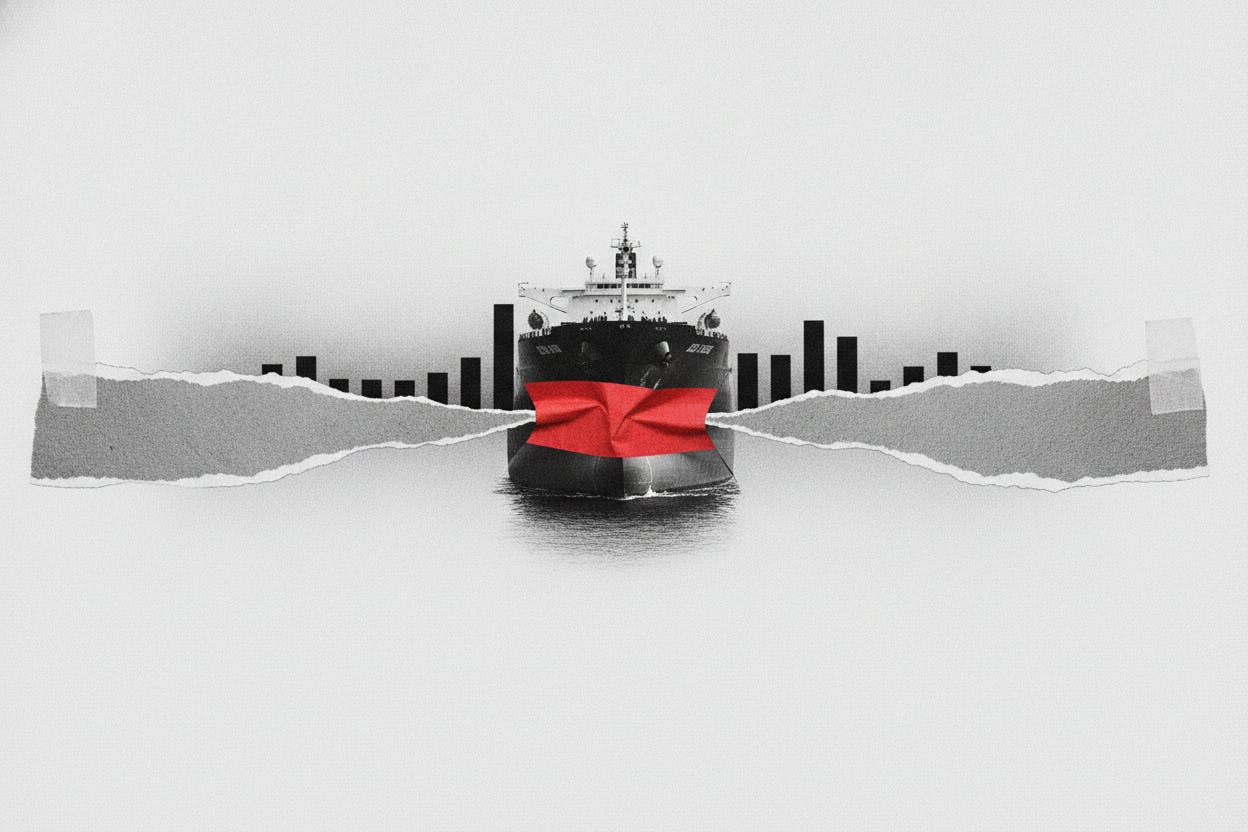
Shipping data showing fewer vessels transiting the strait is a concrete sign that the risk is not just theoretical. Even if no tanker has been attacked or blocked, a reduction in traffic suggests that some shippers are already adjusting their behavior. That can tighten supply in the near term and reinforce the market's nervousness.
This week's price action fits a pattern seen in recent months, where oil has swung on headlines about US-Iran tensions. Earlier this year, prices spiked when the US claimed control of the strait, and they eased when President Trump downplayed the risk. The current move suggests that traders are again weighing the possibility of a real supply shock.
What it means for investors
For everyday investors, higher oil prices can ripple through the economy in several ways. Most directly, they tend to push up prices at the pump and the cost of heating and shipping goods. That can feed into inflation, which in turn influences central bank policy. The Federal Reserve and other central banks have been watching energy prices closely as they decide whether to cut or hold interest rates.
Higher oil prices can also affect stock markets. Energy companies often benefit from rising crude, but airlines, trucking firms, and manufacturers that rely heavily on fuel can see their costs climb. Broader indices may feel pressure if investors worry that expensive oil will slow economic growth.
For those with retirement accounts or other investments, it's worth remembering that oil price moves are often volatile and driven by headlines. A single week's gain does not necessarily signal a long-term trend. Analysts will be watching whether shipping traffic through Hormuz continues to decline, and whether diplomatic efforts can ease tensions.
Broader market context
The oil rally comes as other markets are also reacting to energy prices. European bond yields have eased as energy prices cooled from earlier highs, and the Federal Reserve's Beige Book has noted that tariff and energy risks linger. In Asia, stocks have stalled as Brent climbed toward $97 a barrel, showing how oil's rise can weigh on equities.
Meanwhile, diesel prices have climbed, which can hit consumers and businesses that rely on trucking and heating. And in currency markets, the Canadian dollar has been sensitive to oil price swings, with the Bank of Canada warning of fresh inflation risks even as it holds rates.
What to watch next
Investors will be watching several factors in the coming days. First, any news about US-Iran diplomacy or military actions could quickly move prices. Second, shipping data will show whether the reduction in Hormuz transits is a blip or a sustained trend. Third, weekly oil inventory reports from the US will indicate whether supply is actually tightening.
It's also worth noting that oil prices can be influenced by broader economic signals. If global growth slows, demand for oil could weaken, offsetting some of the supply concerns. Conversely, if the economy stays strong, demand could keep prices elevated.
For now, the market is pricing in a higher chance of disruption. Whether that premium holds will depend on events on the ground. As always, investors should focus on their long-term goals rather than reacting to weekly swings in any single commodity.