Oil prices nudged higher early Thursday, but energy stocks slipped in premarket trading even as Enbridge and KKR announced a C$2.7 billion joint venture to expand a major Canadian natural gas pipeline system.
Front-month West Texas Intermediate (WTI) crude rose 0.5% to $82.63 a barrel, while US natural gas futures gained 1.2% to $2.88 per million British thermal units. That helped near-term commodity trackers like the United States Oil Fund (USO) and United States Natural Gas Fund (UNG) rise about 0.8% in premarket action.
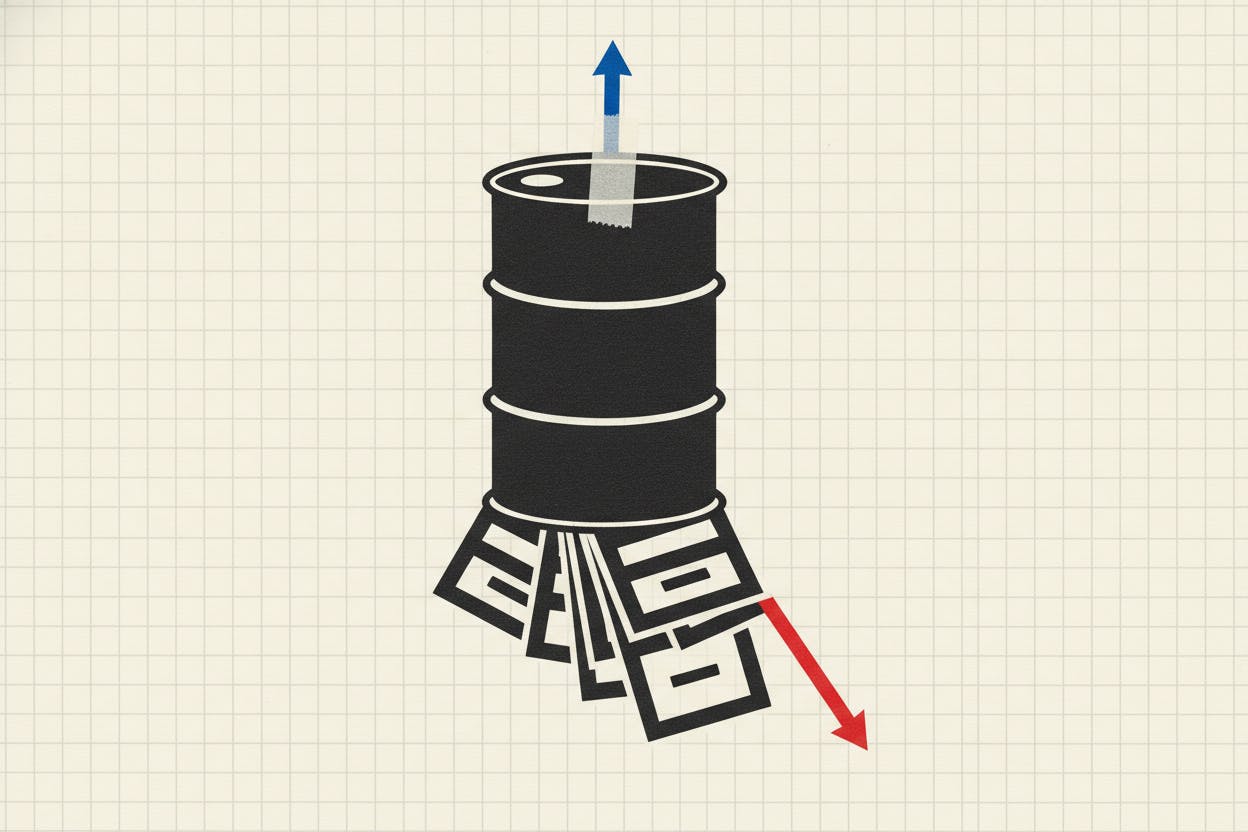
The mixed move highlights a common disconnect: commodity prices and the stocks of companies that produce or transport those commodities don't always move in lockstep. Energy equities often trade on expectations for future earnings, project costs, and broader market sentiment, not just the day's spot price.
What's behind the Enbridge-KKR deal?
Enbridge, one of North America's largest pipeline operators, and private equity firm KKR said they would form a joint venture to expand the Westcoast natural gas pipeline system in British Columbia. The C$2.7 billion investment is aimed at boosting capacity to move natural gas from the region's prolific Montney formation to export markets.
The deal is part of a broader trend of infrastructure investors partnering with energy companies to fund large-scale projects without taking on all the financial risk themselves. By bringing in KKR, Enbridge can share the capital burden while retaining operational control. For KKR, it's a chance to earn steady, long-term returns from regulated or contracted pipeline assets.
This isn't the first time Enbridge has turned to outside investors for its Westcoast system. The company has previously brought in other financial partners, including Apollo, for similar expansions, as reported earlier. The strategy helps Enbridge fund growth while keeping its balance sheet manageable.
Why did energy stocks slip?
Even with oil and gas prices rising, energy shares in the S&P 500 and other major indices were lower in premarket trading. That could reflect profit-taking after a recent run-up, or investor caution about the broader market. On Wednesday, tech stocks got a boost from Nvidia's strong earnings, which may have drawn money away from energy and other sectors. As Nvidia's results lifted chip stocks, the rotation out of energy names could have continued into Thursday.
Additionally, energy companies face their own headwinds. Pipeline operators like Enbridge are sensitive to interest rates, as they carry significant debt to fund infrastructure projects. With central banks still navigating inflation, borrowing costs remain a concern. The Bank of Korea's recent rate hike is a reminder that monetary policy tightening is still happening in some parts of the world, which can weigh on capital-intensive industries.
What it means for investors
For everyday investors, the takeaway is that commodity prices and energy stocks are related but not identical. Oil at $82.63 a barrel is a positive sign for producers, but the stocks you own may not move in perfect sync. Factors like project costs, regulatory approvals, and the overall appetite for risk in the market all play a role.
The Enbridge-KKR deal is a reminder that infrastructure spending in energy is still happening, even as the world transitions to cleaner sources. Natural gas is often seen as a bridge fuel, and expanding pipeline capacity suggests companies are betting on continued demand for years to come.
If you hold energy stocks or funds, watch for how the market reacts to the deal in the coming days. A successful joint venture could boost confidence in Enbridge's growth plans, but it also adds complexity. For those not directly invested, the news is a useful signal about the health of the energy sector and the appetite for large-scale infrastructure investment.
As always, it's wise to keep a diversified portfolio and not overreact to a single day's price moves. The energy sector can be volatile, and today's slip could easily reverse tomorrow.