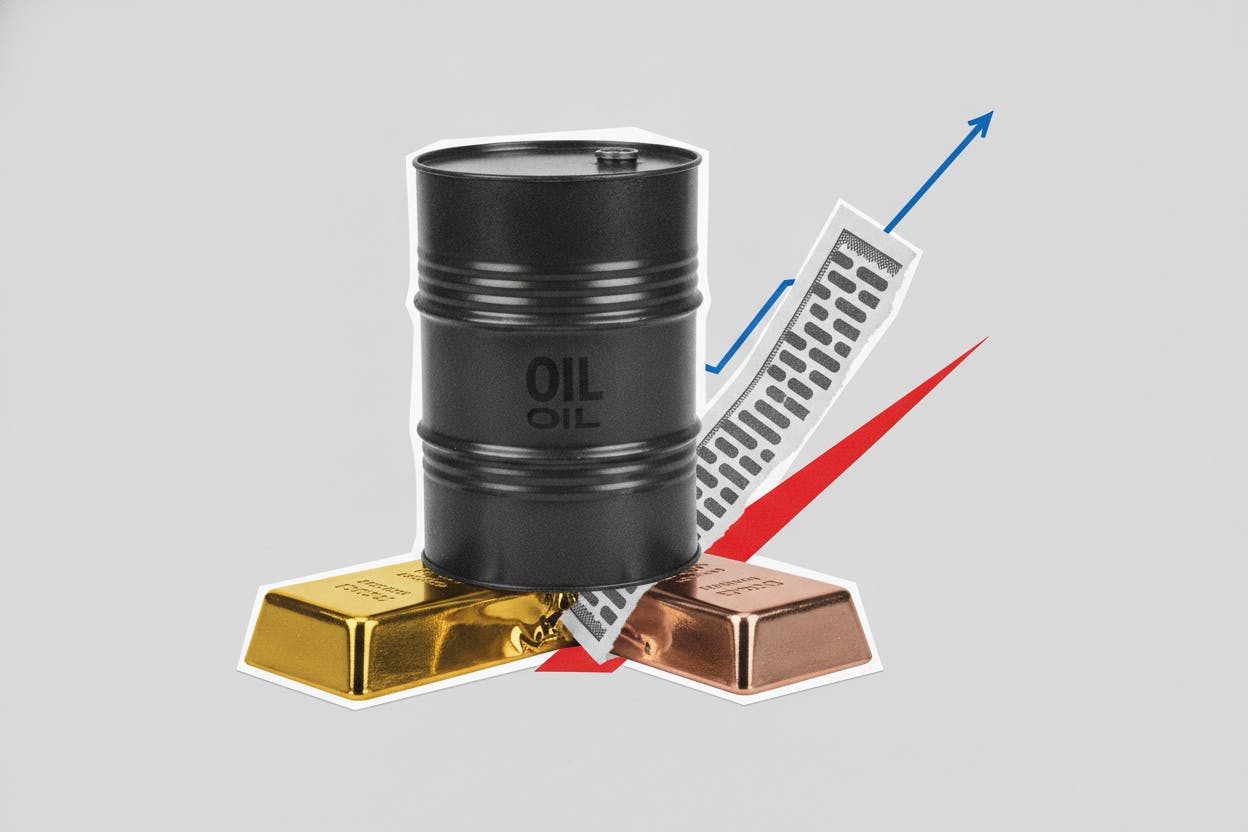
Oil prices are climbing again as tensions between the US and Iran flare up, and the ripple effects are showing up across markets. Higher crude is pushing Treasury yields up, which is weighing on gold, while copper is slipping as traders reassess demand and risk.
The moves come as investors keep one eye on the Federal Reserve, waiting for the minutes from its July policy meeting for hints on whether officials still lean toward keeping interest rates higher for longer.
Why oil matters for everything else
When oil jumps on geopolitical stress, markets start thinking about inflation. Pricier energy can seep into transportation and production costs, and that can keep overall price growth sticky. That's a key concern because the Fed has been trying to bring inflation down to its 2% target, and any sign that price pressures are lingering could delay rate cuts.
Higher oil prices also tend to push up Treasury yields. That's because investors may demand higher returns to compensate for the inflation risk, and also because the Fed might need to keep rates elevated to fight that inflation. As yields rise, the opportunity cost of holding assets that don't pay interest, like gold, increases. That's why gold often falls when yields climb.
Copper, meanwhile, is slipping as traders weigh the impact of higher energy costs on global demand. Copper is used in construction, electronics, and electric vehicles, so its price is seen as a barometer for economic health. If energy costs slow down manufacturing or consumer spending, demand for copper could weaken.
What the Fed minutes could reveal
The Federal Reserve's July meeting minutes, due for release, are the next big catalyst for markets. Investors are looking for any clues about the central bank's thinking on interest rates. The Fed has held rates at a range of 5.25% to 5.50% since July 2023, and officials have signaled they want to see more evidence that inflation is cooling before cutting.
Recent data has been mixed. Some reports show inflation easing, but others, like the soft retail sales that hit stocks, suggest the economy might be slowing. That puts the Fed in a tricky spot: cut rates too soon and risk reigniting inflation, or wait too long and risk a recession.
The minutes could offer insight into how divided officials are on the path forward. Some policymakers have hinted at a possible rate cut in September, but others have urged patience. The minutes won't give a definitive answer, but they'll show the range of opinions.
What it means for investors
For everyday investors, the key takeaway is that geopolitical events can have broad market effects. A spike in oil prices doesn't just affect gas prices; it can ripple through bonds, commodities, and stocks. If you hold gold or copper ETFs, you might see some volatility in the near term.
Gold has been a popular hedge against inflation and uncertainty, but it's sensitive to interest rates. If the Fed signals that rates will stay higher for longer, gold could face headwinds. On the other hand, if the minutes suggest a pivot to cuts, gold could rebound.
Copper is more tied to global growth. If higher oil prices dampen economic activity, copper demand could soften. But if tensions ease and oil retreats, copper might recover.
For those with diversified portfolios, these moves are a reminder that no asset moves in isolation. Keeping a mix of stocks, bonds, and commodities can help cushion against sudden shifts.
Looking ahead
Traders will be watching the Fed minutes closely, but they'll also keep an eye on oil prices and any developments in the US-Iran situation. A further escalation could push oil higher, which would likely keep yields elevated and pressure gold and copper.
On the other hand, if tensions de-escalate, oil could give back some gains, easing the pressure on those metals. The European stocks slip seen recently shows how sentiment can sour quickly on geopolitical news.
For now, the market is in a wait-and-see mode. The Fed minutes will provide some clarity, but the bigger picture remains uncertain. As always, it's wise to stay informed and avoid making hasty decisions based on short-term moves.