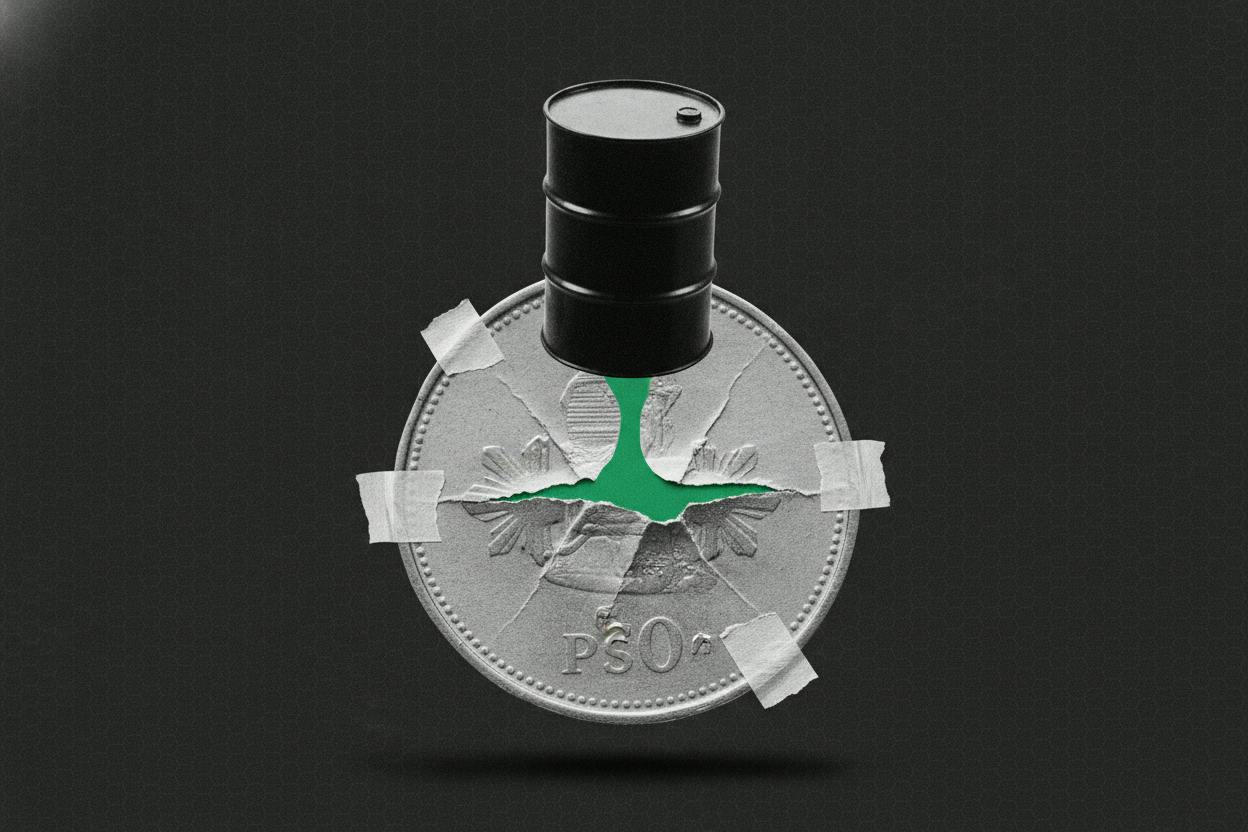
Oil prices climbed more than 3% on Tuesday, and the ripple effect was felt across emerging Asian currency markets. The Philippine peso slid to a record low of 62.831 per US dollar, while other regional currencies also weakened as traders positioned ahead of Wednesday's Federal Reserve decision.
Why oil is hitting Asian currencies
For countries that import most of their energy, a jump in crude prices is a double-edged sword. It raises the cost of imports, which can widen trade deficits and put downward pressure on the local currency. At the same time, higher oil prices can stoke inflation, complicating central banks' efforts to manage price stability.
The Philippines is particularly exposed because it relies heavily on imported fuel. When the peso weakens, the cost of those imports rises further, creating a feedback loop that can squeeze consumers and businesses alike.
The broader move also reflects a familiar pattern: when oil spikes, investors often pull money out of emerging markets and into assets perceived as safer, such as the US dollar. That dynamic has been especially pronounced this year, as the Federal Reserve's aggressive rate hikes have made dollar-denominated assets more attractive.
All eyes on the Fed
Traders are now waiting for the Federal Reserve's policy announcement on Wednesday. The central bank is widely expected to raise interest rates again, but the key question is what signals it sends about future moves. A more hawkish tone could strengthen the dollar further, adding more pressure on emerging market currencies.
For everyday investors, the Fed's decision matters beyond just currency markets. A stronger dollar can affect everything from the price of imported goods to the returns on international investments. It can also influence the performance of US stocks, as a strong dollar tends to weigh on multinational companies' overseas earnings.
In emerging Asia, the immediate concern is whether central banks will need to step in to defend their currencies. Some have already intervened in the past, selling dollar reserves to support their own money. But such moves can be costly and are not always effective in the face of global forces like rising oil prices and a firming dollar.
What it means for investors
For investors with exposure to emerging Asian markets, the current environment calls for caution. Currency weakness can erode returns for foreign investors, even if local stock prices hold up. It also raises the risk of imported inflation, which could prompt local central banks to raise interest rates, potentially slowing economic growth.
On the other hand, a weaker currency can benefit exporters, as their goods become cheaper for foreign buyers. Countries like South Korea and Taiwan, which are major exporters of electronics and semiconductors, may see some benefit from a softer currency, though they also face the same oil price headwinds.
For those invested in US assets, the Fed's decision is the more immediate catalyst. A rate hike is largely priced in, but any surprises in the accompanying statement or economic projections could move markets.
Oil prices themselves remain a wildcard. If crude continues to climb, it could keep pressure on emerging market currencies and complicate the global inflation outlook. Conversely, a pullback in oil would provide some relief.
As always, diversification remains a key principle. Currency movements are notoriously difficult to predict, and the interplay between oil, the dollar, and emerging markets adds another layer of complexity. For most investors, a well-balanced portfolio that spans different asset classes and regions is the most resilient approach.
In the near term, the focus will be on the Fed's language and any hints about the path of future rate hikes. That, along with oil price trends, will likely determine whether emerging Asian currencies can stabilize or face further pressure.