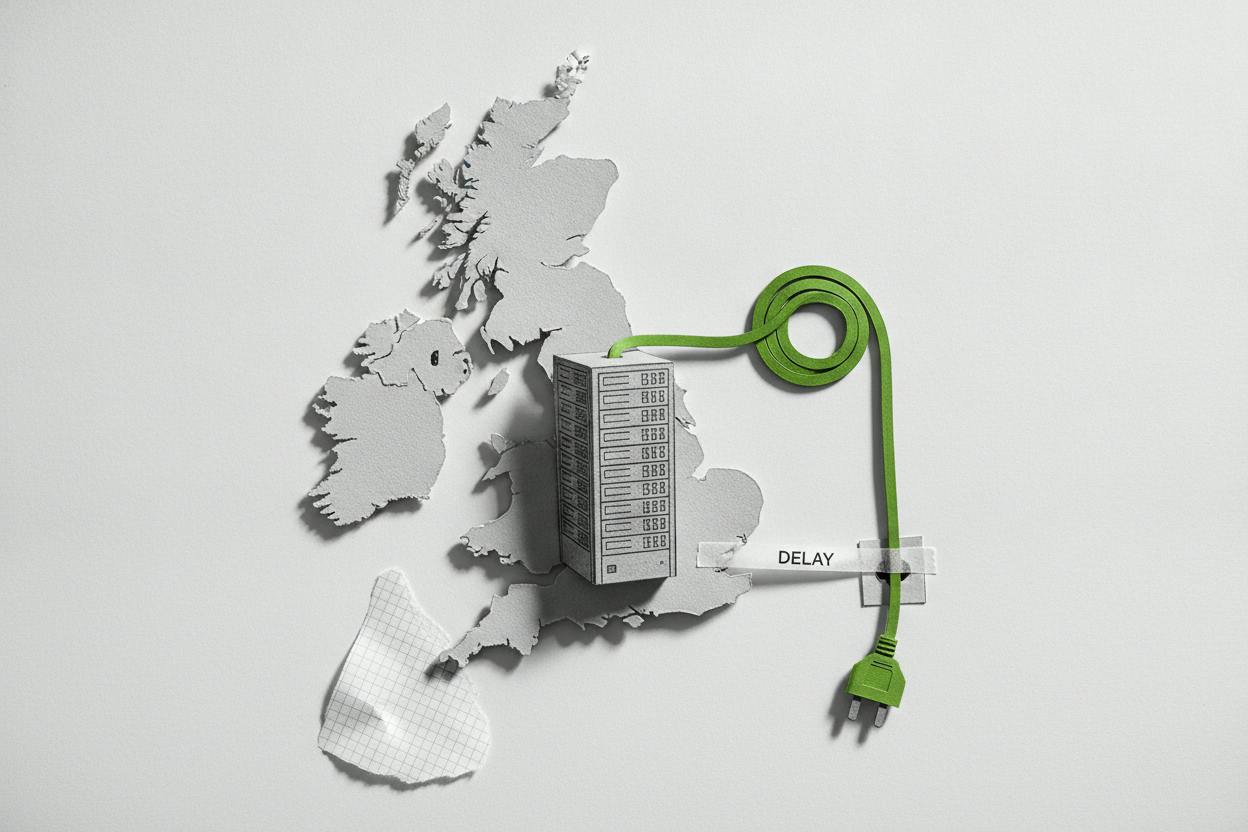
OpenAI has received a hefty financial sweetener in the run-up to SB Energy's initial public offering (IPO). According to draft filings reviewed by the Wall Street Journal, SB Energy granted OpenAI warrants valued at $5.5 billion as part of a deal to secure the AI company as a tenant for its data centers.
Warrants are financial instruments that give the holder the right to buy shares at a fixed price in the future. They work like options, but are often issued directly by a company. In this case, SB Energy used them as an incentive—essentially an equity-based coupon—to persuade OpenAI to commit to using its data-center capacity.
What the filings show
The draft IPO documents indicate that SB Energy initially granted OpenAI warrants valued at $3.6 billion in January. By the end of June, that valuation had been marked up to $5.5 billion. The increase reflects the rising value of the warrants as SB Energy's business prospects improved, likely tied to the anticipated demand for AI infrastructure.
This is not a cash payment. Instead, it's a promise of future equity value. If SB Energy's stock performs well after the IPO, those warrants could become very valuable for OpenAI. For SB Energy, the cost is dilution—existing shareholders will own a slightly smaller piece of the company—but the benefit is securing a marquee tenant.
Why data-center operators are courting AI giants
The market for large-scale AI computing is intensely competitive. Companies like OpenAI, Microsoft, and Google need vast amounts of computing power to train and run their models. Data-center operators, in turn, need long-term, high-usage customers to justify the enormous capital expenditures required to build new facilities.
By locking in a tenant like OpenAI, SB Energy can more easily finance new construction and reassure lenders and investors that its facilities will be occupied and generating revenue. This is a common strategy in the industry, but the scale of the warrant grant is notable.
Other data-center operators are also making aggressive moves to secure AI clients. For instance, NEXTDC recently reported strong contracted earnings, a sign that demand for AI-ready data centers remains robust. Similarly, SoftBank is reportedly seeking a $10 billion loan backed by OpenAI, highlighting the financial firepower behind AI infrastructure deals.
What it means for investors
For everyday investors, this news offers a window into how the AI boom is reshaping corporate finance. Warrants are a form of compensation that can dilute existing shareholders, but they can also be a smart way to attract key customers without spending cash upfront.
If you're considering investing in SB Energy's IPO, it's worth understanding the potential dilution. The warrants give OpenAI the right to buy shares at a set price, which could mean more shares outstanding in the future. That can reduce earnings per share, but it also signals that SB Energy has a strong, committed customer.
For those watching the broader AI infrastructure space, this deal underscores the lengths companies will go to secure AI workloads. It also highlights the growing importance of data centers as a critical asset class, similar to how energy and materials companies are building out supply chains for critical technologies.
The bigger picture
The AI boom has created a land grab for computing capacity. Data-center operators are not just building facilities; they are also using financial engineering to win contracts. Warrants, equity stakes, and other incentives are becoming standard tools in these negotiations.
For investors, this means that the value of a data-center company is increasingly tied to its ability to secure and retain large AI clients. The terms of these deals—including warrants—can have a significant impact on a company's financial health and stock performance.
As SB Energy moves toward its IPO, investors will be watching how the market values its relationship with OpenAI. The $5.5 billion warrant figure is a clear signal that OpenAI is a prized tenant, but it also raises questions about how much of the company's future value is being given away to secure that relationship.
In the end, this story is a reminder that in the fast-moving world of AI, the biggest winners may not just be the companies building the models, but also those providing the infrastructure—and the financial creativity to make it happen.