OpenAI is moving to secure a major new infusion of cash. According to CNBC, citing people familiar with the talks, the artificial intelligence lab is lining up a bridge funding round of up to $30 billion that could value the company at $1.25 trillion. The round is expected to include UAE-backed investors and the hedge fund Coatue, and OpenAI has reportedly told investors it wants commitments signed by the end of next week, though the final check size could still change.
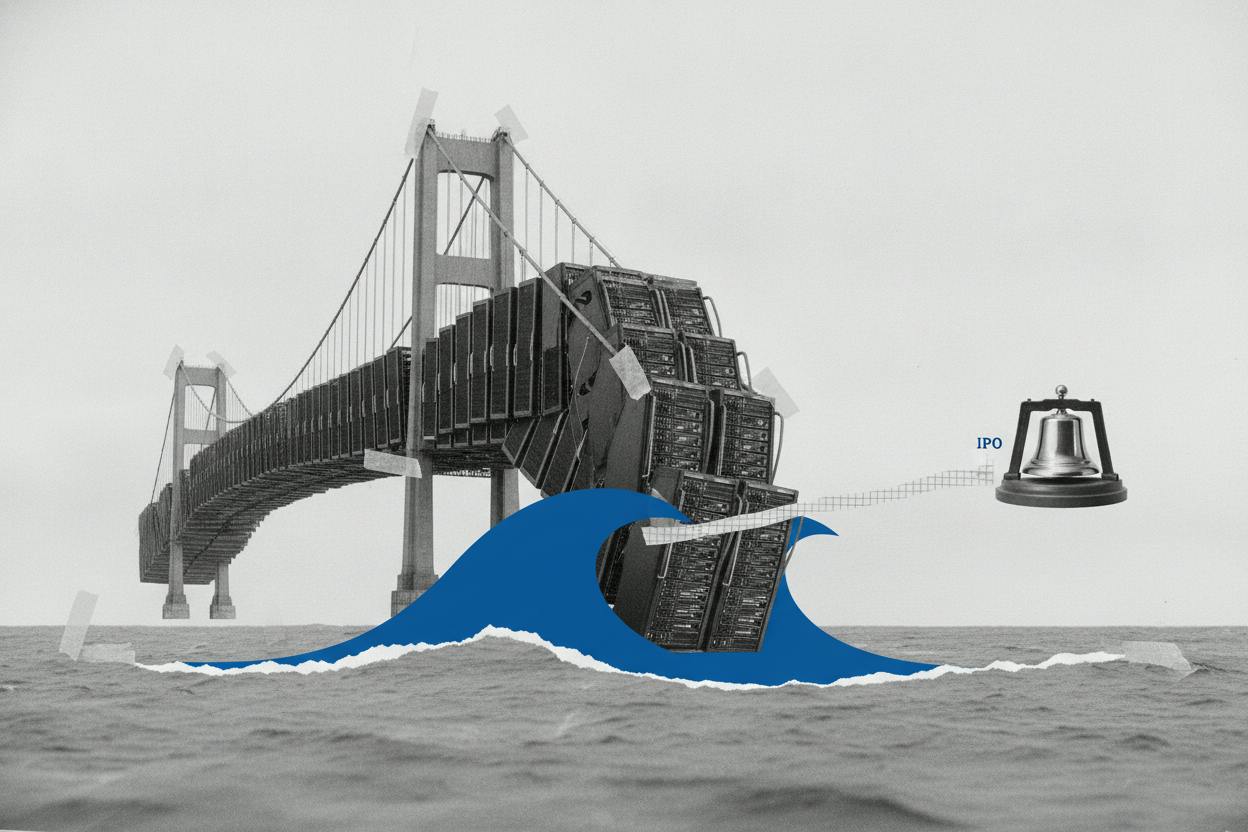
This is not a typical fundraising round. A bridge round is usually a short-term financing step designed to carry a company through to a bigger event—in this case, a possible initial public offering (IPO). For OpenAI, the money is meant to buy time and resources to scale up the hardware needed to train and run its increasingly powerful AI models. The urgency reflects a broader reality: access to computer chips and data centers has become a bottleneck in the AI race.
Why the rush for compute?
OpenAI's need for computing power is not just a technical detail; it's a financial one. The company has said it is aiming for roughly $600 billion of total computing spend by 2030. That staggering figure helps explain why fundraising and capacity agreements are moving in tandem. In addition to the bridge round, OpenAI is negotiating a commercial deal for extra computing capacity in the UAE, a region that has become a major hub for AI infrastructure investment.
For everyday investors, the scale of these numbers can be hard to grasp. Think of it this way: OpenAI's business model depends on having access to enormous amounts of computing power, which is expensive and not always readily available. By locking in capacity through long-term contracts, the company can plan its growth more predictably. But those contracts also come with fixed costs that will weigh on future profitability.
What does a $1.25 trillion valuation mean?
A valuation of $1.25 trillion would put OpenAI among the most valuable private companies in the world. For context, that is larger than the market value of most public companies, including many in the tech sector. The bridge round's valuation is significant because it sets a benchmark. When OpenAI eventually goes public, investors will look at this number as a reference point for what the company is worth.
However, the headline valuation is only part of the story. The bigger test for OpenAI is whether it can fund and secure enough computing power without turning its ambitious spending plans into a long-term cash drain. Long-term capacity contracts act like quasi-fixed costs: they make growth easier to plan, but they also put future margins under a microscope. That means IPO pricing and post-listing volatility are likely to hinge less on the bridge-round number and more on how durable OpenAI's economics look once compute bills and contractual commitments are spelled out.
This dynamic is not unique to OpenAI. Other companies that rely heavily on infrastructure—think cloud providers or semiconductor makers—face similar challenges. But OpenAI's situation is particularly high-stakes because of the sheer size of its ambitions and the speed at which the AI industry is evolving.
What should investors watch?
For now, the bridge round is a private transaction, so everyday investors cannot directly participate. But the news offers clues about the broader AI investment landscape. When a company like OpenAI raises at a massive valuation, it can influence how public markets price other AI-related stocks. It also signals that major investors, including those backed by the UAE, are willing to bet big on AI's future.
Investors should also keep an eye on how OpenAI's compute costs evolve. If the company can secure capacity at reasonable prices and turn that into profitable products, the path to a successful IPO becomes clearer. If not, the $600 billion spending target could become a red flag for future margins.
In the meantime, the bridge round is a reminder that the AI race is as much about capital and infrastructure as it is about algorithms. For those watching from the sidelines, the key is to understand that valuations like $1.25 trillion are based on expectations, not current earnings. The real test will come when OpenAI's financials are opened to public scrutiny.
As the company moves closer to a potential IPO, expect more headlines about funding rounds, compute deals, and capacity agreements. Each one will offer a piece of the puzzle for investors trying to gauge whether OpenAI's growth story can live up to its price tag.