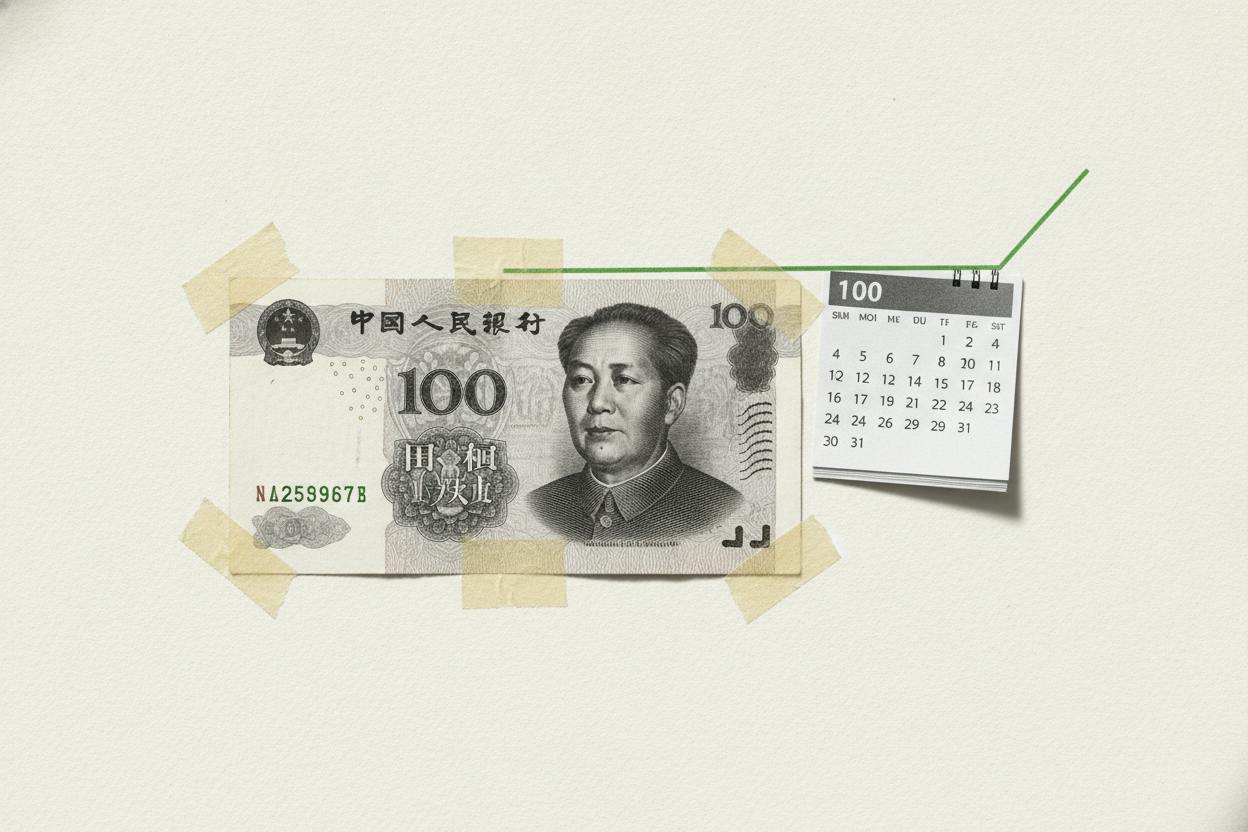
China's central bank announced Friday that it will begin conducting overnight reverse repurchase agreements (reverse repos) every working day starting next Monday. The shift is a deliberate step toward making the 1.25% overnight rate the People's Bank of China's (PBOC) primary policy anchor.
Reverse repos are a standard tool central banks use to inject cash into the banking system. In a reverse repo, the central bank buys securities from banks with an agreement to sell them back later, providing short-term liquidity. Until now, the PBOC has relied on a mix of maturities and related facilities, which sometimes made it harder to read the central bank's intentions.
What changes under the new framework
Under the new setup, the PBOC will run a fixed-rate, quantity-based overnight operation each business day. That means the central bank will offer a set amount of cash at a predetermined rate—1.25%—and banks can bid for it. The goal is to give the market a clear, daily reference point for the cost of very short-term funding.
PBOC Governor Pan Gongsheng recently said officials were studying the overnight rate as the main policy rate. This announcement formalizes that direction. The rest of the central bank's toolkit is being reorganized around this benchmark.
Seven-day reverse repos will shift to a fixed-quantity tender with multiple winning bid rates. They will be used mainly around predictable cash crunches, such as tax-payment periods and month-ends, when banks typically need extra liquidity. Facilities that were previously priced at a spread to the seven-day rate—including temporary repo and reverse repo operations and repo programs for overseas central bank-type institutions—will now reference the overnight rate instead, with those spreads unchanged.
Why this matters for markets
The change tightens the link between what the PBOC does every day and the rates banks and bond markets actually trade. A dependable overnight offer at 1.25% puts a clearer price tag on the marginal cost of very short-term funding. When that anchor is stable, banks and traders tend to pull other ultra-short rates and short-dated bond yields into line with it, because big gaps become arbitrage opportunities or balance-sheet choices.
By re-pricing other facilities off the same overnight base rate, the PBOC is aiming for a cleaner signal. Shifts in policy should show up faster in the front end of China's yield curve, while day-to-day volatility is more likely to cluster in the specific windows policymakers flagged, such as tax dates and month-ends.
For investors, this means the PBOC's policy stance will be easier to track. Instead of parsing a complex mix of operations, market participants can focus on the daily overnight rate. A stable 1.25% anchor suggests the central bank is comfortable with current liquidity conditions. A move in that rate would signal a policy shift more clearly than before.
What to watch next
Investors will be watching how closely the overnight rate stays at 1.25% in the coming weeks. If it holds steady, that suggests the PBOC is successfully managing liquidity. If it drifts, it could indicate stress in the banking system or a change in policy stance.
The move also comes amid broader concerns about China's economy. The CSI 300 index recently hit a one-year low as an AI selloff deepened, and there are ongoing questions about growth and corporate earnings. A more predictable monetary policy could help stabilize market expectations, though it is not a cure-all.
For everyday investors, the key takeaway is that China's central bank is trying to make its policy more transparent and effective. A clearer policy signal can reduce uncertainty in financial markets, which is generally positive for investors. However, the actual impact will depend on how the PBOC uses its new tool and whether it can keep short-term rates anchored as intended.
As with any central bank move, the effects will ripple through bond yields, bank funding costs, and eventually lending rates. Investors with exposure to Chinese assets or companies that borrow heavily in China should pay attention to how the overnight rate behaves in the coming weeks.