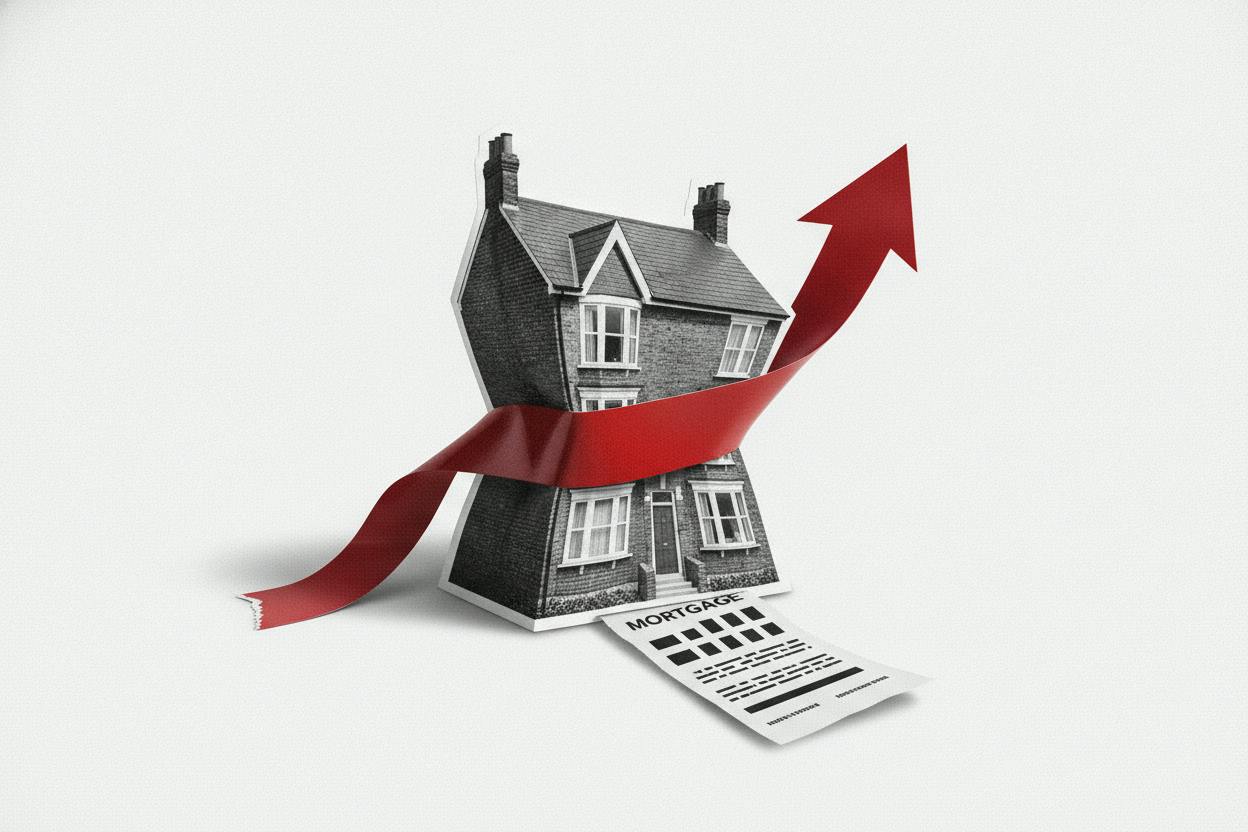
The UK housing market is losing steam. Nationwide, one of the country's biggest mortgage lenders, reported that house prices were just 0.5% higher in October compared with a year earlier. That's a slowdown from September's 0.8% annual growth, and prices were flat month-on-month.
The cooling comes as mortgage rates have been creeping up. Even though the Bank of England (BoE) hasn't raised its key interest rate yet, financial markets are increasingly pricing in a hike at the central bank's next meeting. That shift has already pushed up the cost of typical two- and five-year fixed-rate mortgages, according to Reuters.
Why mortgage rates are rising before the BoE acts
Most fixed-rate mortgages in the UK aren't directly tied to the BoE's official rate. Instead, lenders set them based on wholesale funding costs, particularly swap rates, which reflect where markets expect interest rates to go in the future. When investors start betting that the BoE will raise its rate from 3.75% to 4%, swap rates can jump quickly, and lenders often reprice their fixed deals within days.
That means the pain can show up in mortgage offers before the central bank actually moves. Nationwide's chief economist, Robert Gardner, pointed to rising tensions in the Middle East as a key factor. Higher energy prices from the conflict can feed into inflation, making it more likely that interest rates stay elevated for longer. Even if the BoE doesn't hike immediately, the expectation alone can keep borrowing costs high.
This is already showing up in the data. Bank of England figures show mortgage approvals for house purchases fell in September to their lowest level since December 2023. Fewer approvals typically mean fewer buyers, which tends to put a lid on price growth.
What this means for buyers and homeowners
For anyone with a fixed-rate mortgage coming up for renewal, the timing could be tough. Many households locked in much cheaper deals a few years ago. When those fixes expire, they'll likely face significantly higher monthly payments if they remortgage at today's rates.
Prospective buyers are also feeling the squeeze. Higher mortgage costs reduce how much people can borrow, which can push some out of the market entirely or force them to lower their price range. That's a key reason why demand is cooling and price growth is slowing.
Seasonal factors could add to the slowdown. The housing market typically quiets down in the winter months, with fewer listings and fewer transactions. If borrowing costs stay high, that seasonal lull could be more pronounced, keeping annual price growth under pressure well into the new year.
What investors should watch next
The big question is what the BoE does at its next meeting. If it hikes, that would be a clear signal that inflation remains a concern. If it holds, markets might adjust their expectations, which could ease mortgage rates slightly. Either way, the direction of interest rates will be the main driver of UK housing market activity in the coming months.
For investors, the housing market is a useful barometer of consumer confidence and spending power. When housing slows, it can ripple into retail, construction, and other sectors. But it's not all bad news: slower price growth can make homes more affordable over time, especially for first-time buyers who have been priced out during the boom years.
Nationwide's data is just one measure, but it's closely watched because it's based on its own mortgage lending, giving a real-time snapshot of what's happening on the ground. Other indices, like those from Halifax or the Office for National Statistics, may tell a slightly different story, but the trend is clear: the UK housing market is cooling.
As always, it's worth remembering that house prices are local. While the national picture shows a slowdown, some regions and cities may still see growth, while others could see falls. For anyone thinking about buying or selling, it's the local market that matters most.
For a broader view of how interest rates are affecting different markets, you can check out our coverage of Colombia's central bank facing a tight call on rates and the Bank of Japan's recent rate decision. And for how energy prices are influencing inflation expectations, see how oil price moves are affecting commodities.