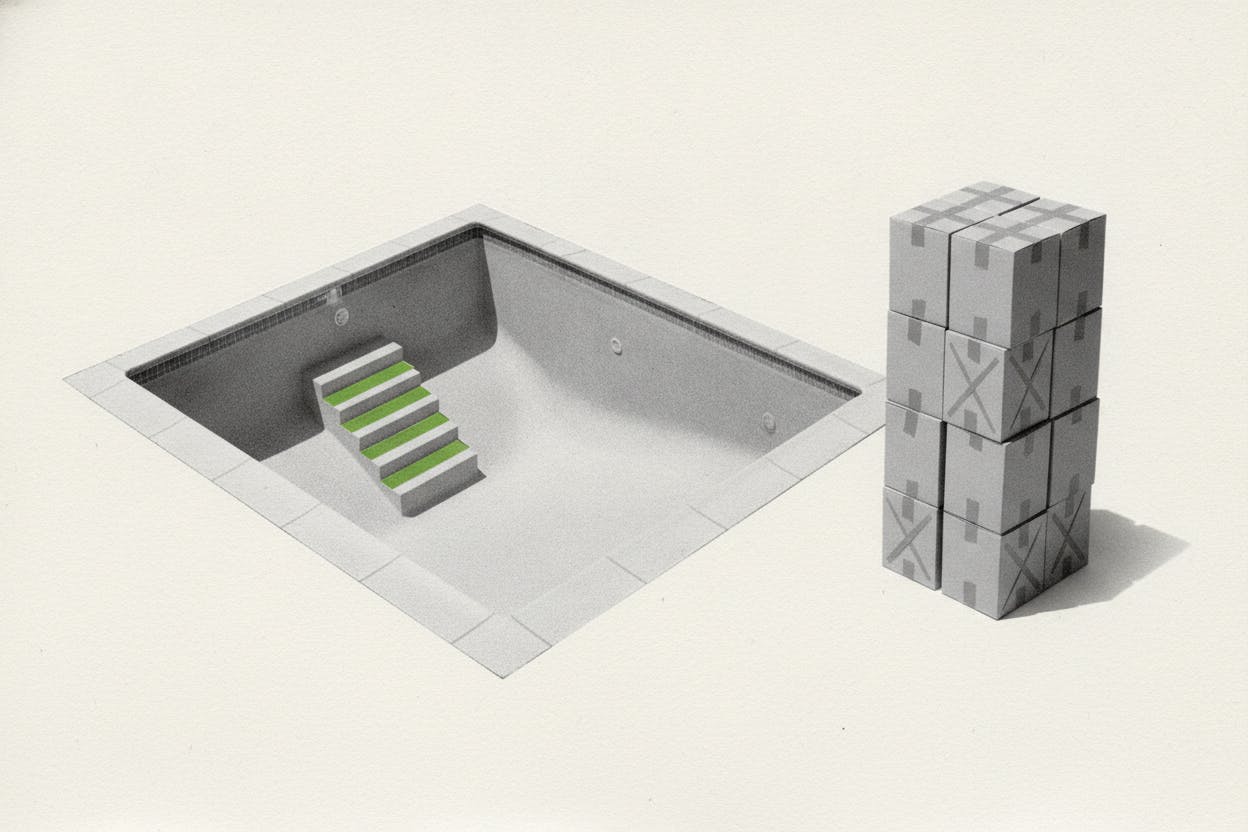
Pentair, the water treatment and pool equipment company, has trimmed its second-quarter expectations and lowered its full-year outlook, citing a larger-than-anticipated impact from what the industry calls “channel destocking” and weaker demand for its pool products. The news, flagged by investment bank Oppenheimer, sent shares lower and raised questions about the near-term health of the pool market.
What Is Channel Destocking?
Channel destocking occurs when distributors and retailers sell from their existing inventory rather than placing new orders with manufacturers. For a company like Pentair, this means that even if end consumers are still buying pools and equipment, the company’s reported sales can look weaker for a period because the middle of the supply chain is working through stockpiles built up earlier.
Oppenheimer estimates that this destocking could knock roughly $170 million off Pentair’s second-quarter Pool segment sales. That would push Pentair’s adjusted earnings per share (EPS) down to about $1.12 for the quarter, below what analysts had been expecting.
Pentair’s pool business is a major part of its overall revenue, so any slowdown there has an outsized effect on the company’s financial results. The company now expects full-year adjusted EPS to come in lower than its previous guidance, though it has not yet released specific updated numbers.
Why This Matters for Investors
For everyday investors, this is a reminder that a company’s sales can be distorted by what’s happening in the supply chain, not just by what consumers are doing. If you own Pentair shares or are considering them, the key question is whether this destocking is temporary or signals a deeper drop in demand for pools and related equipment.
Pentair’s pool business benefited from a pandemic-era boom as people spent more on home improvements, including pools. That surge led to higher inventory levels across the supply chain. Now, as demand normalizes, distributors are working through that excess stock, which hurts Pentair’s near-term orders.
Oppenheimer’s analysis suggests the destocking is more severe than Pentair initially expected, which is why the company had to cut its outlook. Investors will be watching closely to see if the trend continues into the second half of the year or if orders rebound once inventories are cleared.
Broader Market Context
The pool industry is cyclical and sensitive to housing market trends, interest rates, and consumer confidence. Higher borrowing costs have made it more expensive to finance big-ticket items like pools, which could be weighing on demand. At the same time, home improvement spending has cooled from its pandemic highs.
Pentair is not alone in facing headwinds. Other companies tied to housing and discretionary spending have also reported softer demand. For example, Premier Foods recently held its profit outlook despite growth in some categories, while Johnson & Johnson lifted its outlook on strong drug sales, showing that consumer staples and healthcare are faring better than discretionary sectors.
Pentair’s situation also echoes what other industrial companies have experienced. GE Aerospace recently raised its profit outlook on strong engine service demand, highlighting how aerospace is benefiting from travel demand while pool equipment faces a different cycle.
What to Watch Next
Pentair will report its full second-quarter results in the coming weeks. Investors will want to see how deep the destocking goes and whether management provides any signs of a recovery. The company’s ability to manage costs and maintain margins during this period will also be important.
For those invested in the broader pool and home improvement space, Pentair’s outlook cut could be a warning sign. If destocking persists, it may affect other companies in the supply chain, from chemical suppliers to equipment makers.
Oppenheimer’s note also highlights that the impact on Pentair’s adjusted EPS is significant, but the bank has not changed its long-term view on the stock. That suggests the destocking is seen as a temporary issue, not a permanent shift in the business.
In the meantime, investors should keep an eye on housing data, interest rate moves, and consumer spending trends, as these will influence when the pool market rebounds. Pentair shares tumbled on the news, reflecting the market’s disappointment, but the long-term story may still hold if demand normalizes.