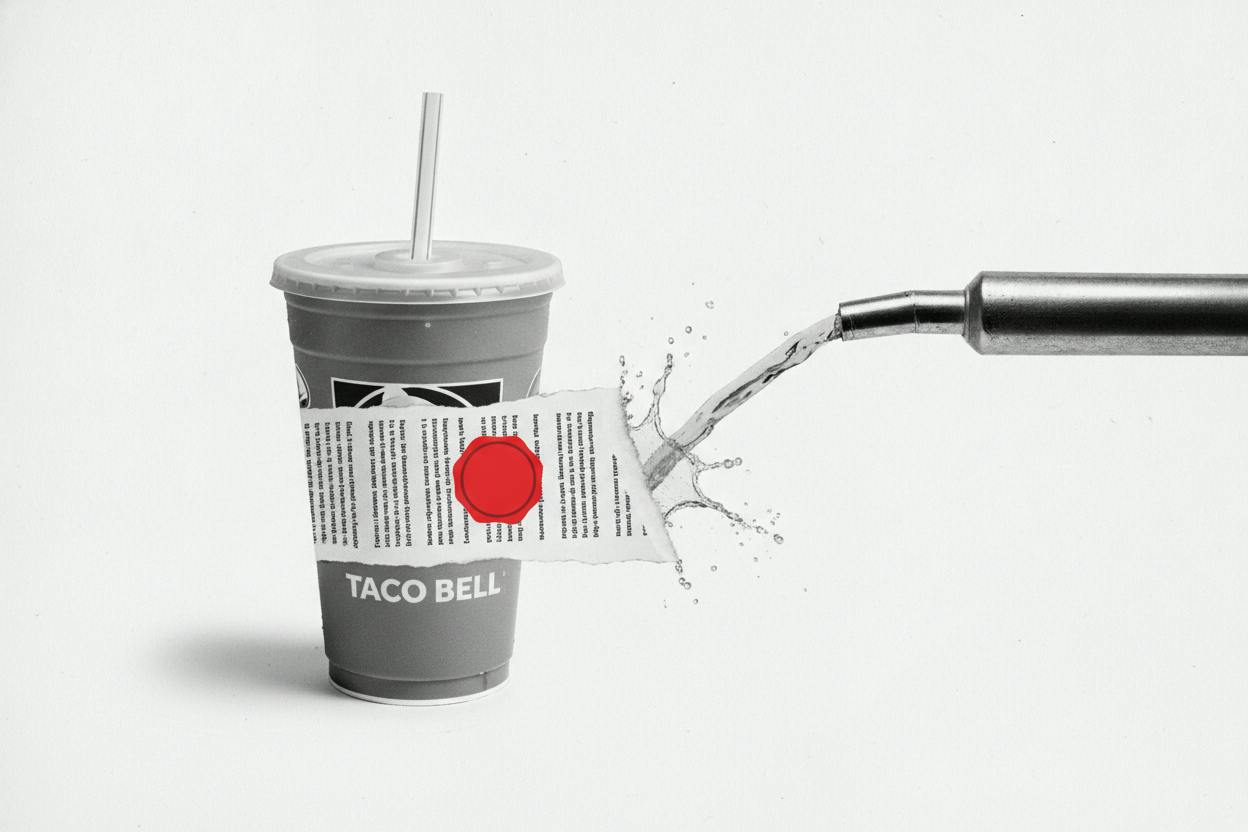
PepsiCo has locked in Taco Bell as its US soda partner through 2036, a move that solidifies a key revenue stream for the beverage and snack giant. The announcement comes just days after KFC US revealed it will switch to Coca-Cola products starting in January, underscoring the intense competition between the two beverage titans for fast-food fountain contracts.
What's going on here?
PepsiCo and Taco Bell have a long-standing relationship, and this renewal extends that partnership for more than a decade. For PepsiCo, it means Taco Bell's US restaurants will continue to serve Pepsi-branded sodas—like Pepsi, Mountain Dew, and Gatorade—at their fountains. The deal is a win for PepsiCo, as Taco Bell is one of the largest fast-food chains in the country, with thousands of locations.
The timing is notable. KFC US, which is also part of Yum! Brands—the parent company of Taco Bell, KFC, and Pizza Hut—announced that it will begin serving Coca-Cola products in January. That means Yum! Brands' two biggest US chains will soon be split between the two rival beverage companies: Taco Bell with PepsiCo and KFC with Coca-Cola.
Why fountain drink deals matter
Quick-service restaurants often sign long-term "pouring-rights" contracts that make one drink company the default supplier for fountain sodas. These agreements are valuable because they lock in steady, repeat orders through the away-from-home channel—restaurants, stadiums, and convenience stores—which helps the supplier plan production and spread bottling and delivery costs.
For beverage companies, these contracts are about more than just selling syrup. They provide predictable revenue and volume, which is especially important in a mature market where at-home soda consumption has been declining for years. The away-from-home channel is a bright spot, and losing or gaining a major chain can shift market share significantly.
PepsiCo's renewal with Taco Bell is a defensive move, protecting a key account. But the KFC loss to Coca-Cola is a reminder that no contract is forever. The fast-food landscape is competitive, and beverage companies are constantly vying for these lucrative partnerships.
What it means for investors
For investors, this news is a small but positive signal for PepsiCo. It reduces uncertainty about a major revenue stream and shows the company can retain important customers. However, it's not a game-changer on its own. PepsiCo's overall performance depends on a wide range of factors, from snack sales to international growth to input costs.
The KFC switch to Coca-Cola is a reminder that even long-standing relationships can change. Investors should watch how both companies manage their fast-food partnerships, as these deals can influence market share and brand visibility. For Coca-Cola, winning KFC is a notable victory, but it's just one chain. For PepsiCo, holding onto Taco Bell is crucial, but the company will need to keep innovating and competing to maintain its position.
In the broader context, the battle for fountain drink contracts is part of a larger rivalry between PepsiCo and Coca-Cola. Both companies are investing in marketing, new products, and pricing strategies to win over consumers and restaurant partners. For everyday investors, the key takeaway is that these deals are a normal part of the competitive landscape, and they can have modest impacts on revenue and earnings.
As the new year approaches, all eyes will be on KFC's transition to Coca-Cola. Will it go smoothly? Will customers notice? And will other chains follow suit? These are the questions that will shape the next chapter in the cola wars.
For now, PepsiCo can breathe a little easier knowing Taco Bell is locked in for the long haul. But in the fast-paced world of fast food, nothing stays still for long.



