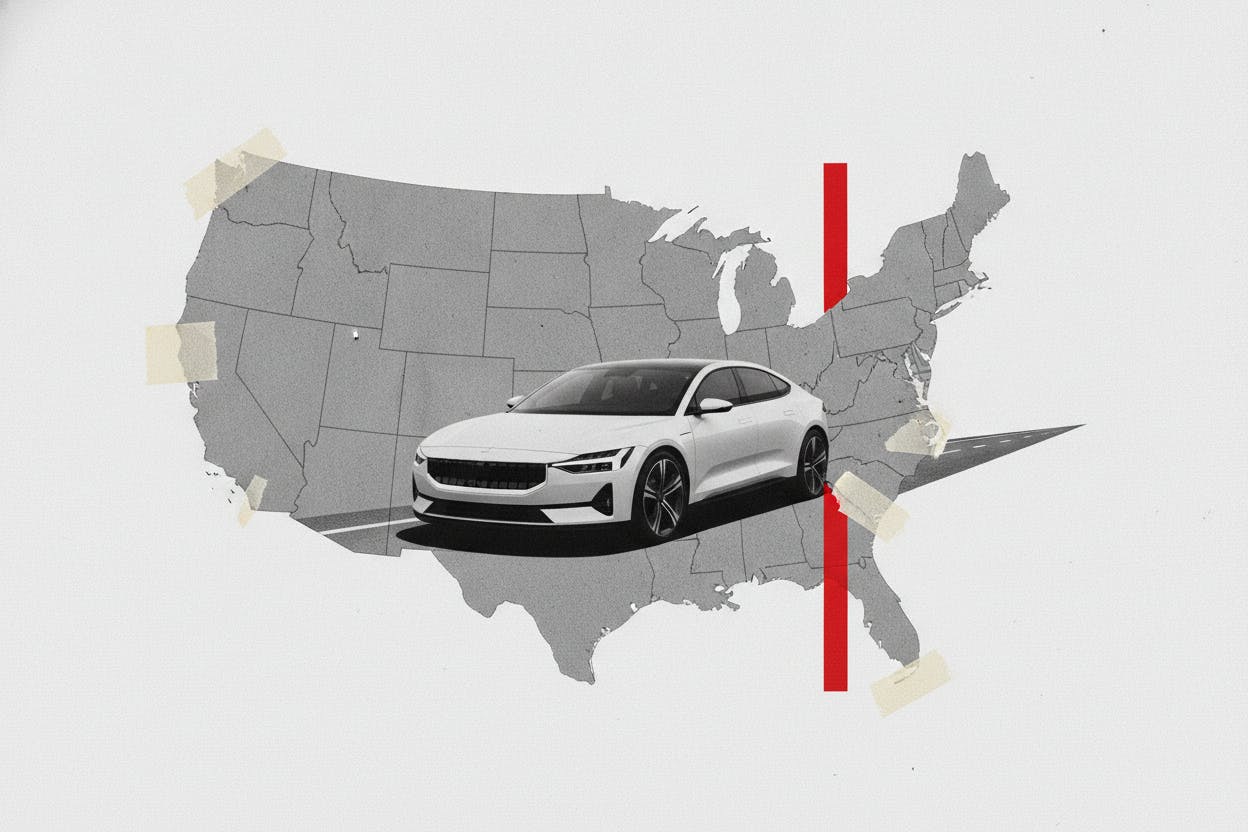
Polestar, the electric vehicle maker owned by China's Geely, reported a 4% decline in second-quarter deliveries on Tuesday, delivering 17,296 vehicles. The drop comes just weeks after the US Commerce Department announced that Polestar would be barred from selling cars in the United States starting with the 2027 model year.
Why the US Ban Matters
The Commerce Department's decision, part of broader restrictions on Chinese-connected technology in vehicles, effectively locks Polestar out of one of the world's largest EV markets. The ban targets vehicles with certain Chinese-made components or software, and Polestar—though headquartered in Sweden and publicly listed—is majority-owned by Geely, a Chinese automaker.
For context, the US is a key growth market for premium EVs. Polestar had been expanding its retail presence there, including showrooms and service centers. Losing access to US customers from 2027 could force the company to rely more heavily on Europe and China, where competition is intense from both legacy automakers and local EV startups.
What the Sales Numbers Tell Us
The 4% decline in second-quarter deliveries is relatively modest, but it comes at a time when many EV makers are still reporting strong year-over-year growth, albeit from a smaller base. Polestar's sales slip may reflect broader softening in EV demand, particularly in Europe, where subsidy cuts and economic uncertainty have weighed on consumer appetite.
Polestar has also faced production challenges and supply chain issues in recent quarters, which have limited its ability to ramp up deliveries of newer models like the Polestar 3 SUV and Polestar 4 coupe-SUV. The company had previously warned that 2024 would be a transition year as it shifts from a single-model lineup (the Polestar 2) to a broader portfolio.
What It Means for Investors
For everyday investors, the Polestar story highlights the risks of geopolitical tensions spilling over into specific companies and sectors. The US ban is a regulatory risk that was not on the radar a few years ago, and it underscores how quickly the landscape can change for companies with Chinese ties.
Investors should also note that Polestar's stock has been volatile since its SPAC merger in 2022. The company has yet to achieve consistent profitability, and the US ban could delay its path to breakeven. While Polestar may still find growth in other regions, the loss of the US market is a significant blow to its long-term volume ambitions.
For comparison, other Chinese-owned or Chinese-linked automakers have also faced scrutiny. The broader trend of de-risking supply chains and technology ties is something investors in any auto or EV stock should monitor closely.
What to Watch Next
Polestar will report full second-quarter financial results later this month. Key metrics to watch include revenue, gross margin, and cash burn. Investors will also look for updates on the company's plans to mitigate the US ban, such as potential partnerships or manufacturing shifts.
In the meantime, the EV market remains highly competitive, with players like Tesla, BYD, and legacy automakers all vying for market share. Polestar's brand positioning as a design-forward, performance-oriented EV maker could still resonate in Europe and Asia, but the road ahead looks bumpier than it did a year ago.
For a broader look at how other companies are navigating shifting consumer demand, check out our coverage of PepsiCo's recent results, which also showed signs of a cautious consumer. And for more on the tech sector's recent struggles, see our analysis of tech stocks.