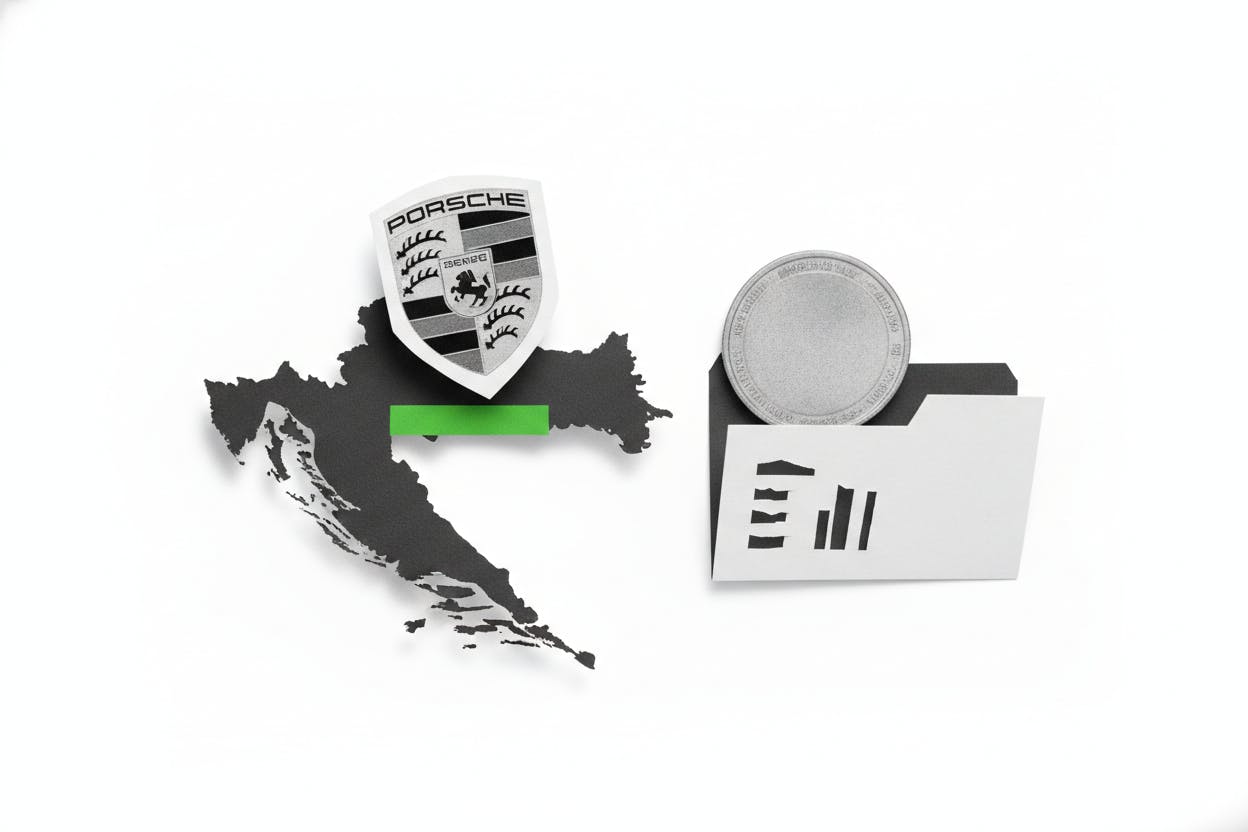
Porsche, the sports-car brand under Volkswagen, has sold its remaining stakes in Croatia's Rimac businesses—Bugatti Rimac and Rimac Group—for about €1 billion. The deal closes a partnership that Porsche helped build and marks a clear pivot toward cash and focus over minority stakes in an electric-vehicle technology ecosystem.
What the sale means for Porsche's finances
The proceeds are expected to lift Porsche's 2026 automotive net cash flow margin outlook to a range of 5.5% to 7.5%, up from previous guidance. The company also said the sale frees up €250 million for pension obligations, providing a buffer for its balance sheet.
Net cash flow margin is a key metric for automakers, showing how much cash a company generates from its operations relative to revenue. A higher margin suggests better efficiency and financial flexibility—important for funding future investments, paying dividends, or weathering downturns.
Why Porsche is stepping back from Rimac
Porsche had owned 45% of Bugatti Rimac and 20.6% of Rimac Group since the 2021 joint venture that combined Bugatti's heritage with Rimac's electric hypercar technology. Rimac, founded by Mate Rimac, became a symbol of high-performance EV engineering, but Porsche's decision to exit suggests a reassessment of priorities.
European luxury carmakers are facing softer demand in China, a key market, and a slower-than-expected shift to electric vehicles. That environment makes liquidity and flexibility more valuable than long-term tech optionality. By cashing out, Porsche is choosing certainty over potential future gains from its minority position.
What it means for investors
For Porsche's shareholders, the sale is a positive signal. The improved cash flow outlook and the pension funding boost strengthen the company's financial position without requiring new debt or equity issuance. It also simplifies Porsche's portfolio, allowing management to concentrate on its core sports-car business and its own EV transition.
However, the move also highlights the challenges facing the broader auto industry. The slower EV adoption and China's demand weakness are pressuring margins across the sector. Companies are increasingly opting for strategic divestments to shore up balance sheets, similar to how Analog Devices is buying Alif Semiconductor to bolster its chip capabilities—though in Porsche's case, it's selling rather than buying.
For everyday investors, this deal underscores the importance of watching how automakers manage their cash and partnerships. A company that can generate strong cash flow and reduce financial risk is often better positioned to navigate uncertain markets. Porsche's decision to exit Rimac may be a prudent move, but it also signals that even high-profile EV ventures are not immune to strategic rethink.
Looking ahead
Investors will likely watch how Porsche deploys the €1 billion in proceeds. The company has not specified plans beyond the pension contribution and margin improvement, but the added liquidity could support future product development or shareholder returns.
The sale also raises questions about Rimac's future without Porsche's backing. Rimac Group will continue to operate independently, but the loss of a major strategic partner could affect its access to capital and technology sharing. For now, Porsche's move is a clear statement: focus on the core, and let go of peripheral bets.
As the auto industry navigates a bumpy transition to electric vehicles, expect more such portfolio adjustments. Companies are prioritizing financial resilience over speculative investments, a trend that could shape the sector for years to come.