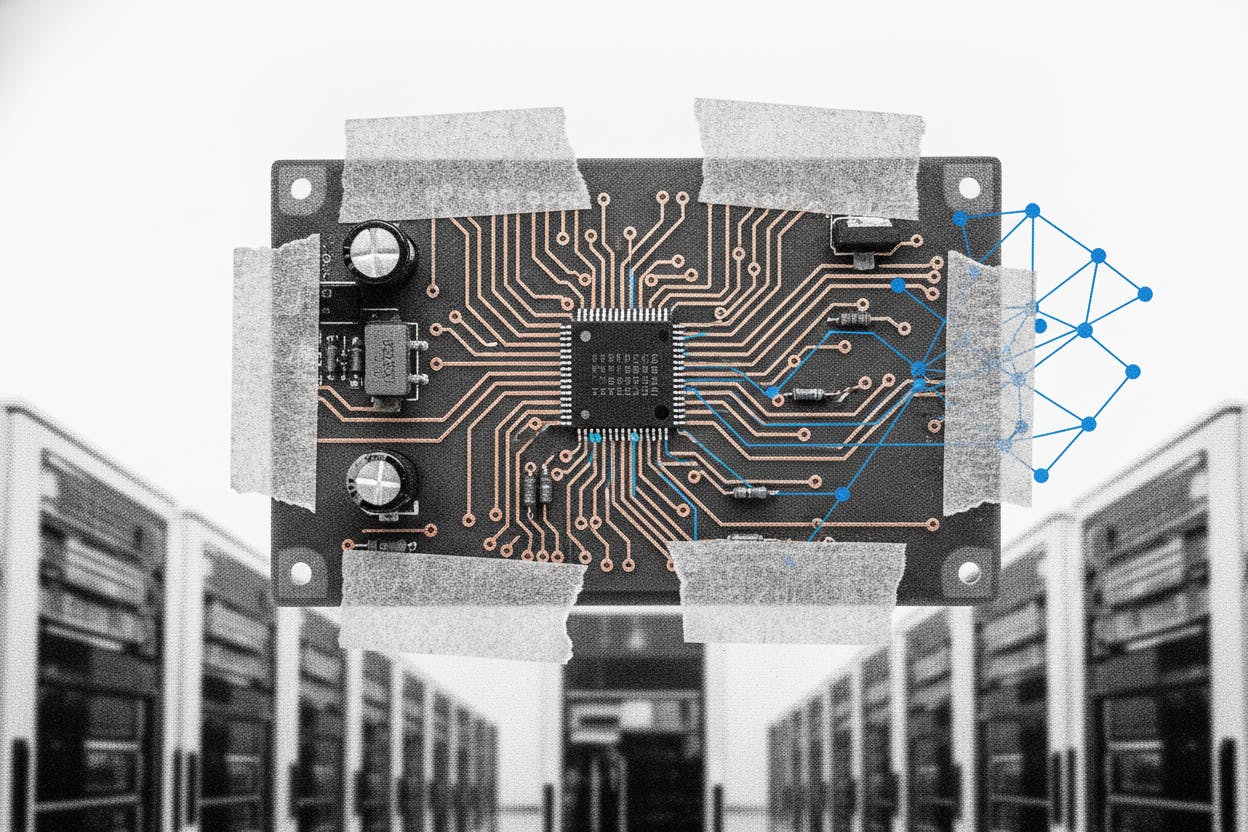
Analog Devices, one of the largest US chipmakers, has agreed to acquire Alif Semiconductor for $1.35 billion in an all-cash deal. The acquisition adds a line of “AI-native” microcontrollers and fusion processors to Analog Devices' portfolio, with an additional up to $200 million in contingent payments if certain performance targets are met.
The deal is a clear signal that the AI boom is moving beyond the cloud. While much of the attention has been on massive data centers running AI models, the technology also needs to work at the “edge” – inside the physical devices that collect data and act on it. Alif's chips are designed to handle AI tasks locally, without constantly sending data back to a central server.
Why edge AI matters
Edge AI refers to running artificial intelligence algorithms on devices themselves, rather than in remote cloud servers. This is important for applications where low latency is critical, such as factory robots, medical devices, or autonomous vehicles. It also reduces the amount of data that needs to be transmitted, which can save bandwidth and improve privacy.
Analog Devices is traditionally known for analog chips and sensors – components that convert real-world signals like temperature, sound, and motion into digital data. By adding Alif's AI-capable microcontrollers, the company can offer more complete solutions that not only sense the world but also process and act on that information locally.
CEO Vincent Roche highlighted that the deal could enable developers to build the equivalent of 100 gigawatts of computing capacity at the edge. That figure underscores the scale of the opportunity: as data centers expand, they also require more supporting electronics, including power management, signal conditioning, and sensors – all areas where Analog Devices already has a strong presence.
What this means for investors
For everyday investors, this acquisition is a reminder that the AI supply chain is broader than just the companies that design the most advanced processors. While Nvidia and others grab headlines with their data-center GPUs, a whole ecosystem of chipmakers supplies the components that make AI systems work in the real world.
Analog Devices is betting that edge AI will be a significant growth driver. By acquiring Alif, it gains technology that can be integrated into its existing product lines, potentially allowing it to sell higher-value chips to its industrial and automotive customers. The deal also fits a broader trend of consolidation in the semiconductor industry, as companies seek to expand their capabilities in AI-related areas.
The contingent payment structure – up to $200 million extra if Alif hits performance targets – is common in tech acquisitions. It aligns the seller's incentives with the buyer's expectations and reduces the upfront risk for Analog Devices.
Investors should watch how quickly Analog Devices can integrate Alif's products and whether it can win design wins in key markets like factory automation and data-center power management. The company will also face competition from other chipmakers, including those that already offer AI-enabled microcontrollers.
The broader semiconductor sector has been a focus of investor attention, with semiconductors increasingly powering global trade and geopolitical tensions affecting supply chains. Meanwhile, companies are raising capital to fund AI infrastructure, as seen in NEXTDC's recent convertible note offering for AI data centers.
For Analog Devices, the deal is a strategic move to position itself at the intersection of analog and digital, where AI meets the physical world. Whether it pays off will depend on execution and the pace of edge AI adoption.