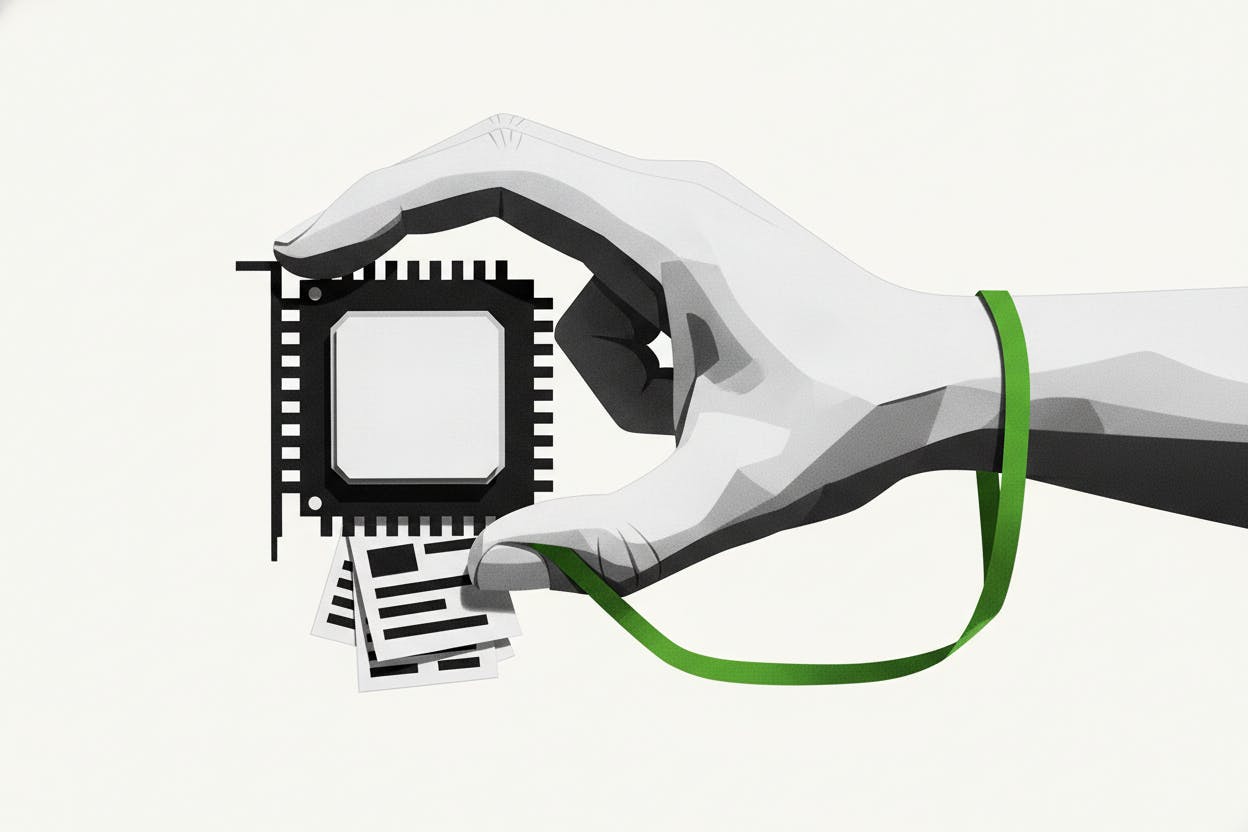
Shanghai Enflame Technology, an artificial intelligence chipmaker backed by Chinese internet giant Tencent, is set to debut on Shanghai's STAR Market after raising 6.12 billion yuan (about $912 million) in an initial public offering. According to an exchange filing cited by Reuters, the IPO values the company at roughly 61.19 billion yuan, or $9.12 billion.
The listing is a significant moment for China's semiconductor sector, which has been under intense pressure from U.S. export controls that restrict access to advanced chips and chipmaking equipment. Enflame designs graphics processing units (GPUs) — the specialized processors that power AI applications like large language models and data center training. By going public, Enflame is effectively putting a market price on China's ambition to build a homegrown AI chip industry.
What is Enflame and why does it matter?
Enflame is one of several Chinese startups trying to develop GPUs that can rival offerings from Nvidia, the dominant player in the AI chip market. The company's chips are designed for both training and inference — the two main stages of AI computing. Training involves feeding massive amounts of data to a model, while inference is the process of using a trained model to make predictions.
Because U.S. rules have limited Nvidia's ability to sell its most advanced chips to Chinese customers, domestic alternatives have become strategically important. Enflame's IPO is not just a financial event; it's a test of investor appetite for a company that sits at the center of China's push for technological self-reliance.
The company is listing only 4.16% of its shares, a relatively small float. That is common for Chinese tech IPOs, where founders and early backers often retain tight control. But a small float can also mean higher volatility, as the limited number of shares available for trading can amplify price swings.
What does this mean for investors?
For everyday investors, the key takeaway is that this IPO is a bet on China's ability to close the gap with global leaders in AI hardware. The valuation of $9.12 billion is substantial for a company that is still likely loss-making, as many chip startups are in their early years. Investors are paying for future potential, not current profits.
The listing also comes at a time when semiconductors are increasingly powering China's trade engine, with chip exports becoming a larger share of the country's overseas shipments. That trend underscores why Beijing views domestic chip production as both an economic and national security priority.
However, the path forward is not without hurdles. Chinese chipmakers face significant technical challenges, including access to advanced manufacturing tools and software. They also operate in a market where global giants like Nvidia continue to innovate rapidly. While Enflame's IPO shows strong investor interest, the company will need to prove it can deliver competitive products at scale.
For those watching the broader market, the IPO is another sign of mixed signals in Chinese equities, where optimism about tech and AI coexists with concerns about slower domestic demand. The STAR Market, launched in 2019, was designed to attract innovative tech companies and has become a key venue for chip-related listings.
What to watch next
Investors will be watching Enflame's trading debut closely. A strong first-day performance could boost sentiment for other Chinese chip startups planning to list. Conversely, a weak debut might temper enthusiasm and lead to more cautious pricing in future IPOs.
Regulators in China have also been tightening IPO rules for certain tech sectors, as seen with new restrictions on humanoid robot startups after a volatile debut. While Enflame's listing has been approved, the regulatory environment remains a factor for any company seeking to go public in China.
For now, the IPO puts a clear price tag on China's GPU hopes. Whether that price proves justified will depend on Enflame's ability to execute in a fiercely competitive and politically charged industry.