Investment bank Berenberg has weighed in on STMicroelectronics, arguing that the chipmaker's rebound is increasingly coming from genuine end-customer demand rather than a temporary inventory refill. In a note on the semiconductor sector, the bank said the company's core industrial and automotive businesses have been recovering for several quarters, and that the latest signals point to a healthier demand picture than a typical "restocking" bounce.
Three signs of real demand
Berenberg highlighted three specific clues that suggest the recovery is sustainable. First, distribution inventories—the stock held by the middlemen who sell chips to manufacturers—are now below their normal target levels. That matters because when inventories are lean, any uptick in orders is more likely to reflect actual consumption rather than companies padding their warehouses.
Second, point-of-sale (POS) demand, which tracks what is actually selling through to end users, is holding up. This is a more direct measure of real-world consumption than order books, which can be distorted by bulk buying or panic ordering. Third, lead times—the time between placing an order and receiving delivery—are also being watched, though the brief notes this signal is still developing.
Together, these indicators suggest that the recovery in STMicroelectronics' core markets is not just a short-term blip driven by customers rebuilding depleted stocks. Instead, it appears to be underpinned by genuine demand from factories, carmakers, and other end users.
The margin squeeze from new fabs
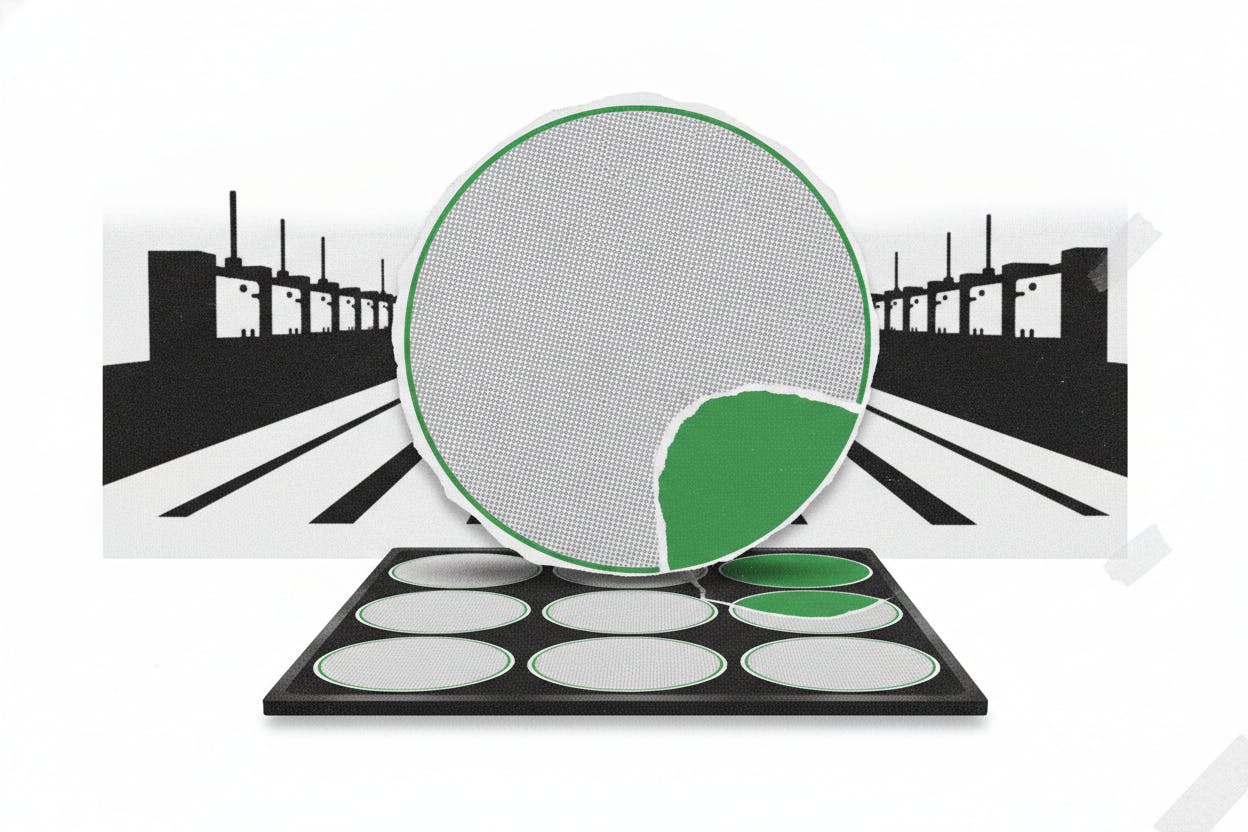
However, the picture is not entirely rosy. Berenberg noted that STMicroelectronics' new fabrication plants, or "fabs," are still not running at full capacity. This "underloading" is a drag on profit margins. When a factory is not fully utilized, the fixed costs—such as equipment depreciation and facility maintenance—are spread over fewer units, which raises the cost per chip and compresses gross margins.
This is a common challenge for chipmakers that invest heavily in new capacity during boom times, only to see utilization lag when demand softens. For STMicroelectronics, which has been expanding its manufacturing footprint to meet long-term demand from automotive and industrial customers, the timing of that capacity coming online has coincided with a period of weaker orders. As a result, even as revenue recovers, profitability may take longer to bounce back.
The situation is reminiscent of other companies in the semiconductor space that have faced similar headwinds. For instance, analysts have flagged data center lag as a concern for other industrial names, highlighting how capacity and demand mismatches can weigh on earnings.
What it means for investors
For everyday investors, the key takeaway is that STMicroelectronics' recovery is on firmer footing than some might have feared, but the profit picture remains mixed. The distinction between a restocking bounce and real demand is crucial because restocking-led recoveries tend to fizzle out once inventories are rebuilt. If demand is genuinely improving, the company could see more sustained revenue growth.
However, the margin pressure from underutilized fabs means that even if sales improve, earnings per share may not grow as quickly. Investors will be watching the company's utilization rates and gross margin guidance closely in upcoming earnings reports.
Berenberg's view is a positive signal for the broader semiconductor sector, which has been through a cyclical downturn. If STMicroelectronics is seeing real demand, it could be a leading indicator for other chipmakers. But it's worth noting that the company's exposure to automotive and industrial markets—two areas that have been sluggish—means its recovery may lag behind peers more focused on consumer electronics or data centers.
For those with exposure to STMicroelectronics through individual stocks or exchange-traded funds, the news is encouraging but not a reason to get overly excited. The margin drag from new fabs is a reminder that even in a recovery, profitability can be slow to follow. As always, it's important to consider the broader market context, including mixed signals on global demand that could affect the semiconductor cycle.
Looking ahead
The next few quarters will be telling. If distribution inventories remain below target and POS demand continues to hold up, that would confirm that the recovery is durable. On the other hand, if lead times start to stretch or orders weaken, the restocking theory could regain traction.
Investors should also keep an eye on how quickly STMicroelectronics can ramp up utilization at its new fabs. The company has been investing heavily in capacity, and the sooner those plants run at higher rates, the sooner margins can recover. Until then, the stock may trade on revenue momentum rather than earnings growth.
In the meantime, the broader market is dealing with its own crosscurrents, from rising interest rates affecting borrowing costs to corporate debt issuance as companies refinance. For chip investors, the focus remains on the balance between demand and capacity—a balance that STMicroelectronics is still working to strike.