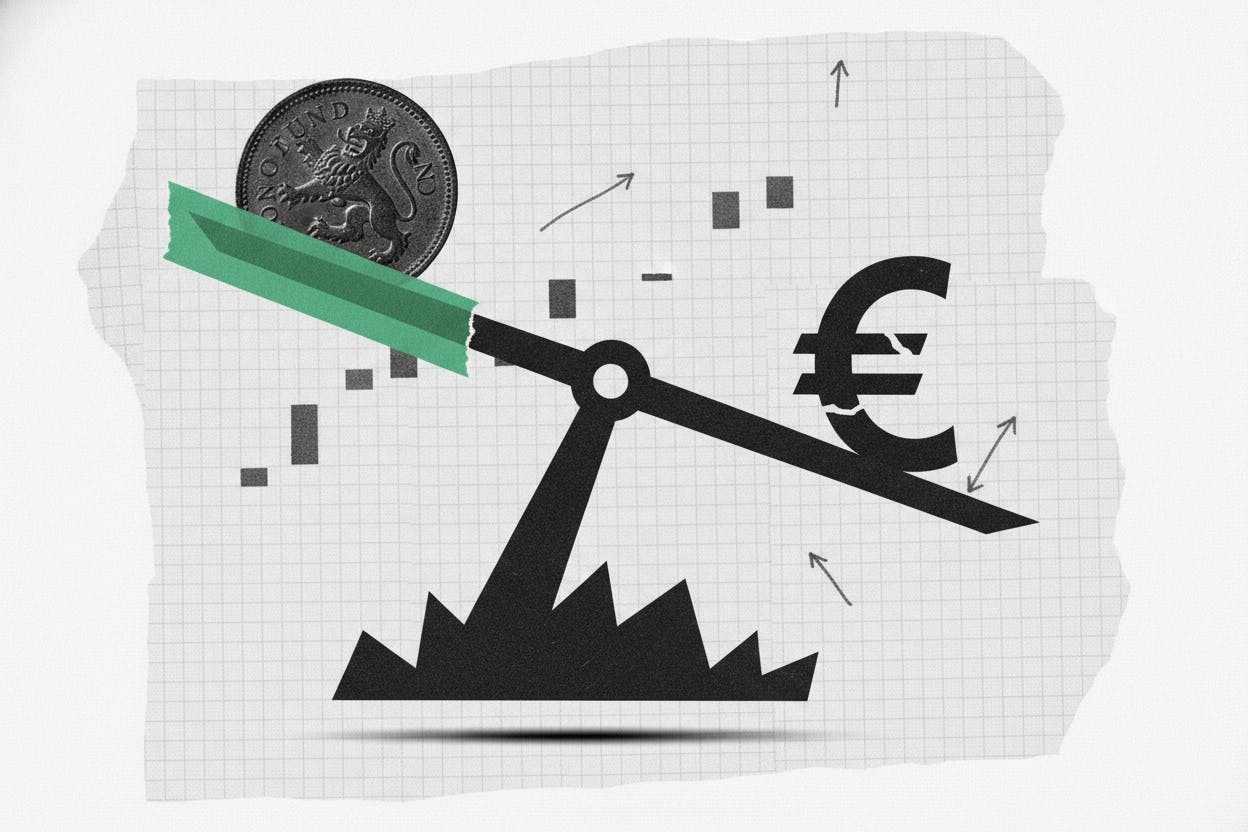
The British pound had a split session on Tuesday, slipping slightly against the US dollar but edging higher versus the euro, as currency markets digested softer inflation readings from France and Germany and the first major policy speech from UK prime minister-in-waiting Andy Burnham.
Sterling fell 0.2% to $1.3233, a modest decline that left it near recent lows. Against the euro, however, the pound strengthened as the single currency weakened after data showed consumer price pressures easing in the eurozone's two largest economies.
Eurozone inflation data drives the euro lower
French and German inflation figures both came in softer than expected, reinforcing expectations that the European Central Bank may be able to cut interest rates sooner than previously thought. Lower inflation reduces the urgency for the ECB to keep rates high, which tends to weigh on a currency by narrowing the yield advantage it offers over other currencies.
The euro slipped against the pound as a result, giving sterling a relative boost even as it lost ground against the dollar. The dollar itself has been firming recently, supported by a resilient US economy and expectations that the Federal Reserve will keep rates higher for longer than other major central banks.
For everyday investors, currency moves like these matter because they affect the value of overseas investments and the cost of imported goods. A weaker pound makes foreign holidays and imported electronics more expensive, but it can boost the returns of UK companies that earn revenue in dollars or euros.
Burnham speech sets out economic vision
Adding to the political backdrop, Andy Burnham delivered a speech on Monday outlining his vision for the UK economy, promising significant change through greater devolution of powers from Westminster to regions and a ten-year push for what he called “good” growth. Markets are watching closely for any hints on fiscal policy, taxation, or spending priorities that could affect the UK's economic trajectory.
Burnham, who is widely expected to become the next prime minister, has positioned himself as a reformer focused on spreading economic opportunity beyond London and the South East. His emphasis on devolution and long-term planning has been broadly welcomed by investors, though many are waiting for more concrete policy details before adjusting their positions.
The speech came as the UK's economy grew 0.6% in the first quarter, in line with the initial estimate. That figure was largely shrugged off by currency traders, according to Reuters, because it does not meaningfully change the Bank of England's interest rate outlook. The Bank has been navigating a delicate balance between persistent inflation in services and a slowing economy.
What this means for investors
For investors holding UK assets, the pound's stability against a mixed backdrop is a mildly reassuring sign. Currency volatility can amplify or erase returns from international portfolios, so a period of relative calm helps reduce uncertainty.
The key factors to watch in the coming weeks are the pace of eurozone disinflation, any further signals from the Bank of England on rate cuts, and more detailed policy announcements from the Burnham camp. If UK inflation continues to ease without the economy weakening sharply, the pound could find support. Conversely, any signs of political instability or a sharp economic slowdown could push sterling lower.
On the domestic front, UK shop price inflation held steady at 1.2% in the latest reading, with food costs easing and summer sales helping to keep overall price pressures in check. That data point supports the view that the cost-of-living squeeze is gradually easing, which could boost consumer confidence and spending in the months ahead.
Meanwhile, currency markets are also keeping an eye on global developments. Oil prices slipped 1% as US-Iran talks in Doha left traders guessing about the risk to shipping through the Strait of Hormuz, a key chokepoint for global oil supplies. Lower oil prices tend to be positive for the pound, as the UK is a net importer of energy.
For now, the pound appears to be in a holding pattern, with traders waiting for clearer direction from both economic data and political developments. The next major test will be the release of UK inflation figures and any further speeches from Burnham that provide more detail on his economic plans.