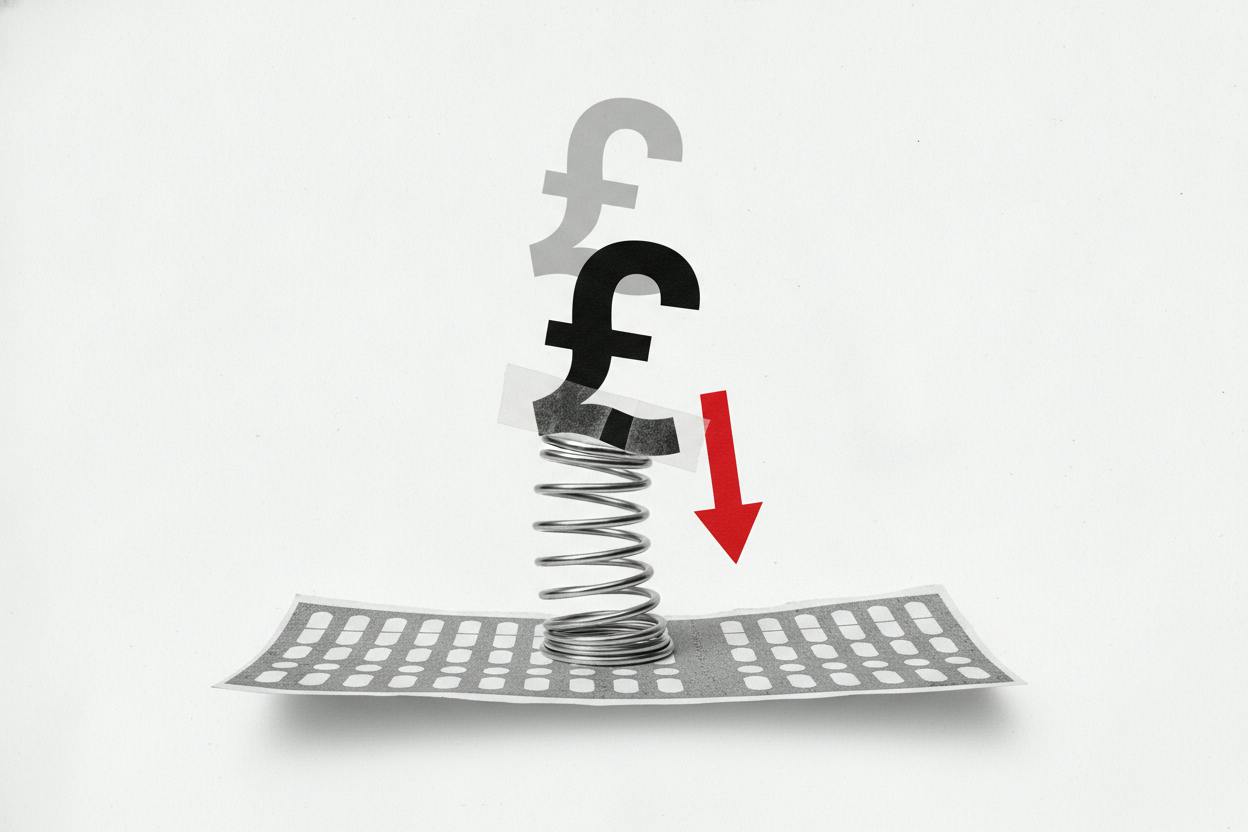
Sterling's brief rally ran out of steam on Tuesday, as fresh data suggested the UK economy is losing some momentum. The pound had jumped to around $1.3144, but quickly slipped back to near $1.3096 after November business surveys pointed to softer growth. The move underscores how sensitive the currency is to the health of the economy and to expectations for the Bank of England's next policy decision.
What the data showed
The latest purchasing managers' index (PMI) surveys from S&P Global, which track how busy companies say they are, indicated that the UK's private sector expanded at a slightly slower pace in November than in October. The composite reading, which combines manufacturing and services, slipped from an eight-month high and landed just below the median forecast in a Reuters poll of economists. It also remained within the same narrow range it has held since July.
Under the hood, the slowdown appeared to be driven partly by weaker overseas demand for UK services. That is a sign that global headwinds are starting to weigh on British businesses, even as domestic activity holds up reasonably well.
Why the Bank of England is in focus
For traders, the key question is what this means for interest rates. Despite the softer growth signals, money markets are still pricing in a rate hike at the Bank of England's meeting in mid-December. That may seem counterintuitive: if growth is cooling, why would the central bank tighten policy?
The answer lies in inflation. The Bank of England has been battling persistently high price pressures, and it has signaled that it will do what it takes to bring inflation back to its 2% target. Even if growth is slowing, policymakers may feel they need to raise rates again to prevent inflation from becoming entrenched. This is a delicate balancing act, and the PMI data adds to the uncertainty.
What it means for investors
For everyday investors, the pound's moves and the Bank of England's decisions have ripple effects. A weaker pound can make imports more expensive, which can feed through to higher prices at the shops. It can also affect the returns on overseas investments when converted back into sterling.
For those with money in UK stocks, the picture is mixed. A weaker pound can actually help large exporters, as their overseas earnings are worth more in sterling terms. But it can hurt companies that rely heavily on imports. The FTSE 100, which is dominated by multinationals, has often benefited from a softer pound. Indeed, UK stocks have shown resilience even when growth data disappoints.
For bond investors, the prospect of another rate hike means yields on UK government bonds could stay elevated. That can be good for savers, as it may push up interest rates on savings accounts, but it also increases borrowing costs for mortgages and business loans.
The broader picture
The UK is not alone in facing this tension between slowing growth and sticky inflation. Across the globe, central banks are wrestling with similar dilemmas. In the US, the Federal Reserve has also been cautious about cutting rates, and traders have been trimming bets on further hikes as data cools. In Asia, investors are watching a data-heavy week to see if the region's growth story holds up.
For the pound, the near-term path will likely depend on the next batch of economic data and any signals from Bank of England officials. If growth continues to soften, traders may start to question whether the central bank will really follow through on a December hike. That could put further pressure on sterling.
What to watch next
Investors will be keeping a close eye on upcoming releases, including inflation figures and retail sales, for clues about the economy's trajectory. Any significant miss could shift rate expectations and move the pound. The Bank of England's meeting in mid-December is the next major catalyst, and the decision will be closely scrutinized for hints about the future path of rates.
For now, the message from the markets is clear: the UK economy is slowing, but the fight against inflation is not over. That leaves the Bank of England in a tough spot, and investors should brace for continued volatility in the pound and in UK assets.



