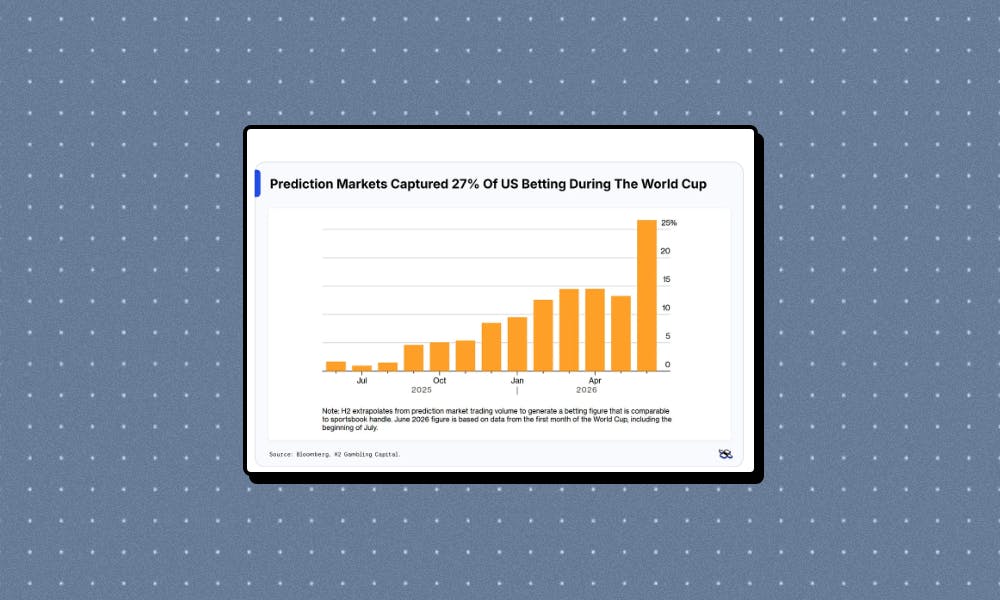
The 2026 World Cup has become a watershed moment for prediction markets, with platforms like Kalshi and Polymarket capturing an estimated 27% of legal US sports-betting volume during the tournament. That is a sharp jump from just 9% at the start of the year, according to industry data.
Kalshi, in particular, smashed its own trading records throughout the event. The platform's app overtook established giants DraftKings and FanDuel in daily active US users — a milestone that signals prediction markets are no longer a niche alternative but a genuine competitor to traditional sportsbooks.
What Are Prediction Markets?
Prediction markets allow users to trade contracts based on the outcome of future events — such as who will win a match, how many goals will be scored, or even non-sports events like election results. Unlike traditional sports betting, where odds are set by the bookmaker, prediction markets operate more like stock exchanges: prices fluctuate based on supply and demand from traders.
Platforms like Kalshi and Polymarket have gained traction by offering a wider range of markets and often lower fees than conventional sportsbooks. The 2026 World Cup provided a massive real-world test, and the results suggest these platforms are here to stay.
Why This Matters for Investors
For everyday investors, the rise of prediction markets represents a potential shift in the competitive landscape of the gambling and betting industry. Traditional sportsbooks like DraftKings and FanDuel have long dominated the US market, but the rapid growth of Kalshi and Polymarket suggests that market share is up for grabs.
Analysts say sportsbooks now face mounting pressure to launch similar products. If incumbents fail to adapt, they risk losing a significant portion of their user base to newer, more flexible platforms. This could affect revenue growth and profitability for companies like DraftKings, which is already facing headwinds from rising customer acquisition costs.
Meanwhile, prediction market operators are likely to attract more venture capital and potentially pursue public listings, offering new investment opportunities. However, regulatory uncertainty remains a key risk. While some regulators have allowed prediction exchanges to offer sports contracts, others may push back, creating an uneven playing field.
Broader Market Context
The shift comes at a time when the gambling industry is under scrutiny from multiple angles. In the UK, for example, Entain recently announced plans to cut 500 jobs as a looming tax hike on online betting weighs on the sector. That move highlights the regulatory and cost pressures facing traditional operators.
Geopolitical tensions have also rattled global markets, with oil prices surging above $90 amid Strait of Hormuz concerns. While not directly related to betting, such volatility can affect consumer spending and investor sentiment, potentially impacting discretionary sectors like gambling.
In Asia, markets have been mixed, with oil above $90 rattling Asian markets as the AI rally faces higher rate threats. Meanwhile, Latin American markets slid as Iran tensions pushed oil to a one-month high. These macroeconomic factors could influence how much consumers are willing to spend on betting and prediction markets.
What to Watch Next
Investors should keep an eye on several key developments. First, how traditional sportsbooks respond — whether they launch their own prediction market products or acquire existing platforms. Second, regulatory decisions at the state and federal level, which could either accelerate or hinder growth. Third, user retention: can prediction markets maintain their momentum beyond the World Cup?
The 2026 World Cup may well be remembered as the moment prediction markets went mainstream. For investors, the question is whether this is a temporary spike or the start of a long-term trend.



