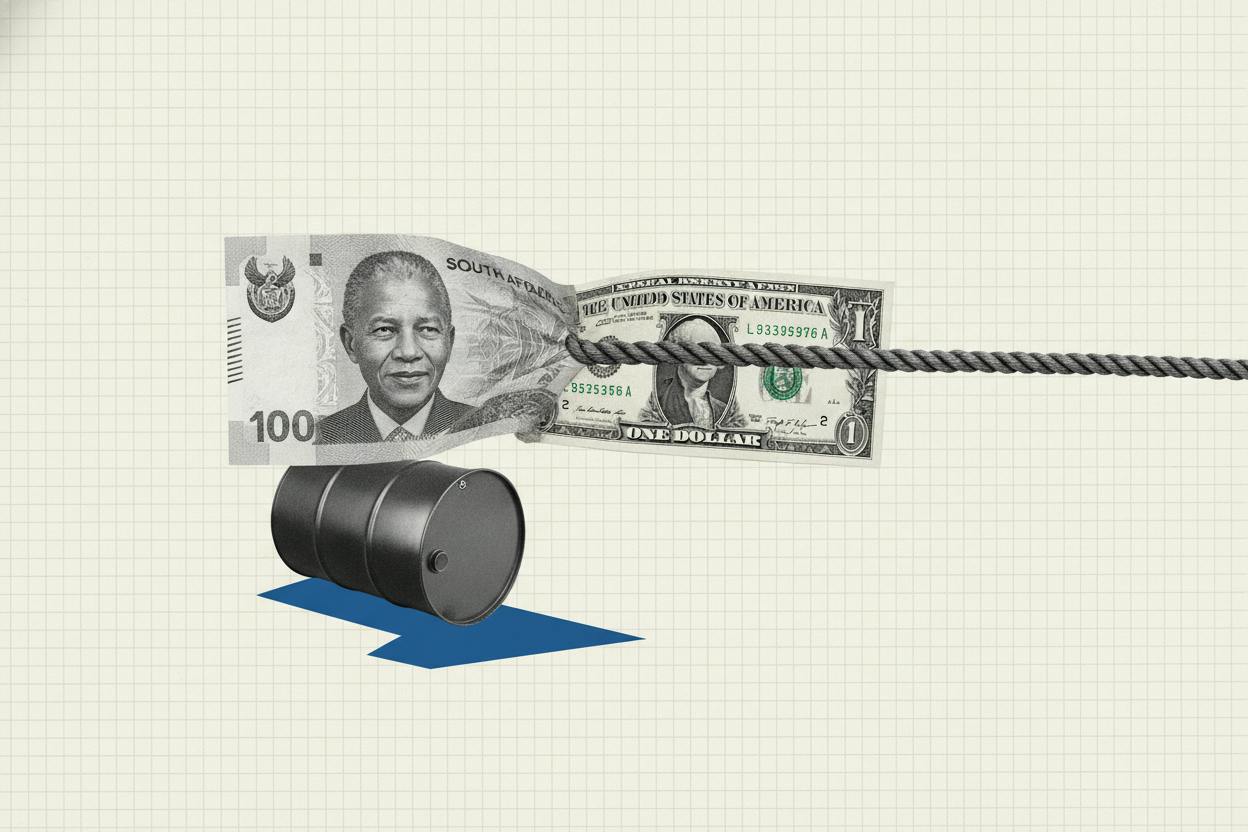
South Africa's rand slipped 0.3% in early trading on Wednesday, as a firmer US dollar and higher oil prices combined to pressure the risk-sensitive currency. The rand was trading near 16.5850 per dollar, with investors turning their attention to the release of minutes from the Federal Reserve's September meeting for clues on the path of US interest rates.
When US rates look set to stay higher for longer, dollar-denominated assets tend to become more attractive to global investors. That can pull money out of riskier markets and weigh on currencies like the rand, which often move in tandem with global risk appetite.
Oil adds to the pressure
At the same time, oil prices moving in the "wrong" direction for South Africa add another headwind. The country imports most of its fuel, and oil is priced in dollars. So when crude gets pricier and the greenback firms at the same time, the local cost of the country's fuel bill rises.
Research firm ETM Analytics noted that diesel-heavy petroleum imports have kept demand for dollars steady in recent weeks, making the currency more sensitive to swings in oil prices. This means that even without a major shift in global risk sentiment, a higher oil price can translate into more spot buying of US dollars, which can keep the rand under pressure.
What it means for bonds
Currency weakness can spill over into the bond market. A softer rand often pushes up expectations for fuel inflation, and bond investors then demand extra compensation for that inflation risk. On the day, South Africa's 2035 government bond yield edged up to about 8.825%.
That link between the rand and long-dated bonds is a reminder that currency moves can have broader implications for a country's financial assets. When the rand weakens, the pain isn't confined to foreign exchange—it can also show up in higher borrowing costs for the government and potentially for businesses and consumers.
Why it matters for investors
For everyday investors, the rand's slide is a reminder of how global forces can affect local markets. A stronger dollar and higher oil prices can hit South African assets through a simple plumbing issue: fuel imports create ongoing demand for dollars, so a higher oil price can translate into more spot buying of USD even without a big change in global risk appetite. If that flow pressure persists, it can keep the rand weaker than traders might expect from domestic news alone.
And when the currency weakens, the impact can ripple through the economy. Higher expected fuel costs can lift the inflation outlook, which is why long-dated government bonds can cheapen at the same time. That's the link between a rand around 16.5850 and the 2035 yield pushing toward 8.825%.
Investors will be watching the Fed minutes for any signals on how long US rates might stay elevated. A more hawkish tone could keep the dollar firm and add further pressure on the rand, while a more dovish stance might offer some relief.
For those with exposure to South African assets, the key takeaway is that currency and oil moves are intertwined with inflation and bond yields. Keeping an eye on these global drivers can help investors understand why local markets might be moving, even when domestic news is quiet.