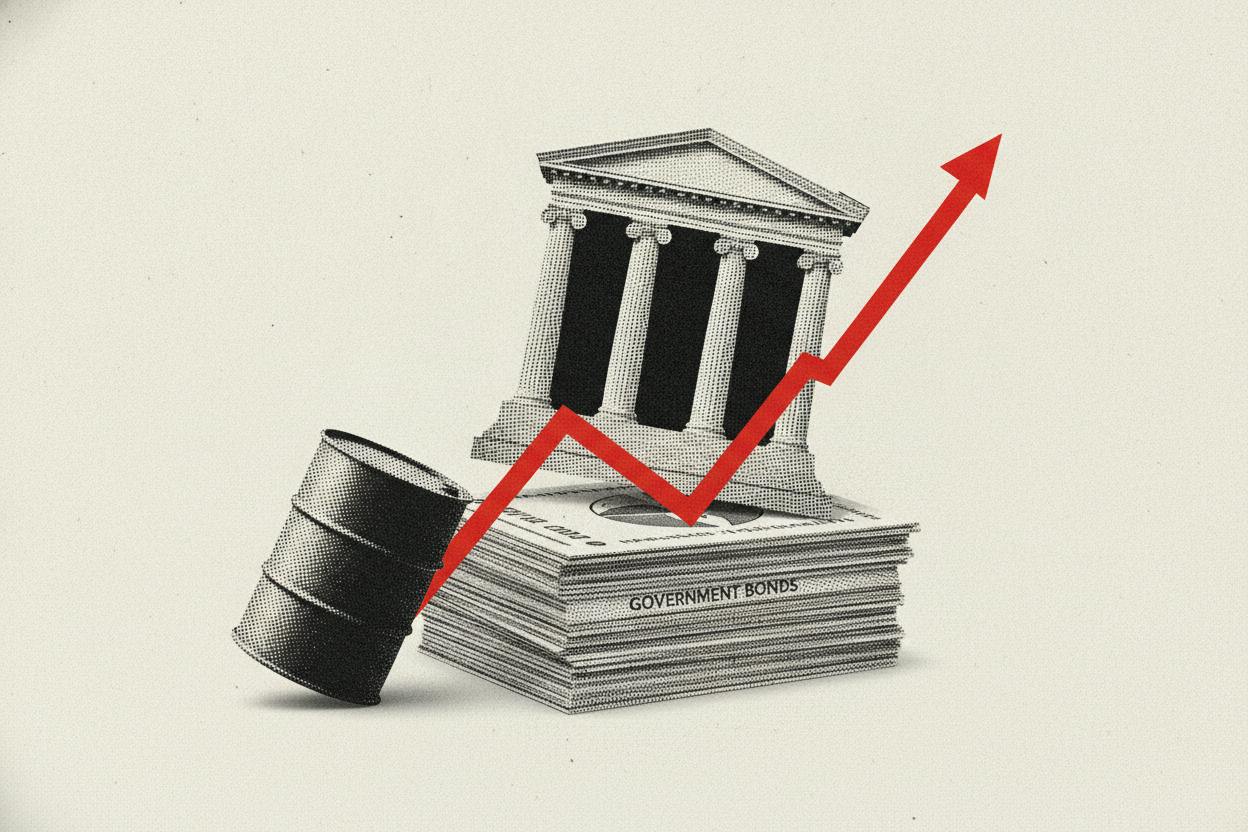
Wealthy investors and family offices gathered in Singapore have a clear message for global markets: the biggest threat to growth isn't inflation or a tech bubble—it's the cost of borrowing. In a poll conducted by Deutsche Bank at its Emerging Markets Family Office Forum, 37% of attendees said higher interest rates and bond yields pose the greatest risk to global growth over the next 12 months. That put rates ahead of inflation (23%) and AI-related risks (17%).
The survey, which drew responses from about 200 family offices and high-net-worth individuals, also revealed a strong regional preference: 73% named Asia as the most stable region for the coming year, far outpacing the US at 14% and the UK and Europe at just 6%.
Why rates dominate the worry list
For everyday investors, the concern about higher rates is easy to translate. When central banks raise interest rates, borrowing becomes more expensive for companies and consumers alike. Businesses face higher costs to finance expansion, which can squeeze profit margins. Consumers see bigger bills on mortgages, car loans, and credit cards, leaving less money to spend. That combination can slow economic growth.
The focus on rates and yields makes sense given the recent market backdrop. Long-term Treasury yields have been climbing, with the 10-year note recently hitting levels not seen in years. As Treasury yields ease from their peaks, investors are watching closely for signs of whether the pressure will persist. Higher yields also make bonds more attractive relative to stocks, which can pull money out of equities.
Inflation, while still a concern, has been cooling in many major economies. That may explain why it ranked second in the poll. AI-related risks, such as overvaluation in tech stocks or disruption from automation, came in third—still a worry, but not the top one for this crowd.
Asia's appeal as a stability hub
The overwhelming vote for Asia as the most stable region reflects a broader shift in how global wealth is being managed. Marco Pagliara, Deutsche Bank's head of Asia Pacific for its wealth business, said global families are prioritizing stability and connectivity, which helps Singapore stand out as a favored wealth hub.
For private banks, where clients choose to base their accounts—known as the "booking center"—can be as important as what they invest in. The booking center determines which jurisdiction provides custody, credit lines, and day-to-day servicing. Even if a portfolio remains globally diversified, the location of the account can shift.
When most respondents at a Singapore event name Asia the most stable region, it points to a potential flow of family-office assets toward Singapore-based platforms. That matters for global banks like Deutsche Bank, which reported €732 billion in assets under management as of June 30 across 14 booking centers. Wealth-management revenue is often tied to assets under management and client activity, so the competition for where assets are parked is intense.
Singapore's rise as a wealth hub has not gone unnoticed. HSBC's recent choice of Singapore for an AI hub drew scrutiny from Hong Kong's regulator, highlighting the regional rivalry. Meanwhile, India's central bank recently raised rates for the first time in four years, a reminder that Asia is not immune to monetary tightening.
What it means for investors
For the average investor, this survey offers a few takeaways. First, the rich are watching interest rates closely—and so should you. When rates stay high, it can affect everything from your mortgage to the performance of your retirement portfolio. Growth stocks, which rely on future earnings, tend to be more sensitive to higher discount rates, while value stocks and bonds may become relatively more attractive.
Second, the preference for Asia could signal where global capital is heading. If family offices and wealthy investors increasingly base their assets in Singapore, that could boost Asian financial markets and currencies. It might also mean more investment flowing into Asian companies and infrastructure.
Finally, the poll underscores that geopolitical stability is a key factor in investment decisions. With tensions in various parts of the world, investors are seeking safe harbors. Asia, and Singapore in particular, appears to be winning that vote.
As always, no single survey dictates market direction. But when the people managing billions of dollars say rates are the top risk and Asia is the safest bet, it's worth paying attention.