RBC Capital Markets is pushing back against a nagging worry among investors: that Baker Hughes, the oilfield services and energy technology giant, may have already seen its best days for new orders. In a note released Thursday, the bank said those fears look overdone after the company beat third-quarter expectations and booked $5.9 billion in orders for its Industrial & Energy Technology (IET) segment.
The debate matters because orders are the lifeblood of Baker Hughes' future revenue. When a company books an order, it typically becomes part of its backlog—work it has signed but not yet delivered—and that backlog eventually converts into sales over time. So a strong order quarter is a good sign for near-term visibility. But investors are also looking further out, asking whether the pace of new orders can keep up.
What the numbers show
RBC noted that Baker Hughes beat on adjusted profit, IET orders, and free cash flow in the third quarter. Management also raised its 2026 order target to $22.5 billion and lifted its longer-term “Horizon 2” target to more than $50 billion. Those are big numbers, and they suggest the company sees plenty of demand ahead.
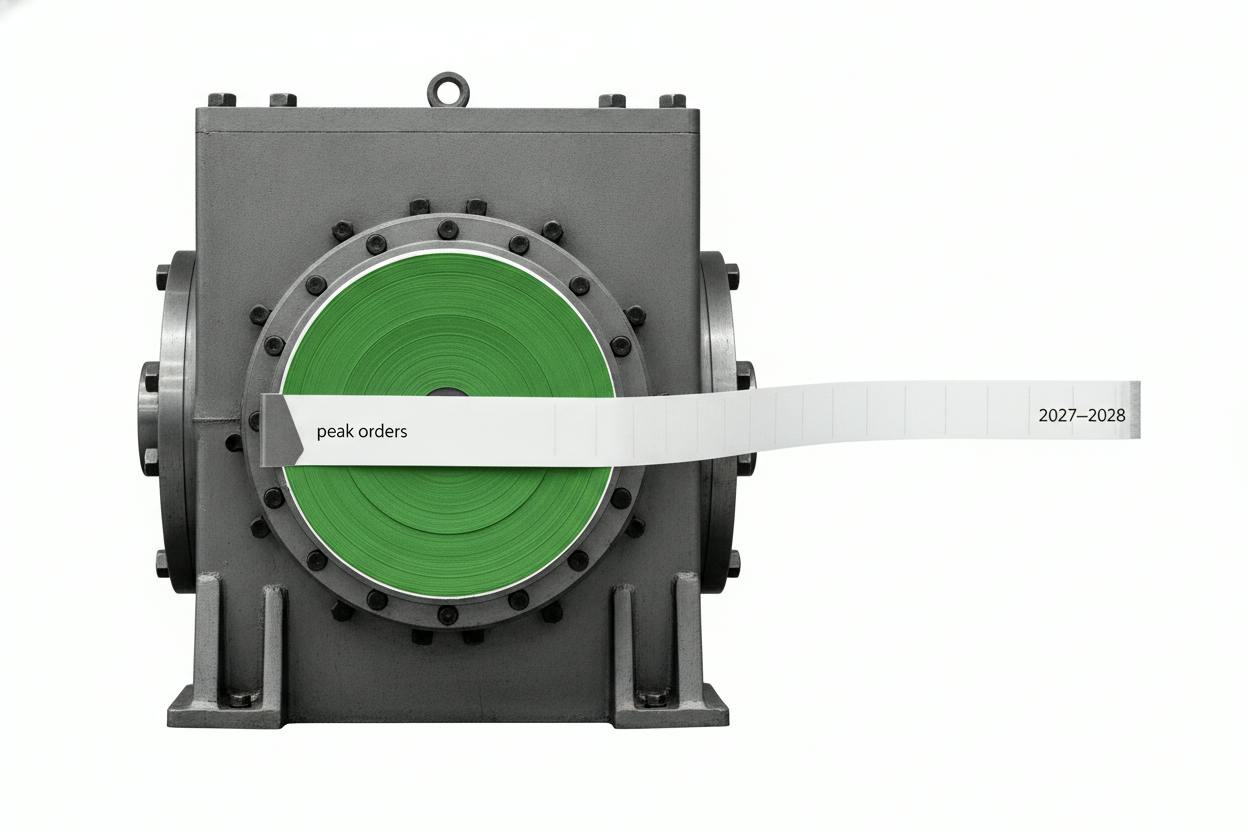
Yet the market is still debating whether growth is cooling. If 2026 is already well covered by existing orders, then the Horizon 2 guidance can be read as implying a slower pace in 2027 and 2028. That's the crux of the “peak orders” worry: not that orders are collapsing, but that the growth rate may be flattening.
RBC's counterargument is that management still expects low-to-mid single-digit growth across its segments in 2027. The bank says that implies about $32.7 billion in revenue, which is roughly in line with what analysts are already forecasting. In other words, the market may be pricing in a sharper slowdown than the company itself is guiding toward.
Why the price target moved anyway
Even with that constructive view, RBC trimmed its price target on Baker Hughes to $70 from $71. That might seem contradictory, but it's a reminder that small changes in out-year assumptions can swing a stock's valuation, even when the latest quarter looks solid.
For everyday investors, the takeaway is that a single quarter's beat doesn't settle the longer-term question. The stock's value increasingly depends on what analysts assume about 2027 and 2028—how fast orders convert into revenue, and whether margins hold up. That's why you can see a bank sound upbeat on the multiyear story yet still nudge its target down: the math is sensitive to forward estimates.
What it means for investors
Baker Hughes is a major player in energy equipment and services, with a growing focus on industrial technology like LNG, gas processing, and carbon capture. Its order book is a key indicator of future revenue, so any shift in order trends can move the stock.
When investors worry about “peak orders,” they're really asking how long today's demand can support tomorrow's sales. A big IET order quarter helps near-term visibility, but if order growth flattens after 2026, the stock tends to trade more on what analysts assume is the steady pace of business in 2027 and 2028 rather than on the latest beat.
RBC's stance suggests that the market may be too pessimistic about the medium-term outlook. But the price target cut is a caution flag: even bulls are adjusting for a slightly slower growth path than previously assumed.
For context, this isn't happening in a vacuum. Broader market jitters about energy demand and industrial spending have been swirling, and investors are watching how companies like Baker Hughes navigate a potentially cooling global economy. The company's results come at a time when AI-related spending fears have rattled tech stocks, but energy and industrial names have their own dynamics.
Baker Hughes' next big test will be whether it can keep converting its hefty backlog into revenue and maintain its growth trajectory. For now, RBC is saying the order book looks strong enough to support the company's targets, even if the market isn't fully convinced.
Investors should watch upcoming quarters for signs of order momentum and any updates to management's long-term guidance. As always, a single analyst's view is just one piece of the puzzle, but it does highlight the key metric—orders—that will likely drive the stock's direction in the months ahead.