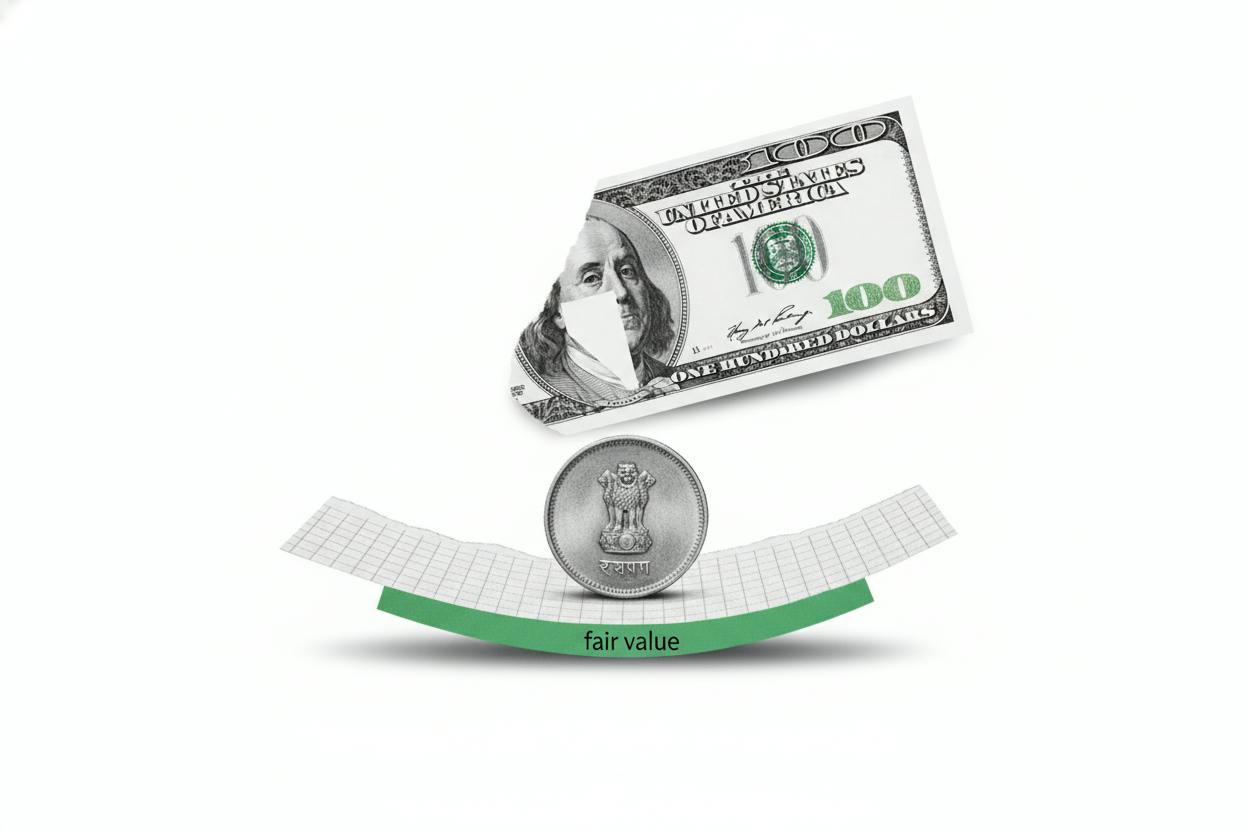
India's central bank governor, Sanjay Malhotra, said on Wednesday that the rupee "may be undervalued" even as the currency slid back near its record low against the US dollar. Speaking at a post-policy press conference, Malhotra argued that short-term currency moves can be driven by sentiment and "irrational" trading, even though prices tend to converge to fair value over time.
The remarks came as USD/INR traded at 96.8450, close to May's peak of 96.96, according to Reuters. The rupee has been under pressure from higher oil prices, rising US Treasury yields, and foreign portfolio outflows, prompting the Reserve Bank of India (RBI) to regularly sell dollars in the spot market to slow the decline.
What the governor's comments mean
Malhotra pointed to valuation yardsticks, including the real effective exchange rate (REER) — a trade-weighted measure that adjusts for inflation — suggesting the rupee is below where fundamentals imply it should be. That framing shifts the narrative from "India is losing its appeal" to "outside pressures are dominating for now."
The RBI's stated goal is to keep currency moves "orderly" while the rupee stabilizes and finds its "correct value." This is a familiar stance for central banks: they rarely target a specific exchange rate, but they do try to smooth excessive volatility that could disrupt trade and investment flows.
For everyday investors, the key takeaway is that the RBI is signaling it will continue to lean against sharp depreciation. When a central bank signals it will intervene near certain levels, it makes one-way bets on further weakness riskier. Traders who pile into short-rupee positions could face sudden losses if the RBI steps in to support the currency.
What it means for markets and investors
For markets, Malhotra's "orderly" promise is a live pricing input. With USD/INR back near the May high, the governor's "undervalued" comment — alongside Reuters' reporting on spot dollar sales — signals where the RBI is likely to push back. When traders believe a central bank will lean against depreciation near certain levels, one-way bets get riskier: intervention can break momentum, and selling dollars also buys rupees, which can temporarily tighten rupee cash conditions unless the RBI offsets it elsewhere.
The first place that shift usually shows up is in short-term hedging tools. If markets start thinking in "range" terms rather than "trend" terms around the highs, pricing can adjust in onshore forward points (the extra cost of locking in a future exchange rate) and near-dated USD/INR option premiums. Indeed, forward premiums have already risen to a six-month high as the RBI's liquidity management has tightened conditions.
For Indian investors with overseas exposure or businesses that import goods, a weaker rupee means higher costs for foreign purchases and lower returns on foreign investments when converted back to rupees. Conversely, exporters benefit from a cheaper currency. The RBI's intervention aims to reduce the volatility that makes planning difficult for both groups.
Broader context
The rupee's slide is part of a global trend of dollar strength, driven by the Federal Reserve's higher-for-longer interest rate stance and robust US economic data. Emerging market currencies have generally faced headwinds as capital flows toward US assets. India's large current account deficit, partly due to oil imports, makes it particularly sensitive to crude price spikes.
The RBI's approach is not unique. Many central banks in emerging markets use foreign exchange reserves to smooth currency swings, though they cannot fully resist market forces. The central bank's willingness to spend reserves is a signal of its commitment to stability, but it also has limits — if outflows persist, intervention can only slow, not reverse, the trend.
Investors should watch for signs of whether the RBI's actions are gaining traction. A stabilization in USD/INR around current levels, or a modest recovery, would suggest the central bank's message is being heard. A break above the May high could test the RBI's resolve and lead to more aggressive intervention.
For now, the governor's comments are a reminder that central banks can influence market psychology even when they cannot control the underlying forces. The rupee's path will depend on global factors like oil prices and US yields, but the RBI's "orderly" mantra provides a floor of expectations for traders and investors alike.