German defense contractor Rheinmetall has been one of the biggest winners of Europe's rearmament push, with a backlog of orders that now stands at €80.5 billion. That figure suggests the company's revenue is well-supported for the next couple of years. But according to a new note from research firm Mwb Research, the real test comes in 2028, when a large chunk of expected sales is not yet backed by signed contracts.
The backlog picture
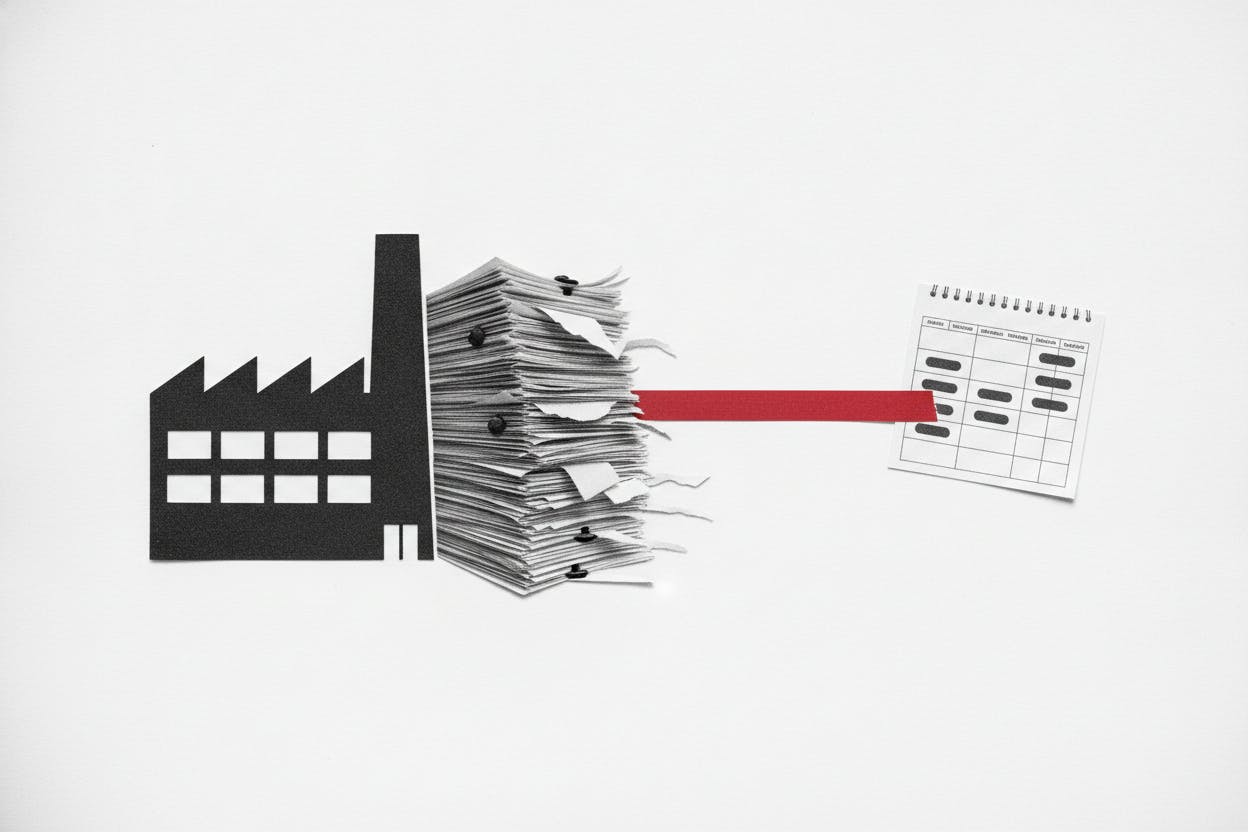
Rheinmetall's backlog—the total value of orders it has received but not yet delivered—is a key indicator of future revenue. The company has said that €30.2 billion of these orders are "fixed," meaning they are expected to convert into revenue over roughly the next two and a half years. That timeline, Mwb Research notes, covers market expectations through 2027.
In other words, the next couple of years look relatively secure. The company's factories are busy producing tanks, artillery, and ammunition, and the demand from European governments is strong. But the picture gets murkier when you look further out.
The 2028 gap
Mwb Research's key warning is that 77% of the consensus sales forecast for 2028 is not covered by signed orders. That means analysts' expectations for that year rely heavily on Rheinmetall winning new contracts and executing them smoothly. If new orders slow down, or if production hiccups delay deliveries, the company could miss those targets.
This is not unusual for defense companies, which often have long lead times between winning a contract and delivering the final product. But it does highlight the difference between a backlog that looks strong on paper and the actual flow of revenue in a specific year.
Why this matters for investors
For everyday investors, the takeaway is about understanding what a backlog really tells you. A large backlog is a good sign, but it doesn't guarantee future performance. The timing of when those orders turn into revenue matters, and so does the company's ability to keep winning new business.
Rheinmetall's shares have surged over the past few years as European governments boosted defense spending, especially after Russia's invasion of Ukraine. The company is a major supplier of military vehicles, weapons systems, and ammunition, and it has benefited from a broader shift in European policy toward rearmament. That trend is likely to continue, but it also means the company's valuation already reflects high expectations.
Mwb Research's note is a reminder that even the most promising growth stories have risks. For Rheinmetall, the risk is not in the near term but in the medium term. If the company fails to convert its backlog into revenue as planned, or if new orders don't materialize at the pace analysts expect, the stock could face headwinds.
What to watch next
Investors will be watching Rheinmetall's order intake in the coming quarters. The company has been winning large contracts, but the pace of new orders will be crucial to closing the 2028 gap. Also important is execution: can Rheinmetall ramp up production fast enough to meet demand? Supply chain issues and labor shortages have affected many manufacturers, and defense companies are not immune.
The broader geopolitical backdrop also matters. If European governments continue to increase defense budgets, Rheinmetall is likely to benefit. But if there is a shift in political priorities or a slowdown in spending, the company's growth could slow.
For now, the consensus seems to be that Rheinmetall is in a strong position for the next couple of years. The question is whether it can maintain that momentum into 2028 and beyond. As Mwb Research points out, that's where the real test lies.
In the meantime, investors should keep an eye on the company's quarterly reports for updates on order intake and production progress. The stock is likely to remain volatile, as it is sensitive to news about defense spending and geopolitical tensions.
For a broader look at how defense and other sectors are faring, you can check out our coverage of Japan's earnings season and Nebius's AI-driven growth. But for now, Rheinmetall's story is one of a strong present and an uncertain future.