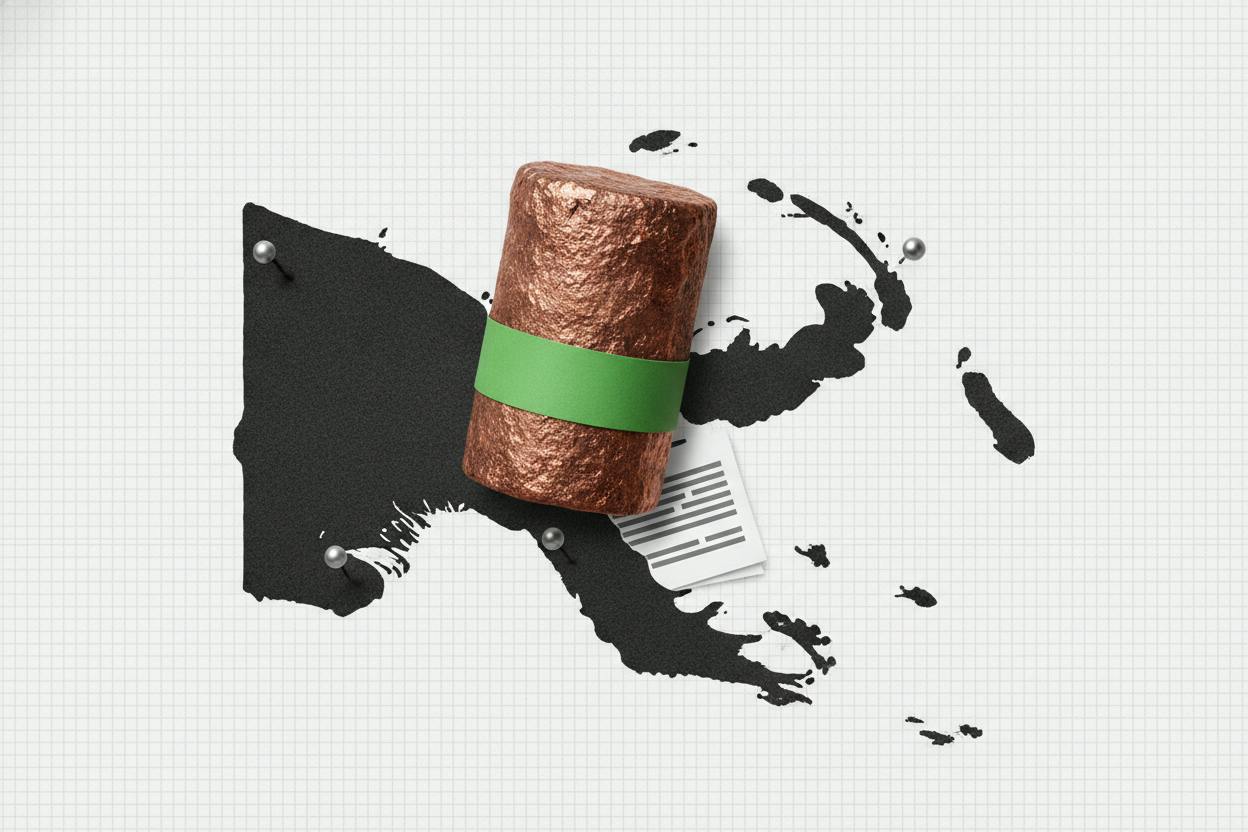
Rio Tinto, one of the world's largest miners, has signed a binding farm-in agreement to earn up to 80% of LCL Resources' Liamu copper project in Papua New Guinea. The deal is structured as a step-by-step earn-in, not an outright purchase, giving Rio the option to increase its stake as the project advances.
Under the terms, Rio can earn an initial 51% by funding at least AU$6 million in exploration within five years. It can then raise its stake to 80% by either spending AU$40 million or by defining a JORC-compliant mineral resource of at least 1 million tonnes of copper (or copper equivalent) and completing a scoping study. A JORC-compliant resource is an independently reported estimate that investors can compare across projects, while a scoping study is a first-pass look at whether a mine could be built and what it might cost.
This structure means Rio only commits more capital if drilling and technical work reduce the project's geological and engineering uncertainty. LCL Resources will continue to operate exploration during the earn-in period, while Rio sets annual work programs and budgets in consultation with the junior miner. After LCL filed the deal with the Australian bourse, its shares rose more than 23% in Monday morning trade.
Why this deal matters for copper investors
Copper is a key metal for the global energy transition, used in everything from electric vehicles to power grids. Major miners like Rio Tinto are increasingly looking to secure new sources of supply, and Papua New Guinea is a region with significant mineral potential but also operational and political challenges. The Liamu project is still at an early stage, and the earn-in structure reflects that uncertainty.
For Rio, the downside is capped early: AU$6 million is the price of finding out whether Liamu's geology is promising enough to justify much larger spending or handing over majority control. If the project fails to meet milestones, Rio can walk away without having spent the full AU$40 million. This is a common approach for large miners looking to de-risk early-stage assets.
For LCL Resources, the deal provides a clear path to funding and a credible partner with deep pockets and technical expertise. The market's reaction—a 23% jump in shares—shows investors see the deal as a positive signal, but the real value will depend on execution.
What it means for everyday investors
For investors in LCL Resources, this earn-in shifts the focus from copper price headlines to specific deliverables. The market tends to reprice around a short list of catalysts: drill results, progress toward the 1 million-tonne JORC resource threshold, and the scoping study. The closer the project gets to those milestones, the more LCL's valuation may hinge on timing and execution rather than day-to-day moves in the copper price.
For those watching the broader copper market, this deal is a reminder that major miners are willing to pay for optionality in early-stage projects, even as copper prices split into US and China lanes amid tariff risk. It also highlights the ongoing interest in Papua New Guinea as a mining destination, despite its challenges.
Investors should note that farm-in deals like this are not guarantees of success. Many early-stage projects never reach production, and the timeline from exploration to a working mine can stretch over a decade. The AU$6 million initial commitment is relatively small for a company of Rio's size, but it represents a meaningful vote of confidence in the project's potential.
For LCL shareholders, the key metrics to watch are exploration results and progress toward the resource threshold. If drilling confirms a large copper resource, the deal could lead to a significant re-rating. If not, the stock could give back some of Monday's gains.
As with any junior mining investment, there is considerable risk. The project is in a remote location, and infrastructure, permitting, and community relations will all be factors. But with Rio Tinto's backing, LCL Resources now has a stronger hand to play.