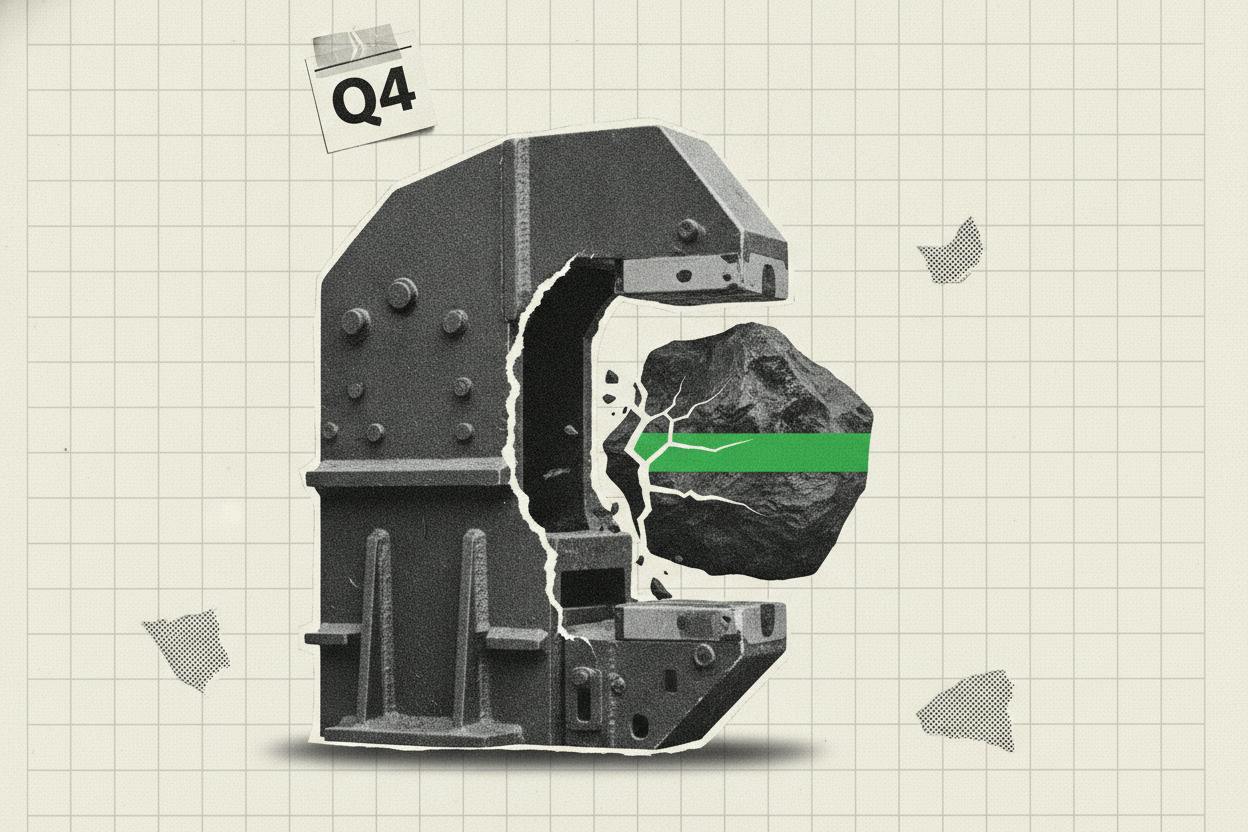
Rio Tinto's long-awaited Simandou iron ore project in Guinea is back in the spotlight after analysts at Berenberg said they expect the first ore to pass through the site's primary crusher in the fourth quarter. The update follows a slower-than-expected ramp-up in the first half of the year, which had raised questions about the project's timeline.
Simandou has been a classic "show me" story for Rio Tinto, one of the world's largest miners. The project holds enormous potential—it is one of the richest untapped iron ore deposits on the planet—but it has also faced years of delays, complex logistics, and hefty construction costs. For investors, the question has always been whether Rio can turn that potential into actual production.
What the Q4 milestone means
Getting "first ore through the primary crusher" is a significant commissioning checkpoint. It means the processing chain—from mining to crushing to transport—can actually operate, not just that the infrastructure has been built. When a mine clears this hurdle, the risk profile shifts from "will it work?" to "how quickly can it scale?" That distinction matters for how investors value the company.
Berenberg's note points to this Q4 moment as the clearest near-term proof that Simandou is moving from construction to real operations. The slower first-half ramp-up was partly tied to disruption following a worker fatality, which added to the project's execution risk. A clean Q4 milestone could help reassure investors that the project is back on track.
The bank also highlighted other updates that investors are likely to weigh alongside iron ore. These include the underground expansion at Oyu Tolgoi, Rio's giant copper mine in Mongolia, and progress at Rincon, the company's full-scale lithium plant in Argentina. Together, these projects signal that Rio's next phase is increasingly about delivering new supply across multiple metals, not just defending near-term iron ore shipments and costs.
Why copper and lithium matter
Rio Tinto has been positioning itself as a supplier of metals needed for the energy transition. Copper is essential for electrification and renewable energy infrastructure, while lithium is a key ingredient in batteries for electric vehicles. The Oyu Tolgoi underground expansion is expected to turn the mine into one of the world's largest copper producers, while Rincon is part of Rio's push into lithium, a market where it has been a relative latecomer.
For investors, these projects represent potential future revenue streams that could diversify Rio's earnings away from iron ore, which has been the company's cash cow for decades. Iron ore prices are notoriously cyclical, and a slowdown in China's property sector has weighed on demand. Having other growth engines could make Rio's earnings more resilient over the long term.
Berenberg kept a positive long-term stance on the mining sector and nudged its price target for Rio Tinto shares to 87p from 86p. That small upward revision suggests the bank sees more upside than risk in the current setup, even with the execution challenges.
What it means for investors
For everyday investors, the key takeaway is that Rio Tinto's valuation could become less tied to day-to-day iron ore price swings if Simandou hits its Q4 milestone. A successful commissioning would reduce the "project discount" that investors often apply to companies with big, complex developments. That discount reflects the risk that a project might be delayed, over budget, or fail to perform as expected.
If Simandou clears that hurdle cleanly, Rio's shares could become more sensitive to confidence in its longer-dated growth plans and future cash flows, rather than to every tick in iron ore futures. That could make the stock more attractive to investors who are looking for exposure to the energy transition metals, not just to the traditional mining cycle.
Of course, there are still risks. The fourth quarter is not guaranteed, and any further delays could reignite concerns. The worker fatality earlier this year was a reminder of the human and operational risks involved in large-scale mining projects. Investors will also be watching the broader market environment, including Treasury yields and inflation data, which can affect commodity prices and mining stocks.
Berenberg's note also comes amid a mixed picture for global markets. Asian shares have slipped as investors await key US inflation data, and bond market jitters have been a recurring theme. For Rio Tinto, the focus remains on its own operational milestones rather than macro noise.
In the meantime, investors will be watching for updates on Oyu Tolgoi and Rincon, as well as any further news on Simandou's ramp-up. The next few months could be pivotal for Rio Tinto's narrative, as it tries to prove that it can deliver on its promises across multiple commodities.