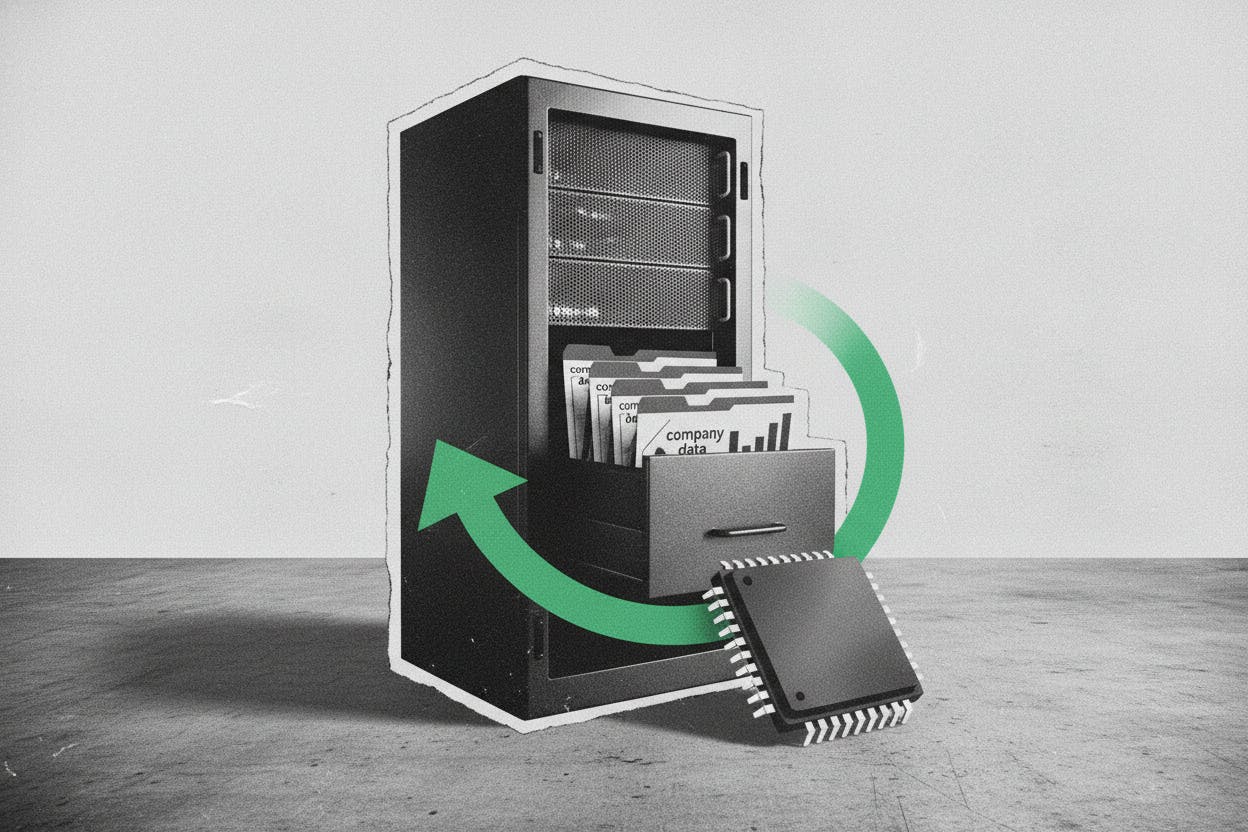
River AI, a startup founded by xAI co-founder Igor Babuschkin, has raised $1.1 billion to build tools that let companies train and own AI models on their own data—rather than relying on one-size-fits-all systems from big labs. The funding round was led by General Catalyst and AMP PBC, with strategic investments from Nvidia and AMD Ventures, as well as Y Combinator and Temasek.
The size and backers of the round suggest that the next phase of AI spending may be less about consumer chatbots and more about what some call “enterprise AI” plumbing: software that helps businesses tailor models to their own workflows while keeping sensitive data in-house. River AI says its application programming interface (API) can run reinforcement-learning training in just 15 to 20 minutes, a speed that could make custom model development far more practical for everyday companies.
Why owning your AI model matters
Most businesses today that want to use AI have two main options: they can rent access to a large, general-purpose model from a tech giant like OpenAI, Google, or Anthropic, or they can try to build and train their own model from scratch—a costly and technically demanding process. River AI aims to offer a middle path: a platform that lets companies train models on their own proprietary data, so the resulting model is tailored to their specific needs and the data never has to leave their control.
That control is a big deal for industries like healthcare, finance, and legal services, where privacy rules and competitive concerns make it risky to send sensitive information to a third-party AI service. By keeping the data in-house and letting the company own the final model, River AI’s approach could appeal to firms that want the benefits of AI without giving up their most valuable asset: their data.
The company’s claim of 15-to-20-minute training runs is notable because traditional reinforcement-learning training can take days or weeks and require massive computing resources. If that speed holds up in practice, it could lower the barrier for smaller companies to experiment with custom models, potentially opening up a new market for AI infrastructure.
What the investors see
The investor lineup is a strong signal. General Catalyst is a major venture firm, and Nvidia and AMD are the two biggest makers of AI chips. Their involvement suggests that River AI’s platform could help drive demand for more hardware, since training custom models requires significant computing power. Y Combinator, the well-known startup accelerator, and Temasek, Singapore’s state investment firm, add both early-stage and global credibility.
This round also fits a broader trend: as the initial hype around AI chatbots matures, investors are increasingly looking for the infrastructure that powers AI behind the scenes. That includes data centers, chips, and now the software that helps businesses deploy AI in practical ways. The AI boom is even lifting economic forecasts in places like Singapore, where officials recently raised growth projections partly on the back of AI-related investment.
What it means for investors
For everyday investors, this news is less about a specific stock to buy and more about understanding where the AI market is heading. The fact that a startup can raise over a billion dollars for enterprise AI tools suggests that big money sees a future where AI is not just a consumer novelty but a core part of how companies operate. That could benefit a wide range of companies—from chipmakers like Nvidia and AMD to cloud providers and software firms that help businesses adopt AI.
It also highlights a potential shift in competitive dynamics. If companies can easily train and own their own models, they may become less dependent on the big AI labs. That could affect the pricing power of companies like OpenAI and Anthropic, though those firms are also investing heavily in enterprise offerings. For now, the market seems large enough for both approaches.
Investors should also note the involvement of Nvidia and AMD as strategic backers. Their participation is a sign that they see River AI as a potential driver of chip demand, which could be a positive for the semiconductor sector. However, it’s important to remember that early-stage startups carry high risk, and there’s no guarantee River AI’s technology will live up to its promises.
As with any major funding round, the real test will be execution. Can River AI deliver on its speed claims? Will customers actually adopt its platform? And can it compete with both the big labs and other startups in the space? Those are the questions investors will be watching in the coming months.
For now, the $1.1 billion raise is a clear vote of confidence in the idea that the next wave of AI innovation will be about helping businesses own their AI—not just rent it.