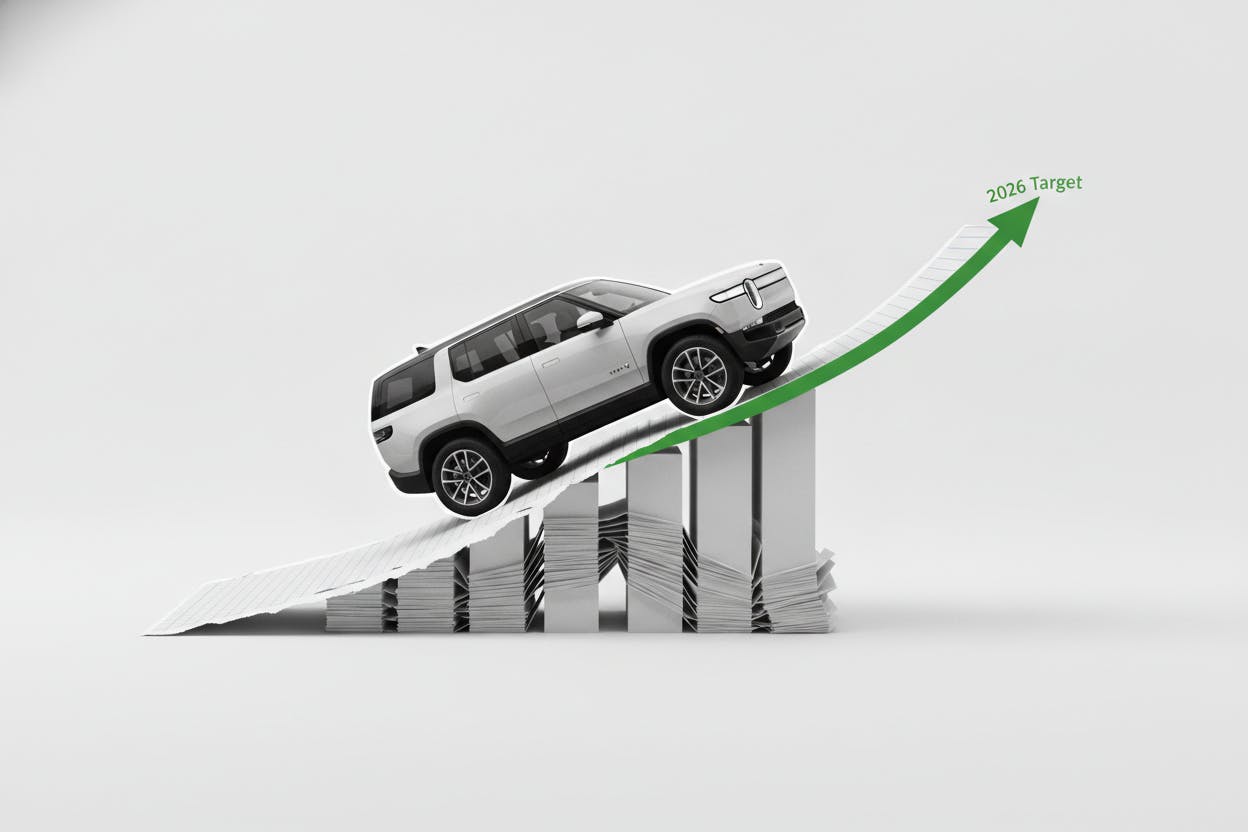
Rivian Automotive has lifted its 2026 delivery forecast, signaling growing confidence in its new R2 SUV as the electric vehicle maker works to expand its customer base beyond early adopters. The Irvine, California-based company now expects to deliver between 65,000 and 70,000 vehicles in 2026, up from its previous range of 62,000 to 67,000.
The revised target comes after Rivian reported second-quarter deliveries of 12,194 vehicles, a 14% increase from the same period last year and well above the 10,518 that analysts at Visible Alpha had expected. The beat was driven by sustained demand for Rivian's electric delivery vans and its R1 lineup of SUVs and pickup trucks, as well as the first customer handovers of the R2, which began production in April and reached buyers in June.
What the R2 Means for Rivian
The R2 is a smaller, more affordable SUV designed to broaden Rivian's appeal beyond the premium R1 models. The launch version starts at $57,990, positioning it directly against Tesla's Model Y. Rivian has also outlined plans for cheaper trims over time, including a much-discussed $45,000 version slated for late 2027. The R2 is central to Rivian's strategy of moving from a niche luxury brand to a higher-volume automaker.
Rivian is also sketching a longer product runway. The company is working on additional R2 variants and an even smaller R3 crossover, and it has a deal with Uber to deploy 10,000 autonomous R2 robotaxis starting in 2028. These moves suggest Rivian is thinking beyond just the initial launch, aiming to build a family of vehicles that can compete across multiple segments.
The Steep Climb Ahead
While the raised 2026 target is a positive signal, the numbers imply a significant acceleration in production. Reuters calculated that Rivian would need to deliver roughly 45,000 vehicles in the second half of 2026 alone to hit the midpoint of its new range. That would require the company to more than double its current quarterly run rate.
For context, Rivian delivered 12,194 vehicles in the second quarter of 2025. To reach 45,000 in the second half of 2026, it would need to average about 7,500 per month—a pace it has not yet sustained. The company's factory in Normal, Illinois, will need to ramp up R2 production significantly, and any hiccups in the supply chain or manufacturing process could delay the timeline.
Automakers face high fixed costs from their factories, so higher and steadier output can spread those costs across more vehicles, lowering the cost per car and reducing cash burn. That's why the back-half math matters more than one quarter's beat: if Rivian can sustain a second-half 2026 run rate consistent with roughly 45,000 deliveries, the company's path to profitability looks more credible. If it cannot, the same operating leverage works in reverse, and losses could linger even with popular models.
What It Means for Investors
Rivian's updated forecast puts the spotlight squarely on execution. The company has already shown it can produce compelling vehicles that attract loyal customers, but turning that into consistent, profitable growth requires scaling production without major stumbles. Investors will be watching quarterly delivery numbers closely over the next 18 months to see if the ramp stays on track.
The broader EV market remains competitive. Tesla continues to dominate, and legacy automakers are rolling out more electric models. Rivian's advantage lies in its brand identity—outdoor-oriented, adventure-focused vehicles that appeal to a specific lifestyle—and its early lead in the electric pickup and SUV space. But that lead is narrowing as rivals catch up.
Rivian also benefits from a strategic partnership with Amazon, which is both a major investor and a customer for its electric delivery vans. Amazon's commitment to electrifying its fleet provides a steady source of demand for Rivian's commercial vehicles, which helps diversify its revenue beyond consumer sales. For more on Amazon's broader ambitions, see our coverage of Amazon's Project Kuiper hitting 394 satellites.
The delivery target revision also comes amid a mixed picture for the EV sector. Tesla recently beat delivery estimates but saw its stock drop amid broader market concerns, as we covered in June Jobs Miss Sends Mixed Signals; Tesla Drops Despite Delivery Jump. Meanwhile, Lucid missed its Q2 delivery estimates and named a new CFO, as reported in Lucid Misses Q2 Delivery Estimates, Names New CFO Amid Restructuring. Rivian's ability to stand out in this environment will depend on whether it can deliver on its promises.
For everyday investors, the key takeaway is that Rivian's story is now about execution at scale. The R2 gives the company a stronger product lineup, but the financial benefits will only materialize if production ramps smoothly. Any delays or quality issues could weigh on the stock, while steady progress toward the 2026 target could build confidence in the company's long-term viability.