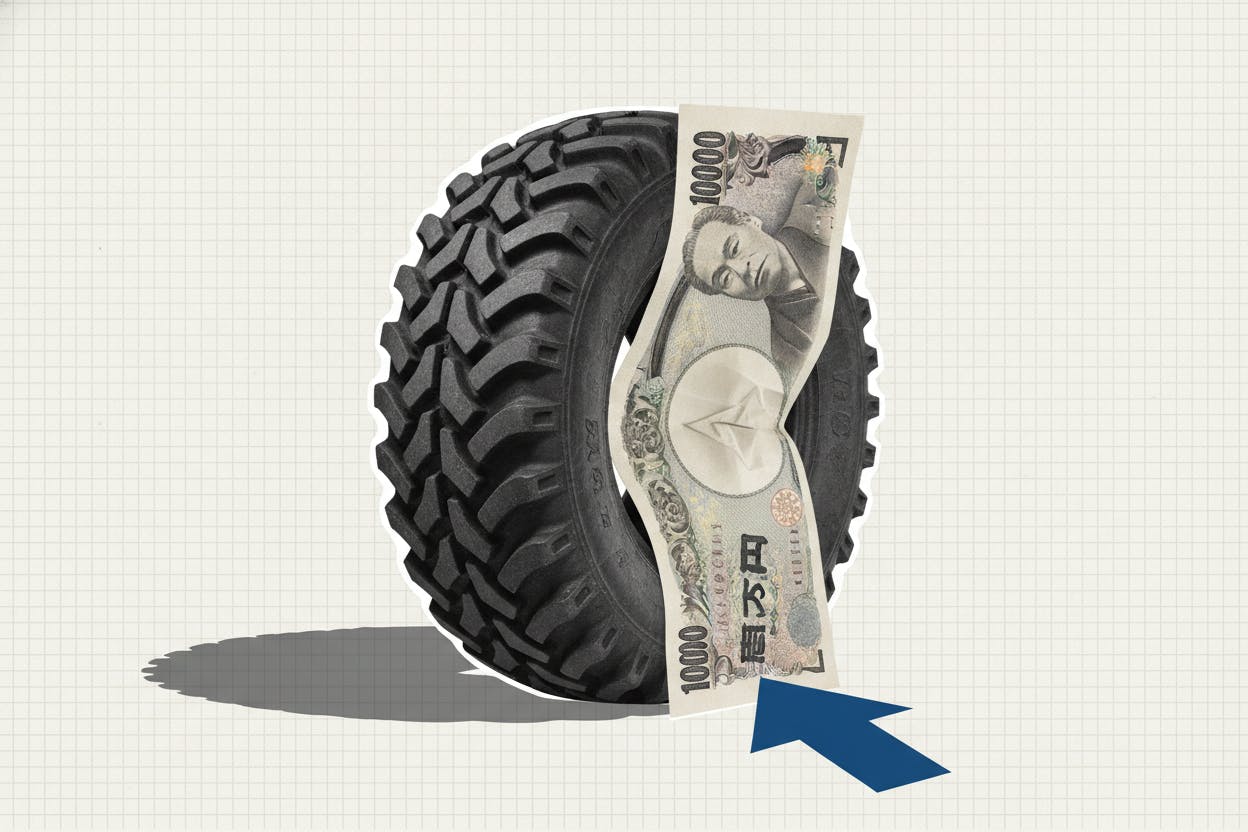
Rubber futures in Japan and China edged higher in recent trading, but the move owes more to currency and cost factors than to any genuine pickup in tire demand. The yen's slide to near four-decade lows and firmer oil prices provided the lift, while underlying fundamentals remain soft.
What Happened
On the Osaka Exchange (OSE), the December rubber contract rose to 421.4 yen per kilogram. Meanwhile, the Shanghai Futures Exchange saw its September rubber contract inch up to 16,970 yuan per metric ton. The yen traded around 161.75 per dollar, close to levels not seen in 40 years. A weaker yen makes yen-denominated contracts like OSE rubber appear higher even if the global dollar-based price hasn't moved much. Oil prices also crept up, which can raise costs for synthetic rubber, a petrochemical-based substitute for natural rubber.
Why It Matters
For everyday investors, this story highlights how currency movements can distort commodity prices. When the yen weakens, Japanese rubber futures can climb simply through translation—the same dollar price converts into more yen. That helps explain why OSE rubber can print 421.4 yen/kg even as Singapore's SICOM August rubber sits near 216 US cents/kg. But the flip side is speed and reversibility. If Japanese officials intervene to strengthen the yen, the math runs backward and OSE prices can drop quickly, narrowing the gap to dollar benchmarks even if tire orders and inventories haven't improved.
This dynamic means that near-term moves in rubber futures may say as much about foreign exchange volatility as they do about the health of the tire market. For investors using rubber as an industrial-demand barometer, it's a reminder to look past headline price moves and consider the underlying drivers.
Fundamentals Remain Soft
Guoxin Futures, a Chinese futures brokerage, highlighted several headwinds. Expectations for new tire orders are weak, inventories of finished tires—especially semi-steel tires—are rising, and some tire makers have started maintenance shutdowns since early July, curbing near-term rubber usage. Together, these factors suggest the recent rally is more a currency-and-cost story than a clean signal that tire demand is turning a corner.
This is consistent with broader trends in industrial commodities. For example, aluminum prices have been influenced by supply fears and inventory levels, while palm oil prices have been boosted by rallies in soy oil and crude. In each case, external factors like energy costs and currency moves play a significant role.
What to Watch Next
Investors should keep an eye on the yen. If the Japanese government or central bank intervenes to support the currency, OSE rubber prices could reverse quickly. Also watch for any signs of a pickup in tire demand, such as stronger auto sales or production data, which would provide a more durable foundation for rubber prices. Until then, the rally looks fragile.
For context, similar dynamics have played out in other markets. For instance, Australian stocks have been sensitive to oil price moves driven by OPEC supply decisions, and Canada's services sector has been weighed down by high prices and uncertainty. Currency and cost factors are often the tail that wags the dog in commodity markets.
In summary, the recent uptick in rubber futures is a reminder that not all price moves reflect changing fundamentals. For investors, understanding the role of currency and energy costs is key to interpreting these signals correctly.