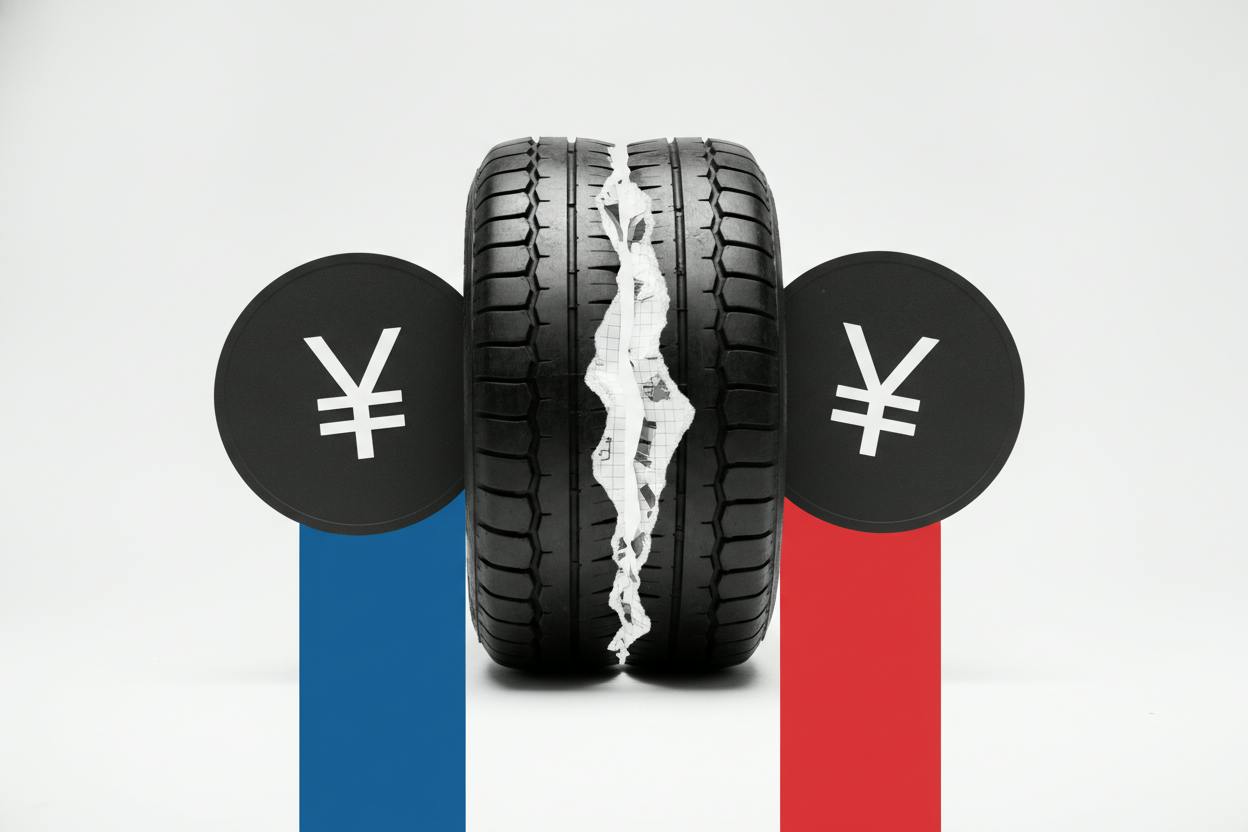
Rubber futures took divergent paths on Thursday, with Osaka contracts sliding as the yen firmed and Tokyo stocks weakened, while Shanghai prices jumped as Chinese markets reopened after the National Day break.
The split highlights how currency moves and regional market sentiment are driving the natural rubber market, a key industrial commodity used in tires, gloves, and other products.
Yen strength pressures Osaka futures
In Japan, rubber futures traded on the Osaka Exchange fell as the yen appreciated against major currencies. A stronger yen makes yen-denominated commodities like rubber more expensive for overseas buyers, which can dampen demand and push prices lower.
At the same time, Japanese equities declined, reflecting a risk-off mood in Tokyo. The combination of a firmer yen and weaker stocks weighed on investor sentiment in the Osaka market, where rubber is one of the most actively traded contracts.
The yen's move comes amid broader volatility in Japanese markets. As Japan's rate swings quicken, currency traders have been on edge, and the yen's strength on Thursday added to the headwinds for commodity futures.
Shanghai rebounds after holiday
In contrast, Shanghai rubber futures jumped as Chinese markets reopened after the National Day holiday, which runs from October 1 to October 7. The rebound suggests traders returned with renewed buying interest, possibly reflecting optimism about demand from the world's largest rubber consumer.
China is a major importer of natural rubber, and its industrial activity and tire production are closely watched by commodity investors. The post-holiday bounce in Shanghai contracts helped offset some of the weakness seen in Osaka.
The divergence between the two exchanges is not unusual, as they respond to different local factors. Osaka is more sensitive to yen moves and Japanese equity sentiment, while Shanghai is driven by Chinese demand expectations and domestic policy signals.
What this means for investors
For everyday investors, the split in rubber prices is a reminder that commodity markets are not monolithic. Prices can move in opposite directions across exchanges due to currency fluctuations, regional economic conditions, and local trading patterns.
Rubber is a cyclical commodity closely tied to the global economy. When growth is strong, demand for tires and industrial goods rises, supporting prices. When currencies shift or stock markets wobble, as seen in Japan on Thursday, those moves can ripple into commodity futures.
Investors with exposure to rubber-related stocks, such as tire makers or natural rubber producers, should watch both the yen and Chinese demand signals. A weaker yen tends to benefit Japanese exporters but can hurt yen-denominated commodity prices. Meanwhile, a strong Chinese recovery could support global rubber demand.
The broader backdrop also matters. Oil prices near $100 have been pressuring global markets, and higher energy costs can influence rubber production and transportation. Additionally, rising Treasury yields have added to market uncertainty, which can spill over into commodities.
For now, the key question is whether Shanghai's post-holiday rally can sustain momentum, or whether the yen's strength will continue to weigh on Osaka. Traders will also be watching for any new data on Chinese manufacturing and auto sales, which are major drivers of rubber demand.
As always, commodity prices can be volatile, and moves on a single day should not be overinterpreted. But the divergence on Thursday underscores how global markets are interconnected, and how currency and equity moves can shape commodity prices in unexpected ways.