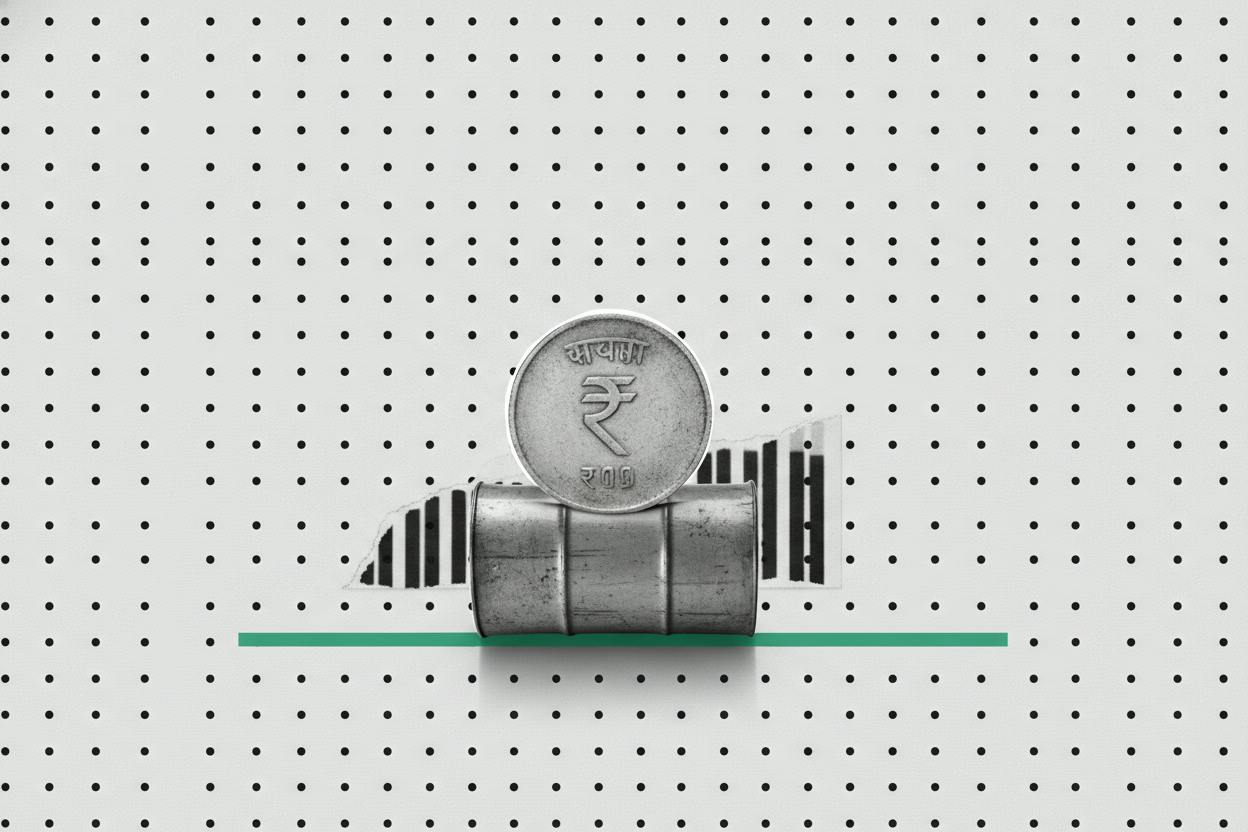
India's rupee has climbed to its strongest level in more than six months, buoyed by two powerful tailwinds: a sharp fall in global oil prices and a cooling of the artificial-intelligence trade that had been drawing money into tech-heavy markets across Asia. The currency traded at about 93.9050 per dollar, a level not seen since early spring, as traders repositioned ahead of India's October inflation reading.
Oil's slide eases pressure on the rupee
The most immediate driver is crude. Brent, the international benchmark, dropped by nearly $20 a barrel in what was its biggest weekly fall in about six and a half years. For India, which imports the vast majority of the oil it consumes, cheaper crude is a meaningful economic tailwind. A lower oil bill means the country needs fewer dollars to pay for its energy imports, which reduces demand for the US currency and can support the rupee.
This is a familiar dynamic for emerging markets that are net energy importers. When oil prices spike, their currencies often weaken as importers scramble for dollars. When prices tumble, the reverse happens: the currency finds support, inflation pressures ease, and the central bank may have more room to focus on growth rather than defending the exchange rate.
AI trade cools, and money moves
The second factor is the rotation away from technology and AI-linked stocks across Asia. After a long stretch where investors piled into anything with an AI angle, that trade has started to wobble. As money flows out of tech-heavy markets, some of it has found its way into markets like India, which has a broader mix of sectors and is seen as a more diversified bet.
This shift is visible in regional equity moves. Emerging market stocks have slid as the AI trade wobbles, but India has held up relatively well. That resilience, combined with the oil tailwind, has made the rupee an attractive destination for foreign investors.
What to watch: October inflation
With the currency at a six-month high, attention now turns to India's October consumer price index data, due this week. Inflation is a key input for the Reserve Bank of India's interest rate decisions. If the reading comes in below expectations, it could reinforce the case for rate cuts, which would be a further boost for bonds and equities. If it surprises to the upside, it could temper some of the optimism.
Analysts are watching closely because the oil price drop has already improved the inflation outlook. Cheaper fuel typically feeds through to lower transportation and food costs, which are significant components of India's inflation basket. A benign print would give the central bank more flexibility to support growth.
What it means for investors
For everyday investors, the rupee's strength has several implications. A stronger currency makes imported goods cheaper, which can help contain inflation and support consumer spending. It also boosts the returns for foreign investors holding Indian assets, since they gain both from asset appreciation and currency gains.
For Indian investors with overseas exposure, a stronger rupee means their foreign investments are worth less in rupee terms. That is a reminder that currency moves can cut both ways, even when they are positive for the domestic economy.
The bond market is also in focus. A stronger rupee and lower oil prices can attract foreign money into Indian government bonds, which offer relatively high yields. This dynamic was already visible in recent months, with some issuers tapping the rupee bond market at attractive rates.
The broader backdrop
The rupee's move comes against a mixed global backdrop. While oil has fallen sharply, other commodities have been less fortunate. Copper has headed for its worst week since March as the tech selloff cooled demand hopes. That divergence highlights how the AI trade has been influencing not just equities but also raw materials.
In India, the equity market has been on a strong run, though it paused during the Diwali session as foreign-led buying took a breather. The rupee's strength could encourage further foreign inflows, but much will depend on the inflation data and the global risk appetite.
Bottom line
The rupee's six-month high is a welcome development for India, reflecting both a favourable oil shock and a shift in global investment flows. But the currency's path forward will hinge on the inflation print and whether the AI trade continues to cool. For investors, the key takeaway is that currency moves are a reminder of how interconnected global markets are—and how a single commodity price can ripple through an entire economy.