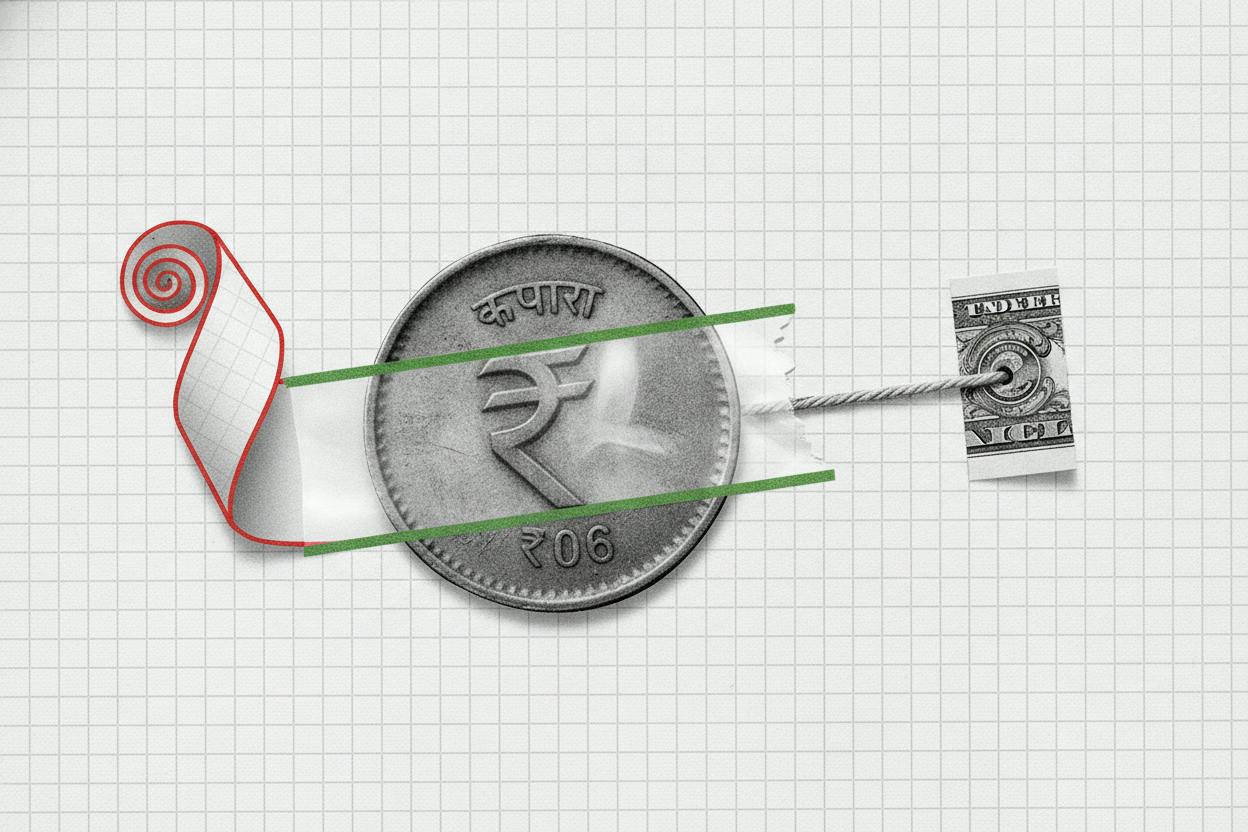
India's rupee slipped to a two-week low on Thursday, even as most other Asian currencies firmed after the U.S. Federal Reserve held interest rates steady. The move highlights how domestic factors—stubborn demand for U.S. dollars and only modest support from India's central bank—can outweigh a generally supportive global backdrop.
Reuters reported the rupee trading at 95.3675 per U.S. dollar, weaker than its previous close. Traders pointed to steady dollar buying near the daily reference rate, as well as payments tied to overseas debt, as key sources of pressure.
Why the rupee lagged its peers
The Federal Reserve's decision to hold rates steady on Wednesday typically boosts emerging-market currencies, as it reduces the appeal of the dollar and eases pressure on countries that borrow in dollars. Indeed, most Asian currencies strengthened in response. But the rupee failed to join the rally.
One reason is the persistent demand for dollars from importers and companies with foreign debt obligations. When these entities buy dollars, they put downward pressure on the rupee. The brief noted that this demand has been "sticky," meaning it hasn't faded even as the global mood improved.
Another factor is the role of the Reserve Bank of India (RBI). The central bank often intervenes in the currency market to smooth volatility, either by selling dollars to support the rupee or by buying dollars to prevent excessive appreciation. In this case, the RBI's support was described as "light," meaning it did not aggressively defend the currency. That allowed the rupee to drift lower.
This marks a shift from earlier in the month, when the rupee had strengthened. At that time, regulatory measures and inflows related to initial public offerings (IPOs) helped support the currency. Those inflows have since faded, leaving the rupee more exposed to dollar demand.
What this means for investors
For everyday investors, a weaker rupee has mixed implications. On one hand, it can be a headwind for foreign investors holding Indian assets, as currency depreciation erodes their returns when converted back to dollars. On the other hand, it can benefit Indian exporters, who receive more rupees for their dollar-denominated earnings.
For Indian investors with exposure to U.S. stocks or dollar-based funds, a weaker rupee means their overseas investments are worth more in rupee terms. But for those planning to travel abroad or pay for imports, a weaker rupee makes those expenses costlier.
The rupee's performance also matters for inflation. A weaker currency makes imported goods, especially oil, more expensive. India imports a large share of its crude oil, so a sustained decline in the rupee could add to inflationary pressures, potentially influencing the RBI's monetary policy decisions.
Investors should watch whether the RBI steps up its intervention in the coming days. If the central bank decides to defend the currency more aggressively, the rupee could stabilize. But if dollar demand remains strong and global factors turn less favorable, further weakness is possible.
The broader context is also important. The Fed's hold on rates, while supportive for emerging markets, comes amid a mixed global outlook. Oil prices remain elevated, and foreign investors have been pulling money out of Indian stocks in recent weeks, as noted in a related story on Indian stocks facing headwinds. These factors could keep the rupee under pressure even if the Fed's stance remains dovish.
For a deeper look at how the Fed's decision is affecting currencies, see our analysis of the dollar's reaction to the Fed's hold. And for more on the rupee's recent moves, check out our earlier piece on the rupee firming after a dovish Fed hold.
The road ahead
Currency markets are notoriously difficult to predict in the short term. But the key variables to watch are clear: the path of U.S. interest rates, global oil prices, and the RBI's willingness to intervene. For now, the rupee is caught between a supportive global tide and persistent domestic dollar demand.
As always, investors should focus on their long-term goals rather than reacting to daily currency swings. A weaker rupee is not inherently good or bad—it depends on your individual circumstances and investment portfolio.