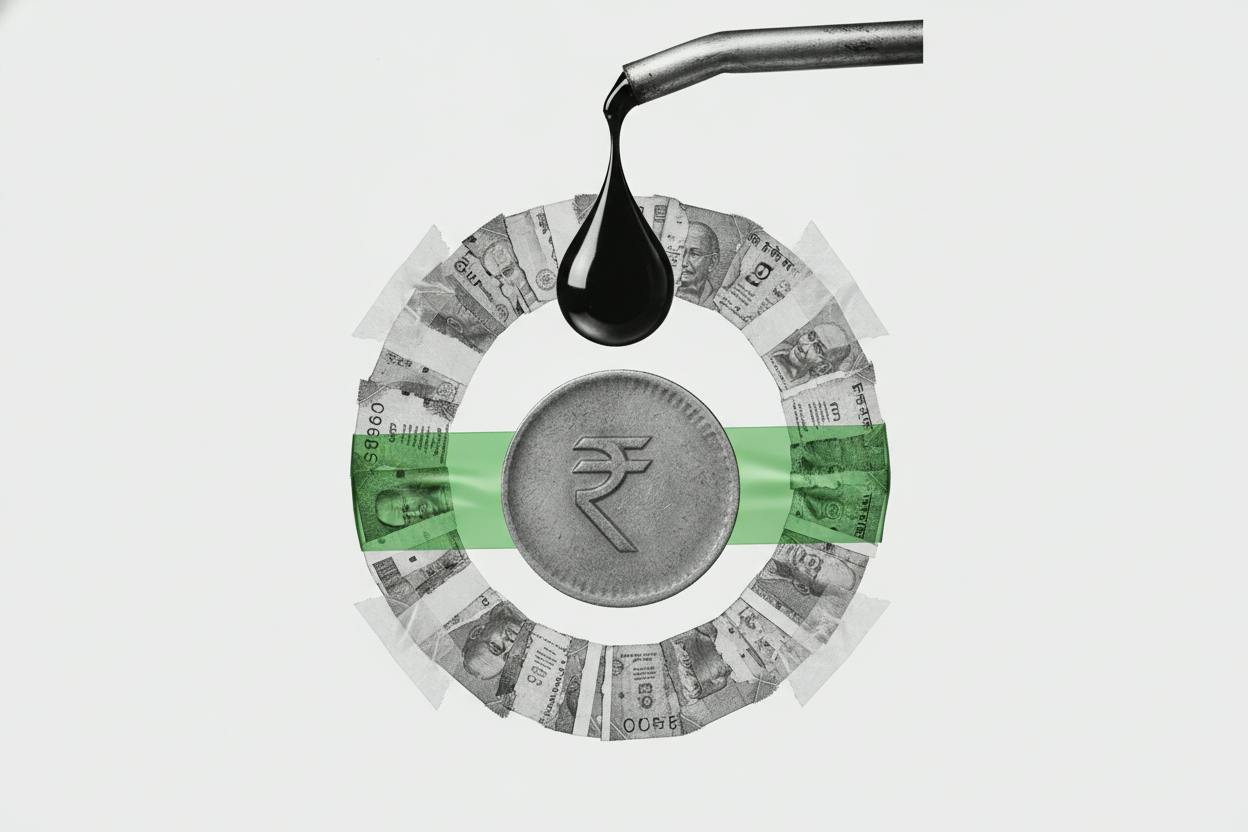
India's rupee is set for a soft start on Monday, with traders eyeing a range of 95.90 to 95.95 per US dollar. The currency is under pressure as global oil prices remain elevated above $100 a barrel, a key concern for an economy that imports the vast majority of its crude.
Despite the weak opening, market participants are counting on the Reserve Bank of India (RBI) to step in and smooth any sharp moves, as it has done in recent weeks. In addition, a wave of upcoming initial public offerings (IPOs) is expected to bring dollar inflows that could help support the rupee.
Why oil matters for the rupee
Oil is a major factor for India's currency because the country buys most of its crude from abroad. When prices rise, the import bill swells, which can widen the current account deficit — the gap between what India earns from exports and what it spends on imports. A wider deficit typically puts downward pressure on the rupee, as more dollars are needed to pay for those imports.
On Monday, Brent crude slipped about 2% to roughly $101.7 a barrel, but it remains well above levels that traders consider comfortable. The elevated price keeps the risk of dollar demand from oil companies and hedgers in focus, as they may need to buy dollars to settle import payments.
For everyday investors, a weaker rupee can have mixed effects. It makes imported goods and foreign travel more expensive, and it can also raise the cost of imported raw materials for Indian companies, potentially squeezing profit margins. On the other hand, exporters and IT firms that earn revenue in dollars often benefit from a softer rupee.
RBI's role and IPO inflows
The RBI has a history of intervening in the foreign exchange market to curb excessive volatility. By selling dollars or using other tools, the central bank can help stabilise the rupee when it is falling too fast. Traders are betting that the RBI will act to prevent a sharp slide beyond the 96 level, a threshold that has drawn attention in recent sessions.
Another supportive factor is the pipeline of IPOs in India. When companies list on the stock market, foreign investors often bring in dollars to buy shares, which increases the supply of dollars in the system and can help lift the rupee. The recent NSE IPO was fully subscribed by day two, and its debut is set for later this month, adding to expectations of continued inflows.
However, the scale of these inflows may be limited compared with the pressure from oil. As one trader noted, the RBI's presence is likely to keep the currency within a narrow band, but the overall trend will depend on global oil prices and the strength of the US dollar.
What it means for investors
For Indian investors, the rupee's movement is closely watched because it affects everything from portfolio returns to the cost of imported goods. A stable rupee is generally seen as positive for the stock market, as it reduces uncertainty for foreign investors and helps companies with overseas borrowings.
On the flip side, if oil prices keep climbing and the rupee weakens further, it could add to inflationary pressures, potentially prompting the RBI to keep interest rates higher for longer. That would affect borrowing costs for businesses and consumers alike.
Traders will be watching the RBI's actions closely, as well as any fresh cues from global oil markets. The yen's recent steadiness and other currency moves also offer hints about broader dollar strength, which influences the rupee's path.
For now, the consensus is that the rupee will stay range-bound, with the RBI acting as a buffer. But if oil prices spike again, the pressure could intensify, and the 96 level may become a key battleground. Investors should keep an eye on oil headlines and any central bank statements for clues about the next move.