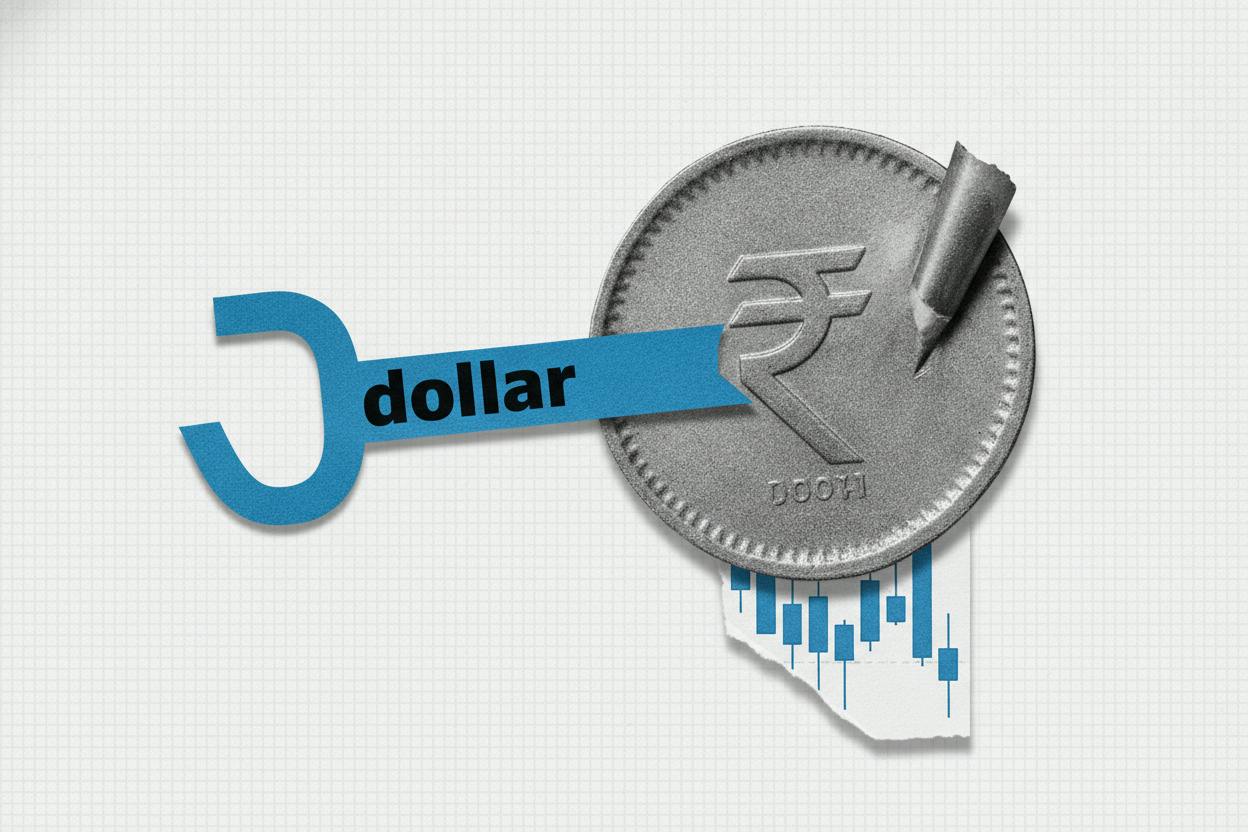
The Indian rupee's five-day winning streak hit a speed bump on Monday, with the currency slipping to 92.91 per dollar after briefly touching its strongest level in seven months. The pullback came as importers stepped up their purchases of US dollars and domestic stocks fell sharply on profit-taking.
Early in the session, the rupee strengthened to 92.44 per dollar, its firmest level since April, before reversing course. Traders pointed to two large conglomerates as key buyers of dollars, a move that left the currency about 0.26% weaker than its previous close. The shift aligned with a risk-off mood at home: the Nifty 50 index dropped nearly 2% as investors locked in gains after a recent run-up.
What drove the reversal?
The rupee's recent rally had been fueled by strong foreign inflows, with overseas investors pouring money into Indian equities and debt. That momentum, however, can quickly reverse when importers—companies that need dollars to pay for goods and services—step in to buy the US currency. Large conglomerates, in particular, can move the market given the size of their transactions.
Monday's action also reflected a broader shift in sentiment. The Nifty 50's decline, driven by profit-taking, signaled that some investors were choosing to cash in gains rather than push stocks higher. When local equities fall, foreign investors often pull money out, which can weigh on the rupee.
The rupee's pause is not unusual after a sharp run. Currencies often take a breather as traders reassess positions and new buyers emerge at different price levels. The fact that the rupee had risen for five straight sessions made it vulnerable to a correction.
What it means for investors
For everyday investors, the rupee's movement matters in several ways. A weaker rupee makes imported goods more expensive, which can feed into inflation. It also affects companies that rely heavily on imports or have foreign currency debt, as their costs rise. On the flip side, exporters—such as IT services firms and pharmaceutical companies—tend to benefit from a weaker rupee because their earnings in dollars translate into more rupees.
The Nifty 50's nearly 2% drop is a reminder that stock markets do not move in a straight line. Profit-taking after a rally is a normal part of market cycles, and investors should not panic over a single day's decline. However, sustained weakness in equities could signal deeper concerns, such as slowing economic growth or rising global uncertainty.
For those with investments in international funds or foreign assets, currency movements can add another layer of volatility. A weaker rupee means that returns from overseas investments, when converted back to rupees, may be lower.
Broader context
The rupee's recent strength came amid a broader trend in global markets. The US dollar has been under pressure as traders trimmed expectations for further Federal Reserve rate hikes, a development that has supported emerging market currencies. However, the dollar's moves can be unpredictable, and any shift in Fed policy or global risk sentiment could quickly change the picture.
In India, the central bank has historically intervened in the currency market to smooth excessive volatility, though it has not commented on recent moves. Investors will be watching for any signs of intervention, as well as upcoming economic data that could influence the rupee's direction.
The rupee's pause also comes at a time when other markets are experiencing their own turbulence. For instance, copper prices have slid to an eight-month low amid doubts about AI-driven demand and a strong dollar, while gold has posted its worst week in eight months as the dollar and Fed rate hike expectations weigh on the precious metal. These global trends can indirectly affect the rupee through their impact on investor sentiment and commodity prices.
Looking ahead, traders will likely focus on the pace of foreign inflows, the trajectory of the Nifty 50, and any fresh cues from the US Federal Reserve. A sustained recovery in the rupee would depend on continued foreign investment and a stable global environment.
For now, the rupee's pause is a reminder that currency markets are inherently volatile, and short-term moves should not be overinterpreted. Investors are better served by focusing on long-term fundamentals rather than daily fluctuations.