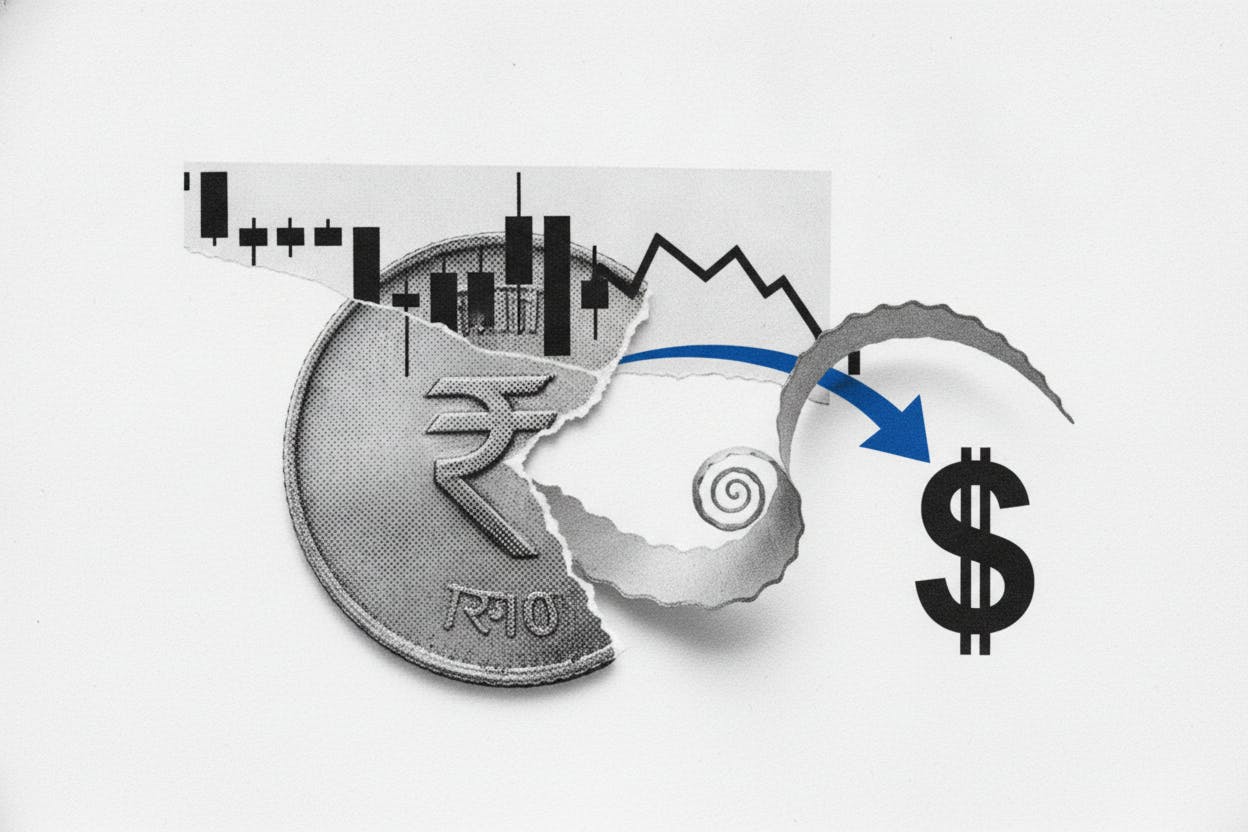
The Indian rupee ended Monday 0.1% weaker at 94.54 per dollar, a move that stood out against a backdrop of gains in most other Asian currencies. The decline came as a late-session slide in Indian stocks prompted foreign banks to step in as dollar buyers, weighing on the local currency.
Traders said the USD/INR pair traded in a tight range for most of the day before softening in the final hour. The trigger: the Nifty 50 fell 0.4%, and foreign banks began executing dollar purchases, likely on behalf of custodian clients. That kind of end-of-day flow is a familiar pattern when overseas investors trim their holdings of Indian equities.
Why the Rupee Moved Against the Regional Tide
The rupee's weakness was notable because most other Asian currencies strengthened on Monday. That divergence highlights a key dynamic: when foreign investors sell Indian stocks, the rupee proceeds from those sales are often converted back into dollars through custodian-bank desks. That creates a wave of dollar demand that can push the rupee lower, even when broader regional sentiment is positive.
This is not a new phenomenon. The rupee has historically been sensitive to portfolio flows, especially from foreign institutional investors (FIIs). When FIIs are net buyers, the rupee tends to strengthen; when they pull money out, the currency often comes under pressure. Monday's move was small, but it underscores how equity market sentiment can directly affect currency markets.
Meanwhile, traders were also watching for signals from the US Federal Reserve. Expectations around future interest rate hikes can influence the dollar's strength globally, and any hawkish shift from the Fed tends to put pressure on emerging-market currencies like the rupee. For now, the market is in a wait-and-see mode, with the Fed's next policy meeting a key event to watch.
What This Means for Investors
For everyday investors, the rupee's movement matters for a few reasons. A weaker rupee makes imported goods more expensive, which can feed into inflation. It also affects the returns on foreign investments: if you hold US stocks or ETFs, a falling rupee means your returns in rupee terms get a boost. Conversely, if you are planning to travel abroad or buy imported products, a weaker rupee means higher costs.
The broader takeaway is that Indian markets remain sensitive to foreign capital flows. When global risk appetite is strong, money flows into emerging markets like India, supporting both stocks and the currency. But when sentiment turns cautious—whether due to Fed policy, geopolitical tensions, or domestic factors—that money can quickly reverse.
Investors should also keep an eye on the Indian stocks stall as US-Iran ceasefire update fails to ignite rally story, as equity market direction is closely tied to currency moves. Similarly, broader regional trends, such as those seen in Singapore stocks edge up as geopolitical tensions cool, can provide context for how global factors are shaping investor sentiment across Asia.
While Monday's move was modest, it serves as a reminder that currency markets are influenced by a complex mix of local and global factors. For now, the rupee remains in a range, but any sustained selling in Indian stocks could push it lower. Traders will be watching the Nifty's next moves and any fresh cues from the Fed for direction.