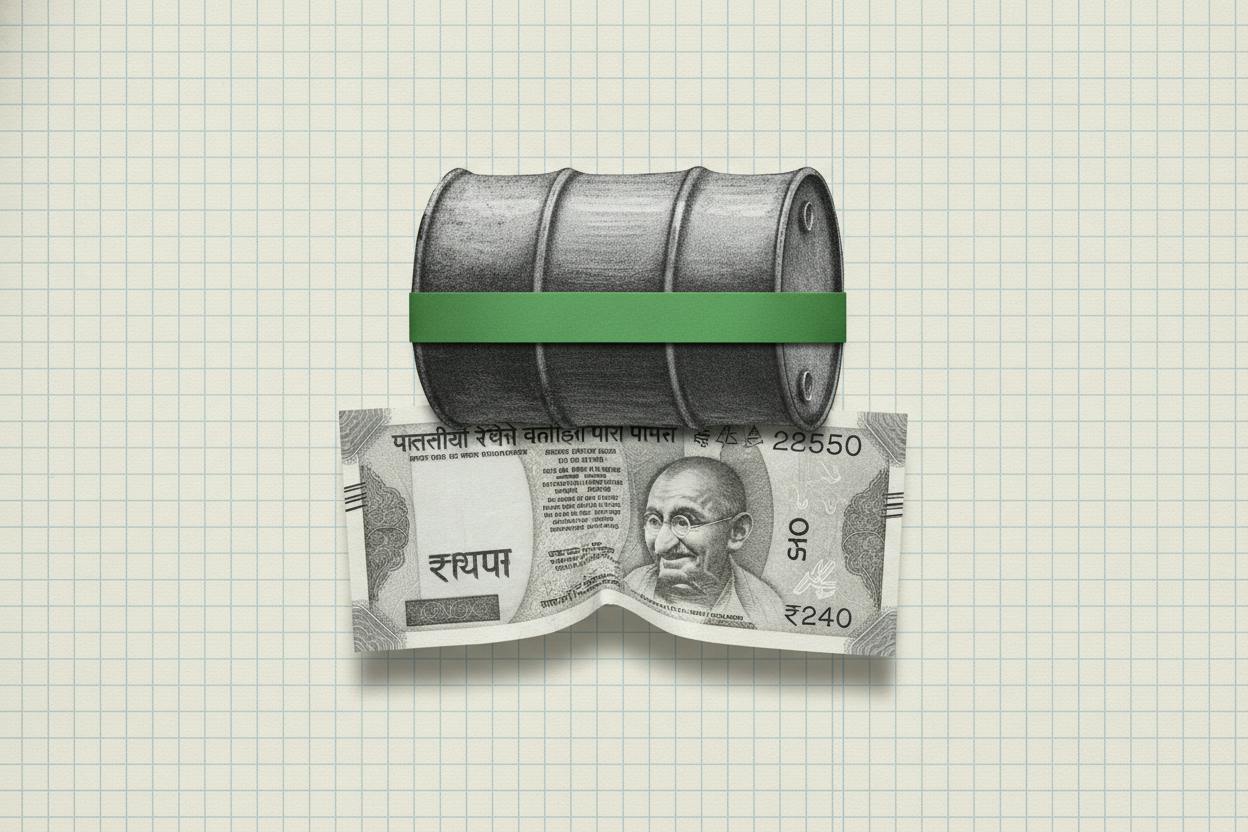
India's rupee edged lower on [day] as global oil prices jumped above $115 a barrel following an attack on a Saudi refinery. The move underscored how sensitive the currency is to energy shocks, given that India imports the vast majority of its crude oil.
According to traders, state-run banks were seen offering dollars in the market, likely on behalf of the Reserve Bank of India (RBI). This intervention, along with some foreign portfolio inflows, helped limit the rupee's slide. The currency was trading around 95.19 per US dollar, a level that looks stable on the surface but masks the ongoing pressure.
Why oil hits the rupee so hard
India buys most of its oil from abroad, and those purchases are settled in US dollars. When Brent crude rises, the country's import bill swells, creating steady demand for dollars in the spot market. Over time, this can widen India's current-account deficit—the gap between what the country earns from exports and what it spends on imports. A wider deficit typically weighs on the currency.
The RBI can smooth day-to-day swings by supplying dollars through state-run banks, as it did in this session. But such intervention is a holding action, not a cure. If oil stays expensive, the dollar demand from energy imports keeps coming back, regardless of one-off support or a single risk-on session.
What to watch next
The next catalysts are clear. Further disruptions in the Middle East could keep oil elevated, adding more pressure on the rupee. Meanwhile, the US Federal Reserve's policy decision is on the horizon. Its guidance on interest rates could influence US yields and the relative appeal of holding dollars versus emerging-market currencies like the rupee.
For investors, the key is to understand that the rupee's fate is tied closely to oil prices and global monetary policy. A calm-looking exchange rate can still hide a medium-term bias toward a weaker rupee if energy prices remain high. That means pricing for India-linked assets and currency hedges often hinges more on how long Brent stays near $115 than on any single bout of central-bank smoothing.
The situation is reminiscent of other episodes when oil spikes tested the rupee. In the past, the RBI has stepped in to prevent sharp moves, but the underlying economic fundamentals eventually reassert themselves. As some economists have warned, defending a specific exchange rate level can be costly and may not be sustainable if the pressure persists.
What it means for investors
For everyday investors, the rupee's movement matters in several ways. A weaker rupee can make imported goods more expensive, potentially feeding into inflation. It can also affect companies that rely on imported raw materials or have foreign-currency debt. On the flip side, exporters and IT services firms that earn in dollars may benefit from a weaker rupee.
The RBI's intervention is designed to prevent excessive volatility, which can be disruptive for businesses and markets. But investors should not assume that the central bank will defend any particular level indefinitely. As oil at $115 and the Fed decision weigh on Indian stocks, the broader market is also feeling the pinch.
For those with exposure to Indian assets, the key is to monitor oil prices and the Fed's stance. If Brent stays elevated, the rupee could remain under pressure, and that could have knock-on effects on inflation, interest rates, and corporate earnings. Conversely, a drop in oil prices or a dovish Fed could ease the pressure and support the currency.
In the near term, the RBI's actions may keep the rupee within a range, but the medium-term trend will depend on forces beyond its control. As Indian banks pause dollar bond sales due to rising hedging costs, the cost of managing currency risk is also climbing, adding another layer of complexity for investors.
Ultimately, the rupee's wobble is a reminder that in a globalised economy, no currency is an island. For Indian investors, staying informed about oil and global monetary policy is as important as watching domestic fundamentals.