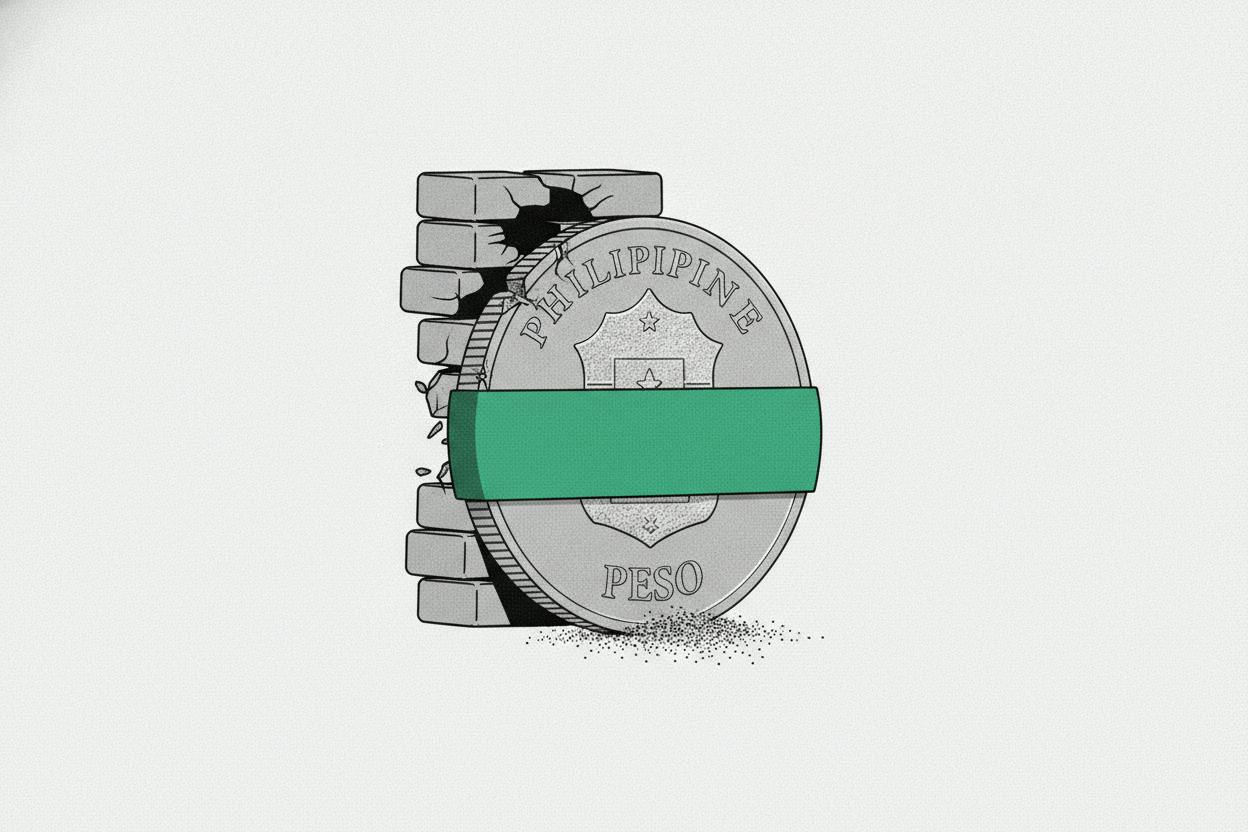
The Philippine peso tumbled to an all-time low of 64.17 against the US dollar this week, prompting President Ferdinand Marcos Jr. to vow that the government will “defend the peso as hard as we possibly can.” The pledge comes as the currency faces sustained pressure from a strong dollar and rising global interest rates.
Marcos pointed to the country’s foreign exchange reserves as proof that the Philippines has the firepower to lean against sudden currency swings. However, that buffer has been shrinking. Reserves fell to $99.5 billion in September, their lowest level since September 2023. The decline highlights the cost of defending the currency in a challenging global environment.
How the central bank defends the peso
The Bangko Sentral ng Pilipinas (BSP), the country’s central bank, says it steps into foreign exchange markets to smooth sharp swings. In practice, that means using reserves to meet dollar demand when the peso weakens. By selling dollars and buying pesos, the BSP can help calm the spot exchange rate in the moment. But each intervention reduces the reserve stockpile, and traders quickly shift their focus to how fast those reserves are being spent.
This dynamic is familiar to emerging markets. When a central bank supports its currency in the spot market, it is effectively trading foreign currency from its reserve pile for local currency. The more often it has to do that, the more investors worry about the trajectory of reserves. A falling buffer can make future defense look less credible, which can actually accelerate pressure on the currency.
That is why the $99.5 billion reserve figure is the real scoreboard, not the 64.17 exchange rate. If reserves keep sliding, markets may start to question the government’s ability to defend the peso over the long run.
Interest rates: a second lever with trade-offs
Policy makers also have another tool: interest rates. Higher rates can make peso-denominated assets more attractive to investors, which can support the currency and help slow price increases. But higher rates also raise borrowing costs for households, companies, and the government itself. That can weigh on economic growth and make it more expensive for the government to service its debt.
Marcos’ message was that stabilizing the currency cannot be done by rate moves alone. That suggests the government is hoping to avoid a sharp tightening cycle, and instead wants to address the underlying economic pressures that are driving the peso lower. Investors will be watching whether broader economic policy reduces the need for repeated market interventions.
What it means for investors
For everyday investors, the key takeaway is that currency weakness can ripple through financial markets. When a central bank supports its currency, pressure often shows up first in hedging costs. If investors think devaluation risk is rising, they tend to demand pricier protection through foreign exchange forwards and swaps. Over time, higher hedging costs can translate into a bigger risk premium on peso-denominated assets, especially local government bonds and other rate-sensitive borrowing.
This is part of a broader trend across Asia, where dollar strength is pressuring many regional currencies. The US dollar has been firm as markets anticipate the Federal Reserve’s next moves, with traders eyeing a possible December rate hike. A stronger dollar makes it harder for emerging market currencies like the peso to hold their ground.
For investors holding peso assets, the shrinking reserve buffer is a signal to monitor. A central bank with ample reserves can weather currency storms, but a dwindling stockpile can undermine confidence. The BSP’s willingness to intervene is clear, but its ability to do so repeatedly depends on preserving that buffer.
In the near term, the peso’s fate will hinge on global factors, such as the Fed’s policy path, as well as domestic ones, like inflation and economic growth. Marcos’ pledge is a political statement, but markets will be watching the numbers behind it. The next few months will show whether the government can balance defending the currency with keeping the economy on an even keel.