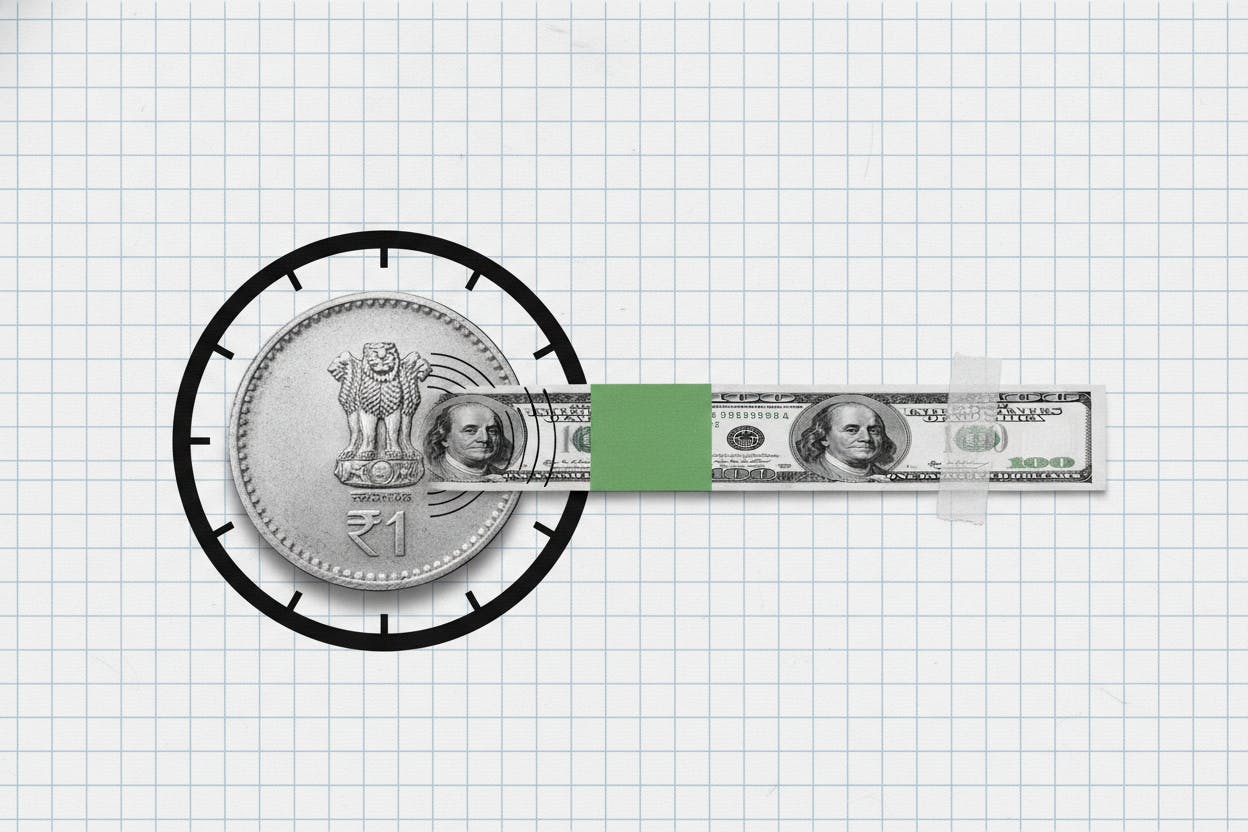
India's rupee slipped to a three-week low on Tuesday, pressured by a combination of dollar demand from oil importers and the expiry of offshore forward contracts. The currency weakened about 0.2% to around 95.4150 per dollar, underperforming some Asian peers as local flows took center stage.
The move underscores how short-term currency moves can be driven by technical and flow-related factors, even when the broader dollar backdrop is relatively calm. The dollar index was steady near a two-week low as investors pared back expectations for further Federal Reserve rate hikes, but that did little to support the rupee against the specific demand pressures it faced.
What's Driving the Rupee Lower?
Two main forces combined to push USD/INR higher. First, local oil companies needed dollars to pay for imports, a recurring source of demand that can weigh on the rupee when crude prices rise or when payments bunch up. Second, traders had to settle or roll over non-deliverable forwards (NDFs) — offshore rupee contracts that, when they mature, can translate into onshore dollar buying. These flows tend to concentrate near the Reserve Bank of India's daily "fix," a reference rate used for many contracts.
Reuters reported that the fix was trading at a 0.25-0.50 paisa premium, a sign that dollars were relatively scarce at that moment and buyers were willing to pay up. When USD/INR rises while the fix shows a premium, it usually points to urgent, "price-insensitive" demand arriving in a tight window — here, oil-importer buying plus NDF-related rolls.
Broader Dollar Picture: Calm for Now
Zooming out, the broader dollar backdrop looked less dramatic. The dollar index was steady near a two-week low as markets dialed back expectations for more Fed rate hikes. Recent data, including weaker-than-expected US jobs numbers, has fueled speculation that the Fed may be done tightening, which typically weighs on the dollar. For context, a similar dynamic recently boosted the South African rand and JSE, as a softer dollar lifted emerging-market currencies.
Still, Wednesday's release of the Fed's July meeting minutes could shift the picture. Any hawkish surprises — signals that the Fed remains concerned about inflation and may need to raise rates further — could reignite dollar demand globally, even if the day-to-day move in USD/INR is currently being driven more by local flows.
What It Means for Investors
For investors with exposure to Indian assets, the rupee's move is a reminder that currency risk can spike even when global markets are quiet. The premium at the RBI fix suggests that liquidity and timing matter more than headlines from the Fed in these moments. Short-term hedging can get more expensive, and volatility often clusters around fix time, until the flows clear or the RBI steps in to smooth the move.
Companies that import goods or have foreign-currency debt may see their costs rise if the rupee remains under pressure. Conversely, exporters could benefit from a weaker rupee, as their dollar-denominated revenues become more valuable in local currency terms. For equity investors, a weaker rupee can weigh on sectors that rely heavily on imports, such as oil and gas, while boosting IT and pharma companies that earn in dollars.
The rupee's performance also ties into broader trends in Indian markets. Strong loan growth has boosted Indian bank stocks, but rising deposit costs and currency volatility could temper the outlook. Meanwhile, the rupee and bonds are awaiting foreign inflows and a key decision on inclusion in Bloomberg's bond index, which could bring significant dollar demand into Indian debt markets.
Looking Ahead
Traders will watch Wednesday's Fed minutes for any shift in rate expectations that could alter global dollar demand. But in the near term, the rupee's direction may depend more on whether oil prices stay elevated and whether the RBI chooses to intervene to smooth volatility. The central bank has a history of stepping in during periods of sharp moves, using its reserves to provide dollar liquidity and prevent disorderly depreciation.
For now, the rupee's slide to a three-week low is a reminder that in currency markets, local plumbing can sometimes matter as much as global macro. Investors with India exposure should keep an eye on fix-time flows and oil prices, as those factors are likely to remain key drivers in the days ahead.