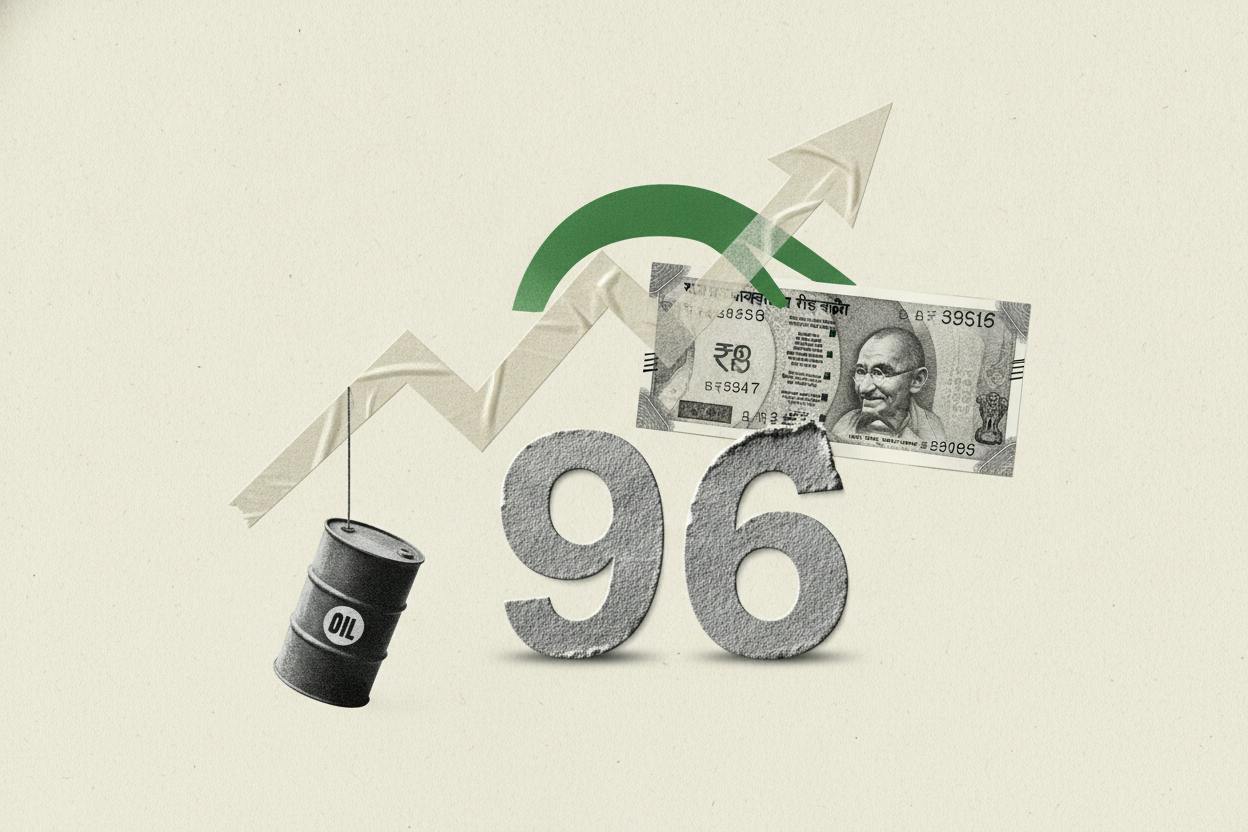
India's rupee is poised for a calmer start on Friday, with traders expecting it to open around 96.22-96.26 per US dollar, a modest improvement from Thursday's close of 96.3150. The respite comes as oil prices soften and markets scale back expectations that the US Federal Reserve will raise interest rates in October.
The currency's recent slide has been driven by two familiar pressures: higher US Treasury yields, which make the dollar more attractive, and elevated crude prices, which swell India's import bill and increase daily demand for dollars. A cooler US jobs report briefly lowered the perceived odds of a Fed hike this month, but as Morgan Stanley noted, bond markets quickly gave back those gains, suggesting investors are not ready to declare inflation risks over after a single data point.
Breaking 96: a psychological barrier
The USD/INR pair has now pushed through the closely watched 96-per-dollar level, a threshold that traders often treat as a signal that the currency pair can keep drifting higher. Big round numbers matter because they can change trading behavior. Once USD/INR gets through 96, importers that had been waiting often rush to lock in future dollar payments, stop-loss orders can kick in, and options tied to that level can push dealers to buy dollars as the spot rate rises.
That extra demand can keep the pair choppy around the 96 handle even on days when the original pressures—oil and US rates—ease. The rupee's weakness has largely come from those two familiar forces, but the bigger swing factor, according to traders, is the Reserve Bank of India (RBI), which has been a steady presence in the market to slow the move rather than reverse it.
RBI's role: smoothing, not reversing
The central bank has been supplying dollars, including through forward-market operations, to cushion the rupee's fall. However, its approach tends to slow the pace of depreciation rather than change the direction if the dollar-and-oil backdrop stays unfavorable. This is a common strategy for central banks in emerging markets: intervene to prevent disorderly moves, but not to fight fundamental trends.
For ordinary investors, the rupee's level matters beyond currency traders. A weaker rupee makes imported goods more expensive, which can feed into inflation. It also affects companies with large foreign-currency debt or those that rely heavily on imports. On the flip side, exporters and IT services firms, which earn in dollars, often benefit from a weaker rupee.
What it means for investors
For markets, breaking 96 can turn hedging flows into the main driver. Importers that delayed hedging may now rush to cover their exposure, adding to dollar demand. This can create a self-reinforcing loop, at least in the short term. Options markets may also see increased activity around the 96 strike, with dealers adjusting their positions as spot moves.
The RBI's intervention can smooth the path, but it is unlikely to reverse the trend if global factors remain adverse. Investors should watch for further cues from US inflation data and Fed speeches, as well as oil price movements. A sustained drop in crude would ease pressure on the rupee, while a renewed spike could push it lower.
In the broader context, the rupee's weakness is part of a global trend of dollar strength. The US economy has remained resilient, and the Fed's higher-for-longer stance has kept Treasury yields elevated. This has put pressure on many emerging market currencies, not just the rupee.
For Indian investors, the key takeaway is that currency movements can have ripple effects across asset classes. A weaker rupee can boost the returns of exporters and IT firms, but it can also increase the cost of imported inputs and fuel inflation. Keeping an eye on the rupee's trajectory, along with oil prices and Fed policy, can help investors understand the forces shaping the market.
As the day unfolds, traders will be watching for any signs of RBI intervention and whether the rupee can hold above 96. The recent RBI's steps to support the rupee have been a key factor, and its continued presence will be crucial. Meanwhile, the broader market sentiment remains cautious, with Indian stocks set to bounce after a long losing streak, though the currency's stability will be a factor to watch.
In the commodities space, copper prices edged up on a softer dollar, reflecting the broader impact of currency moves on global markets. For India, the focus remains on the RBI's actions and the path of oil prices, which will likely determine whether the rupee finds lasting relief or continues its gradual slide.