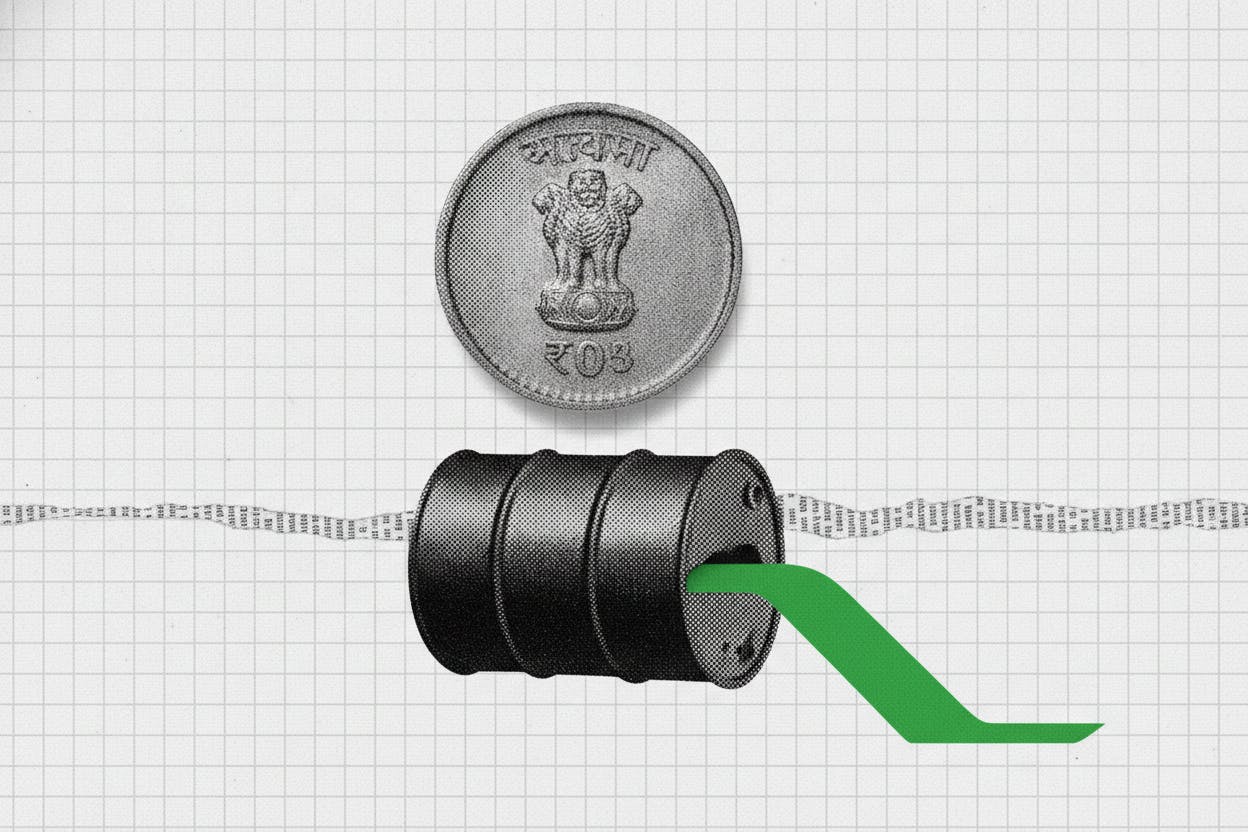
India's rupee was poised to open slightly stronger on Wednesday, getting a welcome reprieve as Brent crude oil prices dropped about 2%. The decline in oil—a key import for India—helped ease some of the pressure on the currency, even as geopolitical tensions between the US and Iran kept markets on alert.
Oil and the Rupee: A Tight Link
India imports roughly 85% of its crude oil needs, making it one of the world's largest oil buyers. When oil prices fall, the country's import bill shrinks, and Indian oil refiners need fewer US dollars to pay overseas suppliers. That reduces day-to-day demand for dollars in the foreign-exchange market, which can help support the rupee.
This week has been a vivid example of how quickly that relationship can swing. Brent crude traded in a wide range between $71 and $80.50 before slipping to around $76.34. Meanwhile, the rupee has been moving in a 94.96–95.60 band against the US dollar, and was seen opening near the stronger end of that range on Wednesday.
Geopolitical Jitters Remain
The oil price drop came despite ongoing US-Iran tensions, which have kept traders on edge. Any escalation in the region—home to some of the world's biggest oil shipping lanes—could quickly reverse the move lower in crude. For now, though, the pullback has given the rupee some breathing room.
Investors are also watching for any signs of intervention by the Reserve Bank of India (RBI), which has been known to step into the currency market to smooth out excessive volatility. Earlier this year, the RBI helped steady the rupee through a series of measures, including covering hedging costs for overseas Indian deposits, as seen in SBI's $1.5 billion fundraising from overseas Indians.
What It Means for Investors
For everyday investors, a stronger rupee can have mixed effects. On the positive side, it reduces the cost of imported goods—from electronics to machinery—which can help contain inflation. It also makes foreign travel and overseas investments cheaper. However, a stronger rupee can hurt export-oriented sectors like IT services and textiles, because their earnings in dollars become worth less when converted back to rupees.
That said, the rupee's move is still modest, and the broader trend remains driven by global factors. The US dollar's strength, driven by the Federal Reserve's interest rate stance, has been a headwind for emerging-market currencies including the rupee. The oil price drop is a short-term positive, but not a game-changer.
Investors should keep an eye on upcoming data, including India's July 10 data dump covering bank earnings, loan growth, and foreign exchange reserves, as detailed in this preview. Strong earnings from major banks could further support the rupee by attracting foreign portfolio inflows.
Broader Market Context
The rupee's slight uptick comes as Indian stocks have also been gaining, helped by a strong start to earnings season. IT giant TCS recently beat revenue estimates on banking demand and a weak rupee, as covered in this report. The combination of lower oil and positive corporate results has lifted sentiment in Indian markets.
Globally, other oil-importing economies are also benefiting from the crude pullback. Latin American markets steadied as oil fell 1.3% on US-Iran strikes, as noted in this article. Meanwhile, the ASX was flat as bank and healthcare losses offset mining gains amid the reopening of the Hormuz strait.
Looking Ahead
The key question for the rupee is whether the oil price drop can be sustained. If US-Iran tensions ease further, crude could continue to slide, giving the rupee more room to recover. But if tensions flare up again, oil could spike, renewing pressure on the currency.
For now, the rupee is getting a breather. Investors should watch oil prices, the RBI's next moves, and the broader global risk appetite to gauge where the currency heads next.



