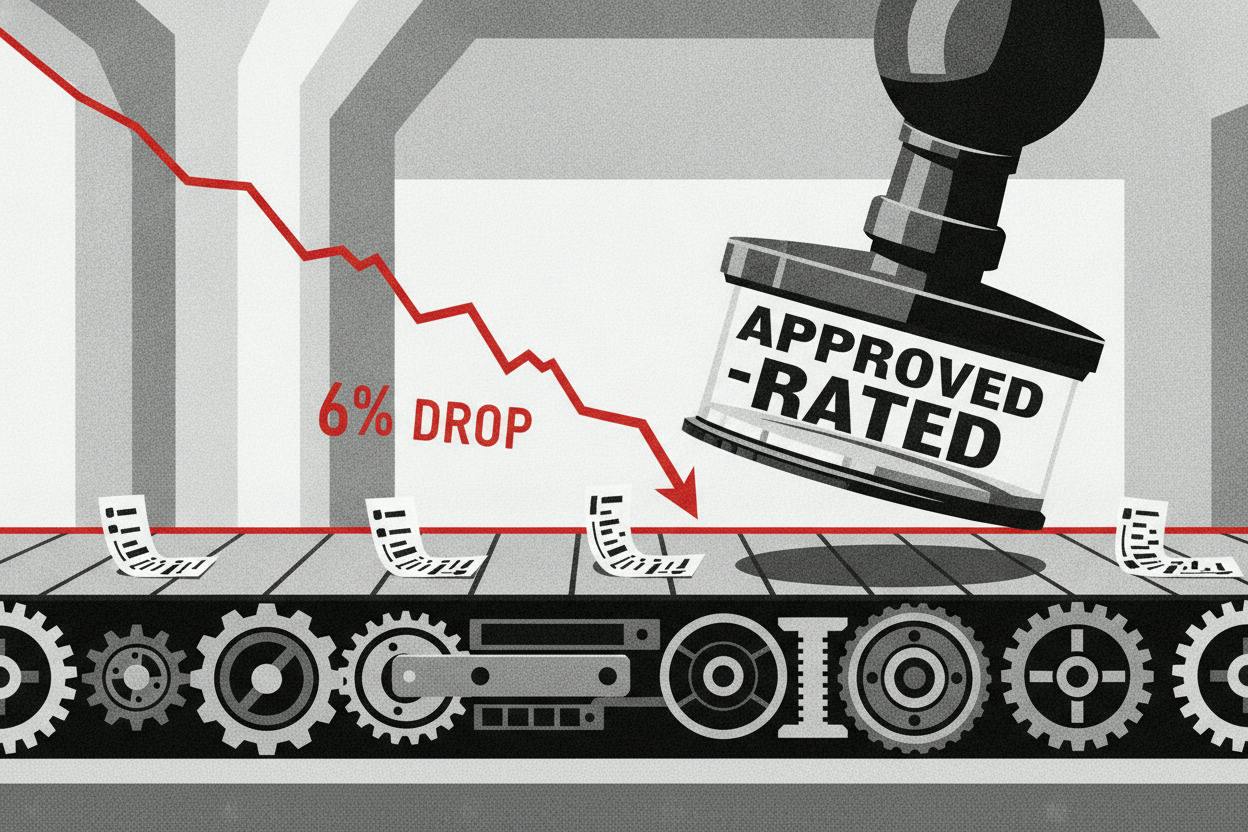
Morgan Stanley is warning that S&P Global and Moody's, the two biggest credit ratings agencies, likely had a sluggish third quarter as companies pulled back on issuing new debt. The bank estimates that corporate debt issuance fell about 6% from a year earlier, which directly hits the fees these firms collect for rating new bonds and loans.
Because ratings fees are tied to the volume of new deals, a slowdown in issuance can quickly cool revenue even when the agencies' subscription-based products remain steady. Morgan Stanley now expects both companies to soften the guidance they've given investors for their ratings divisions, cutting its own forecast for third-quarter ratings revenue growth from 5% to a 1% decline. The bank also trimmed its earnings-per-share estimates by about 1%.
Why ratings revenue is so sensitive
S&P Global and Moody's make a significant portion of their profits from rating newly issued bonds and loans. When a company sells debt, it typically pays an upfront fee to have that debt rated. If fewer deals come to market, those fees disappear quickly. This makes the ratings business highly cyclical, tied to the health of the broader credit markets and the appetite of companies to borrow.
In contrast, the agencies also earn recurring revenue from ongoing surveillance and data subscriptions, which are more stable. But the upfront fees are the swing factor, and that's what Morgan Stanley is flagging for the third quarter.
The slowdown in issuance comes amid a period of elevated interest rates, which makes borrowing more expensive for companies. When rates are high, firms often delay or scale back debt sales, waiting for cheaper financing. That dynamic has been a headwind for the ratings agencies throughout the year.
What it means for investors
For everyday investors, the news is a reminder that even well-established financial firms can see their earnings swing with the credit cycle. S&P Global and Moody's are often seen as steady, high-margin businesses, but their ratings units are not immune to downturns in dealmaking.
Morgan Stanley's revised outlook suggests that investors should brace for weaker-than-expected results from these companies when they report third-quarter earnings. The bank's move to cut its earnings estimates, even by a modest 1%, signals that the slowdown is real but not catastrophic.
Longer term, Morgan Stanley remains constructive on debt issuance, meaning it expects the market to recover as economic conditions improve. If interest rates eventually fall, companies may return to the bond market, boosting ratings fees again. That optimism is why the bank isn't more aggressive in cutting its forecasts.
For those holding shares of S&P Global or Moody's, the key thing to watch will be the companies' own guidance when they report results. If they confirm Morgan Stanley's view and lower their full-year ratings revenue targets, that could pressure the stocks. If they hold steady, it might suggest the slowdown is temporary.
It's also worth noting that the ratings business is just one part of these companies. S&P Global has a large index and data business, while Moody's has a significant analytics arm. Those divisions can help cushion the blow from weaker ratings revenue.
In the broader context, the slowdown in debt issuance is part of a larger trend. Global dealmaking has been subdued as companies navigate higher borrowing costs and economic uncertainty. Recent reports of busy days for dealmakers suggest some activity, but the overall pace remains below the boom years.
Investors should also keep an eye on the bond market. A global bond selloff that pushes yields higher can further dampen issuance, as borrowing costs rise. Conversely, any easing in yields could spark a rebound.
Looking ahead
Morgan Stanley's note is a useful signal for investors who follow the credit markets. It suggests that the third quarter was a soft patch for ratings agencies, but not a disaster. The bank's longer-term optimism implies that this is a cyclical dip, not a structural decline.
For now, the focus will be on the companies' own updates. When S&P Global and Moody's report earnings, investors will look for any changes to their full-year guidance. If they follow Morgan Stanley's lead and trim expectations, that could be a modest negative. But if they maintain their outlook, it might reassure the market.
As always, it's important to remember that these are large, diversified companies. A slowdown in one division doesn't necessarily spell trouble for the whole business. But for those who own the stocks, it's worth understanding how sensitive their earnings are to the ups and downs of the credit cycle.