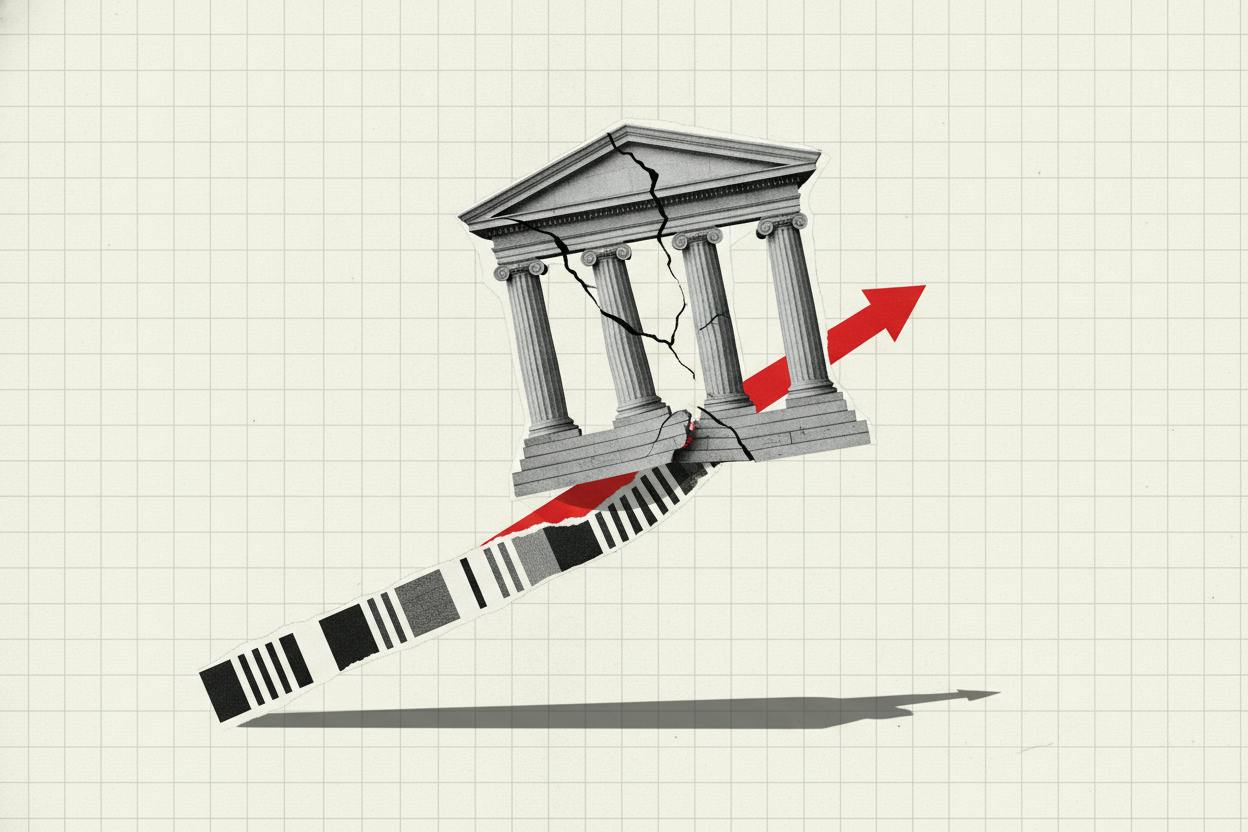
European bank stocks took a sharp hit on [day] as a global bond selloff pushed government borrowing costs higher, with the US 30-year Treasury yield climbing to its highest level in 24 years. The STOXX Europe Banks index, which tracks the region's major lenders, fell 3.5% as investors grew nervous about the impact of rising yields on bank balance sheets and on the broader eurozone economy.
Why bond yields are climbing
The move was part of a worldwide bond market rout. When bond prices fall, yields rise, and the US 30-year Treasury—a benchmark for long-term borrowing costs globally—has been climbing steadily. The latest jump pushed it to a level not seen since the early 2000s, a sign that investors are demanding higher compensation for holding long-term government debt.
Rising yields are often driven by expectations of higher inflation, stronger economic growth, or central banks keeping interest rates elevated for longer. In this case, the selloff has been fueled by concerns that inflation may be stickier than hoped, and that major central banks, including the US Federal Reserve, may not cut rates as quickly as markets had expected.
For Europe, the rise in yields has been particularly uncomfortable. The brief notes that the selloff "rattled eurozone spreads"—the difference between the yields on core eurozone government bonds, like German bunds, and those of more indebted countries such as Italy or France. When spreads widen, it signals that investors see more risk in holding the debt of those countries, which can raise borrowing costs for governments and businesses.
What higher yields mean for banks
At first glance, higher interest rates might seem good for banks. Banks typically earn more on the loans they make than they pay on deposits, so a rising rate environment can boost their net interest margins—the difference between what they earn and what they pay out.
But the immediate effect of a rapid jump in bond yields is often negative, and that's what played out on [day]. Banks hold large portfolios of government bonds as "safe" assets, often to meet regulatory capital requirements or to park excess deposits. When yields rise, the market value of those bonds falls. That can dent the reported capital of banks, making them look less financially solid and prompting investors to sell.
"A fast move in yields is rarely comfortable for banks," said [analyst name], a markets strategist. "Even if the long-term outlook is positive, the mark-to-market losses on bond portfolios can spook investors and force banks to shore up capital."
This is especially true for European banks, which have been holding large amounts of domestic government bonds. The brief highlights that the selloff revived worries about eurozone government debt, a reminder of the region's debt crisis from a decade ago. If yields on Italian or French bonds rise sharply, banks holding those bonds face bigger losses, and governments face higher borrowing costs—a double whammy.
What it means for investors
For everyday investors, the drop in European bank stocks is a reminder that rising bond yields are a double-edged sword. While they can eventually translate into higher profits for banks, the transition period can be painful.
If you hold European bank stocks or funds that invest in them, expect more volatility as long as bond yields keep climbing. The key thing to watch is how quickly yields rise. A gradual increase might be manageable, but a sharp spike—like the one that pushed the 30-year Treasury to a 24-year high—can trigger selloffs across the sector.
Also keep an eye on eurozone spreads. If the gap between German and Italian yields widens significantly, it could signal that investors are losing confidence in the region's fiscal outlook, which would likely hit bank stocks even harder.
For those with diversified portfolios, this is a good moment to review how much exposure you have to financial stocks and to long-duration bonds. Rising yields can hurt both, though for different reasons.
Broader market context
The selloff in European banks was part of a wider market move. European stocks slipped as oil prices and bond yields both ticked higher, adding to investor unease. The rise in yields also weighed on other regions, with US stocks slipping as the 30-year yield hit its highest level in over two decades.
Investors are now focused on central bank signals. Minutes from the Federal Reserve's latest meeting are due soon, and markets will be parsing them for clues about the path of interest rates. If the Fed signals that rates will stay higher for longer, bond yields could keep climbing, putting more pressure on banks and other rate-sensitive sectors.
For now, the message from the bond market is clear: long-term borrowing costs are rising, and that has consequences for banks, governments, and investors alike.