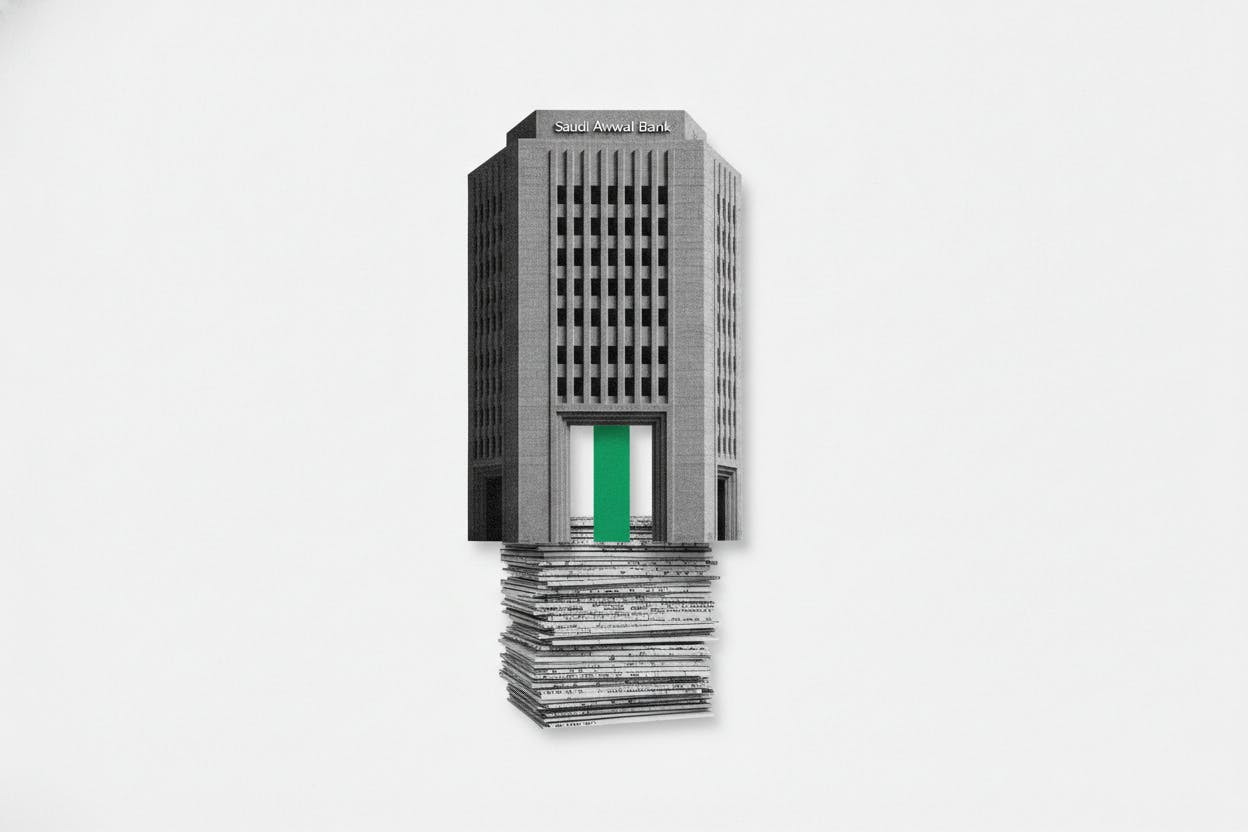
Saudi Awwal Bank (SAB) delivered a mixed set of second-quarter results that still managed to beat profit expectations, according to a note from United Securities, a Saudi brokerage. The bank's net income for the three months ended June 30 came in at 2.33 billion Saudi riyals, ahead of United Securities' estimate, even as some revenue lines weakened.
What the numbers show
Operating income slipped 1.6% year-on-year to 3.66 billion riyals, mainly because fee and other non-interest revenue fell more than expected. Non-interest income—which includes fees, trading income, and other sources outside traditional lending—dropped 17% compared with the same period last year.
Despite that drag, net income rose 10% from a year earlier and beat United Securities' forecast by 14%. The outperformance came from two below-the-line items: lower provisions (money set aside for potential loan losses) and a lower effective tax rate. These helped offset the weaker revenue picture.
Provisions are a key metric for banks because they reflect how much management expects to lose on bad loans. When provisions fall, it suggests credit quality is stable or improving, which can boost profits even if top-line growth is sluggish.
Why this matters for investors
For everyday investors, the takeaway is that a bank's reported profit can be influenced by more than just its core business. A beat driven by lower provisions and tax benefits is generally viewed as lower quality than one powered by strong lending growth or higher fees. Still, it shows that SAB's balance sheet is in decent shape, and that the bank is managing its risk costs well.
SAB is one of Saudi Arabia's largest banks, formed from the merger of Saudi British Bank and Alawwal Bank in 2019. It operates in a banking sector that benefits from the kingdom's economic diversification efforts and government spending. However, like all lenders, it is sensitive to interest rates, loan demand, and the health of the corporate and retail borrowers it serves.
The 17% drop in non-interest income is worth watching. If that trend continues, it could pressure future earnings, especially if loan growth slows. But the lower provisions suggest that the bank's loan book is performing better than expected, which is a positive signal.
What to watch next
Investors will likely focus on whether the decline in non-interest income is a one-off or a sign of a broader trend. They will also watch for any updates on loan growth, asset quality, and the bank's outlook for the rest of the year.
Banks across the Gulf region have been reporting solid results recently, helped by higher interest rates and strong economic activity. For example, NAB's quarterly profit rose as bad-debt costs fell, a similar theme to SAB's lower provisions. And UAE stocks ended mixed as investors looked past geopolitical tensions to focus on earnings.
For SAB specifically, the market reaction will depend on how much weight investors put on the profit beat versus the weaker revenue components. In the short term, the beat is likely to be taken positively, but the sustainability of the bank's earnings will depend on its ability to grow core income.
As always, it's important to remember that past performance is not a guarantee of future results. A single quarter's beat doesn't tell the whole story, and investors should consider the broader economic environment and the bank's long-term strategy before making any decisions.