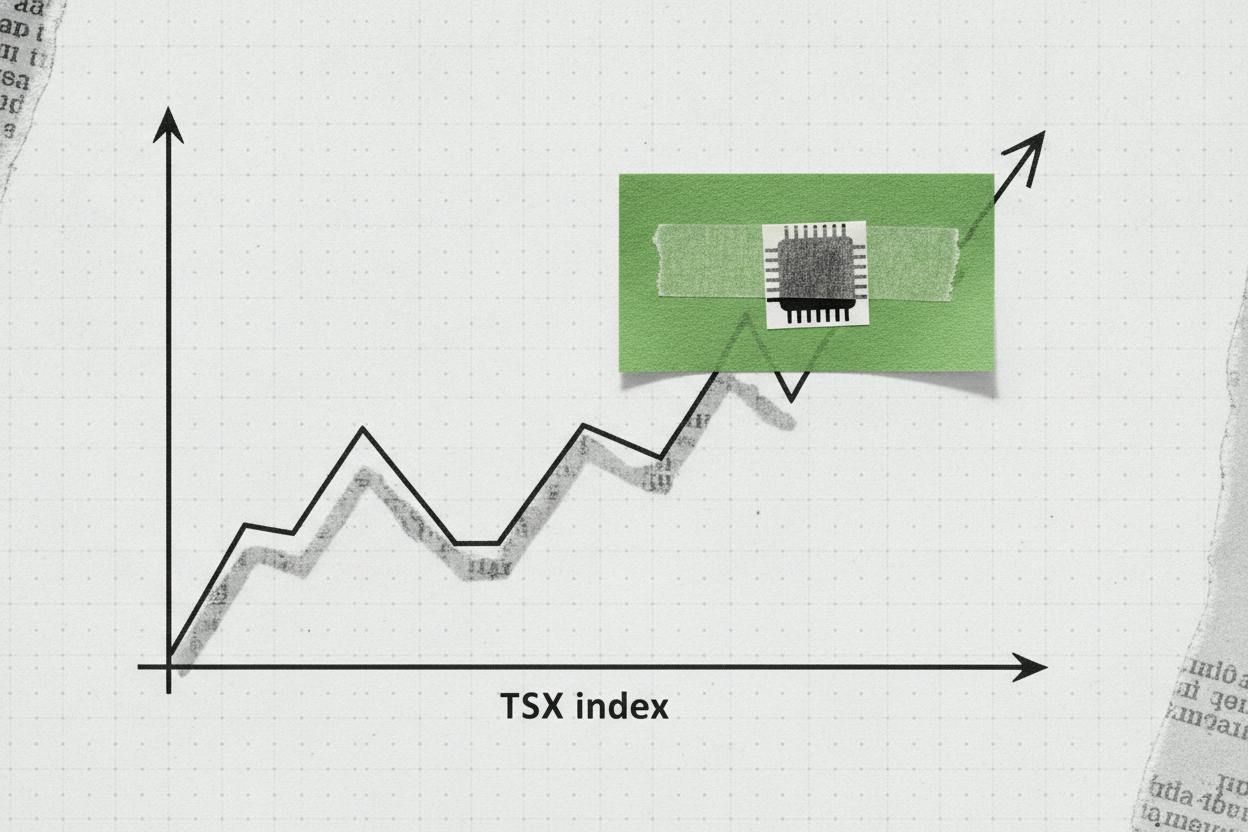
Canada's S&P/TSX Composite index turned positive Tuesday morning, recovering from an early slide as technology shares led a broad bounce. The turnaround came even as new economic data showed the country's output was unchanged in July, underscoring a stalling growth picture.
Tech leads the rebound
The information technology sector was the standout gainer on the TSX, helping offset weakness elsewhere. Telecom stocks, by contrast, lagged the broader market. The day's headline mover was Sangoma Technologies, a Canadian communications software company, whose shares surged 38% to CA$6.98 after the company agreed to be acquired by Nasdaq-listed BRC Group, a telecom software provider, in a deal valued at $204 million.
The acquisition is a cash-and-stock transaction, as detailed in our earlier coverage. For Sangoma shareholders, the offer represents a significant premium to where the stock had been trading, which explains the sharp jump. Such buyouts often provide an immediate payoff for investors, but they also remove the company from public markets, meaning shareholders will eventually receive the deal consideration rather than continued trading in the stock.
Economy flat in July
On the macro front, Statistics Canada reported that gross domestic product was unchanged in July, matching the previous month's performance. The flat reading masked divergent trends beneath the surface: construction activity rose, while manufacturing output slipped. The mixed picture suggests the economy is treading water, with some sectors expanding and others contracting.
This softness is consistent with the view that Canada's growth momentum has cooled. In the second quarter, the economy expanded at a solid pace, but that strength now faces headwinds, including the threat of US tariffs and uncertainty around the Bank of Canada's next policy move. RBC economists had already flagged that July's data could stall, clouding the third-quarter outlook.
For everyday investors, a flat GDP print is a reminder that economic growth is not uniform. While construction spending is holding up, manufacturing weakness points to challenges in goods-producing industries. This divergence can influence which sectors of the stock market perform well, as investors tend to favour areas with stronger underlying demand.
What it means for investors
The TSX's ability to shake off weak economic data and move higher reflects a market that is increasingly focused on corporate news and interest rate expectations rather than the latest GDP figure. A flat economy is not necessarily bad for stocks, especially if it keeps the Bank of Canada on a path toward cutting interest rates, which can support valuations.
However, investors should note that the overall market's gains were led by a single sector and a single stock. The tech rebound, while welcome, may not signal a broad-based rally. Telecom stocks lagging suggests that investors are rotating within the market rather than buying everything indiscriminately.
For those holding Sangoma shares, the buyout is a clear positive, but it also means the stock will likely trade in line with the deal terms until the transaction closes. For the broader market, the key watchpoints remain the Bank of Canada's rate decisions and any further developments on trade policy, as the labour market also shows signs of cooling.
In the near term, investors will be parsing upcoming data releases and corporate earnings to gauge whether the flat July GDP is a one-off or the start of a softer trend. The construction sector's resilience offers some hope, but manufacturing's decline is a cautionary signal. As always, diversification across sectors and asset classes remains a prudent approach for long-term investors.