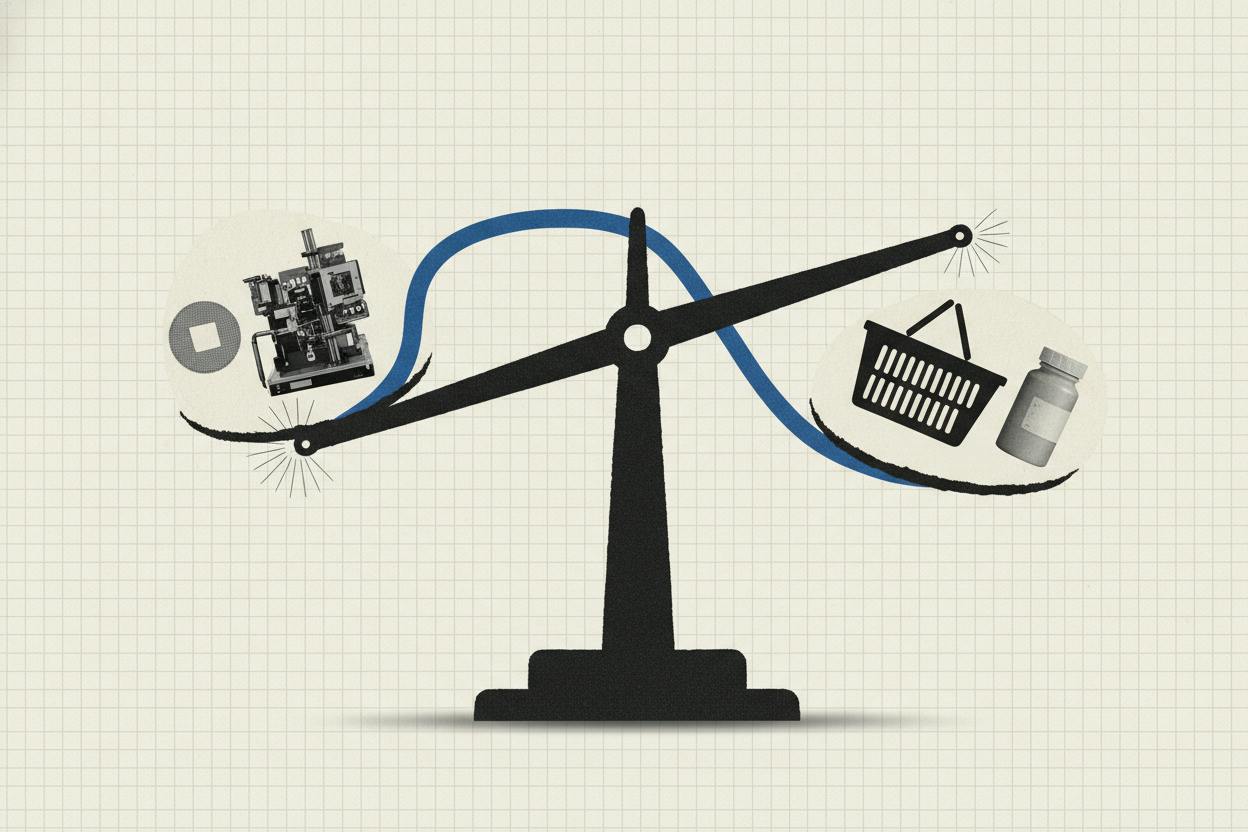
European stocks trading on US exchanges ended slightly lower on the day, with the S&P Europe Select ADR Index dipping 0.2% to 1,918.22. But beneath that calm surface, a clear split emerged: chipmakers surged while consumer and healthcare names pulled back.
The index, which tracks American depositary receipts (ADRs) of major European companies, often masks big individual moves. ADRs let US investors buy shares of foreign firms on American exchanges, and their performance can reflect both the underlying company's health and broader market sentiment.
Chipmakers lead the charge
The standout performers were two semiconductor-linked firms. ASML, the Dutch maker of advanced chip-making equipment, jumped 3.7%. Arm, a UK-based chip designer whose technology powers most smartphones, gained 5.3%. Both companies are closely tied to the artificial intelligence boom, as demand for powerful chips continues to drive investment in the sector.
Their gains echo a broader trend seen in recent sessions, where AI enthusiasm has lifted chipmakers across European and US markets. Investors are betting that companies like ASML and Arm will benefit from the massive spending on data centers and AI infrastructure.
Consumer and healthcare drag
On the losing side, several large consumer and healthcare ADRs weighed on the index. Anheuser-Busch InBev, the world's largest brewer, fell 4.1%. Unilever, the consumer goods giant behind brands like Dove and Ben & Jerry's, dropped 2.2%. Fresenius Medical Care, a German dialysis provider, declined 3.3%.
These moves suggest investors are rotating out of defensive sectors and into technology. Consumer staples and healthcare are often seen as safe havens, but when risk appetite grows, money tends to flow toward growth-oriented names. The result is an index that looks flat even as individual stocks swing sharply.
What it means for investors
For everyday investors, the takeaway is that a small index move can hide significant underlying activity. The S&P Europe Select ADR Index is a broad measure, but it doesn't tell you which sectors are driving the action. On this day, the winners were concentrated in tech, while consumer and healthcare lagged.
This kind of sector rotation is normal in markets. When AI-related stocks rally, they can pull the whole index up, but if other sectors fall, the net effect can be muted. Investors should pay attention to the composition of their portfolios and consider whether they are over- or under-exposed to particular sectors.
For those holding ADRs, it's also worth remembering that currency fluctuations can affect returns. ADRs are priced in US dollars, but the underlying stocks trade in euros, pounds, or other currencies. A stronger dollar can reduce the value of foreign earnings when converted back.
The broader backdrop remains uncertain, with oil prices and geopolitical tensions adding to volatility. European markets have been mixed in recent sessions, as investors weigh the impact of higher energy costs on consumer confidence and corporate profits.
Looking ahead
Investors will be watching whether the chip rally can sustain itself, especially as earnings season continues. ASML and Arm are both seen as bellwethers for the semiconductor industry, and their results often set the tone for the sector.
At the same time, consumer and healthcare stocks may find support if economic data weakens, as investors could rotate back into defensive names. The balance between growth and safety is likely to remain a key theme in the coming weeks.
For now, the message from the market is clear: not all European ADRs move together. Understanding the drivers behind individual stocks is essential for making informed decisions.