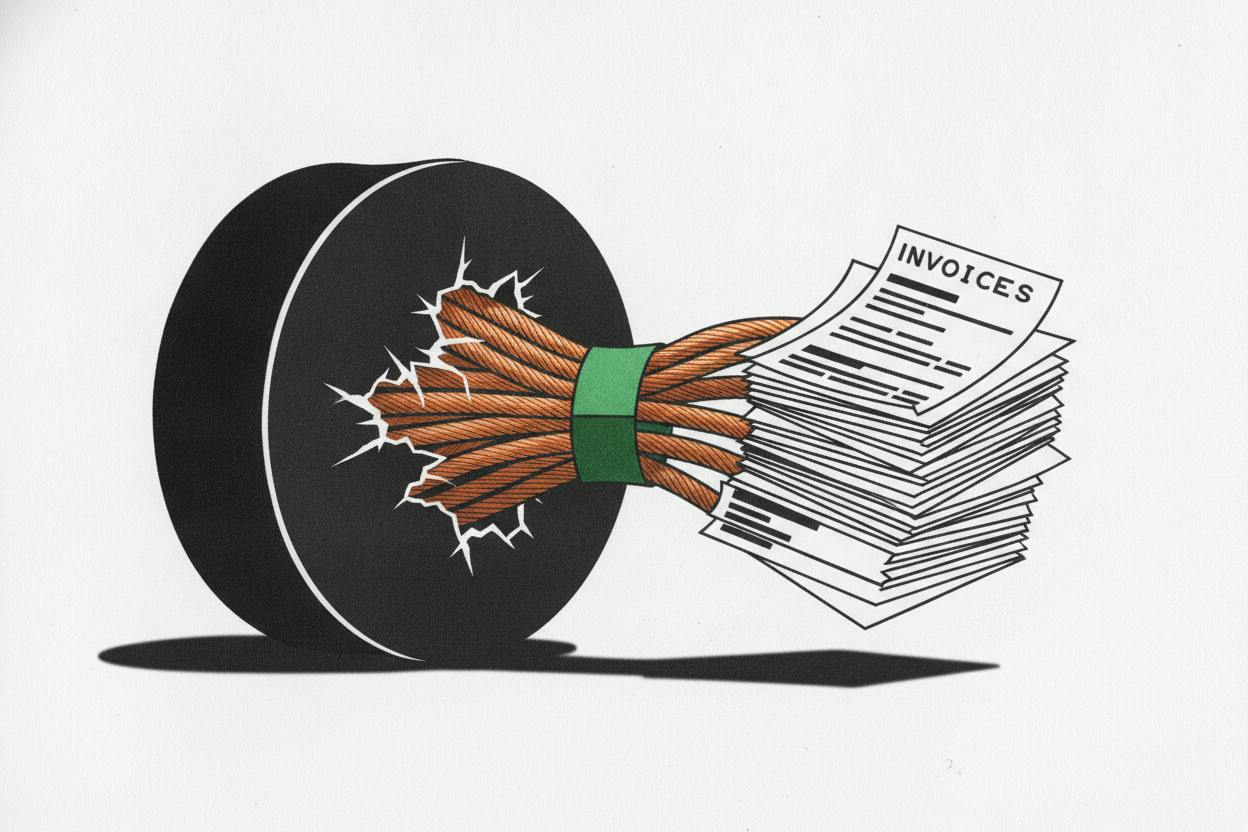
Saudi cable manufacturer Middle East Specialized Cables reported a rise in third-quarter sales, but the numbers show how climbing input costs can eat into a company's bottom line even when demand is strong.
The company, which makes power and telecom cables, posted sales of SAR 592.18 million (about $158 million) for the three months ended September 30, and net profit of SAR 19.41 million. The sales figure was lifted by higher volumes sold in Saudi Arabia and the UAE across its product lines, according to a Reuters report.
But the same quarter brought higher costs. Copper, the main raw material for cables, was more expensive, and the company bought more of it. Other materials and shipping also cost more. On top of that, operating expenses rose, financing costs increased, and the company faced a larger bill for zakat and income tax.
Why rising copper costs matter
Copper is the lifeblood of a cable maker. When its price jumps, the cost of producing each meter of cable goes up. Many cable contracts are structured to pass through metal costs, but with a delay. That means a company can be paying more for copper today while still selling at prices set before the increase. The result is a squeeze on profit margins until revenue catches up.
This is a familiar pattern for manufacturers that rely on commodities. When input prices rise faster than selling prices, profitability dips even if sales volumes are healthy. The company's own statement pointed to this dynamic, noting that higher volumes and pricier copper both contributed to the sales increase, but also to higher costs.
Shipping costs have also been volatile, especially in the Gulf region, where disruptions have affected some industries. While the brief does not specify the cause, shipping expenses have been a recurring headache for exporters and importers alike.
What it means for investors
For investors, the key takeaway is that revenue growth does not automatically translate into fatter profits. Middle East Specialized Cables' net margin—profit as a percentage of sales—remains exposed to swings in copper prices and financing costs.
When copper gets pricier and the company buys more metal, more money gets tied up in inventory and in unpaid invoices from customers. That "working capital" gap is often plugged with short-term borrowing, so financing costs can rise even while sales volumes improve. The company flagged higher financing costs in the quarter, reinforcing that point.
This is a common issue for commodity-dependent manufacturers. Their cash generation can be more volatile than their revenue. A strong quarter like this one can look fine on the surface, but if copper prices keep climbing or borrowing stays expensive, profits could turn quickly.
Investors should also watch how the company manages its working capital and debt. A company that can pass on higher costs to customers quickly, or that hedges its copper purchases, is better positioned than one that absorbs the hit.
The broader backdrop is also relevant. Saudi Arabia's economy has been diversifying, with big infrastructure projects driving demand for cables. That helps explain the higher volumes in the domestic market. But the same projects also mean more competition and potentially more pressure on pricing.
For a sense of how other companies are navigating similar cost pressures, consider Alba's output rebound amid Gulf shipping woes, or how Adani's spending plan hinges on funding costs. Both show how commodity prices and financing expenses can shape corporate results.
In the end, Middle East Specialized Cables' quarter is a reminder that in manufacturing, the top line is only part of the story. The cost side—materials, shipping, financing—can be just as important, and often more volatile.



