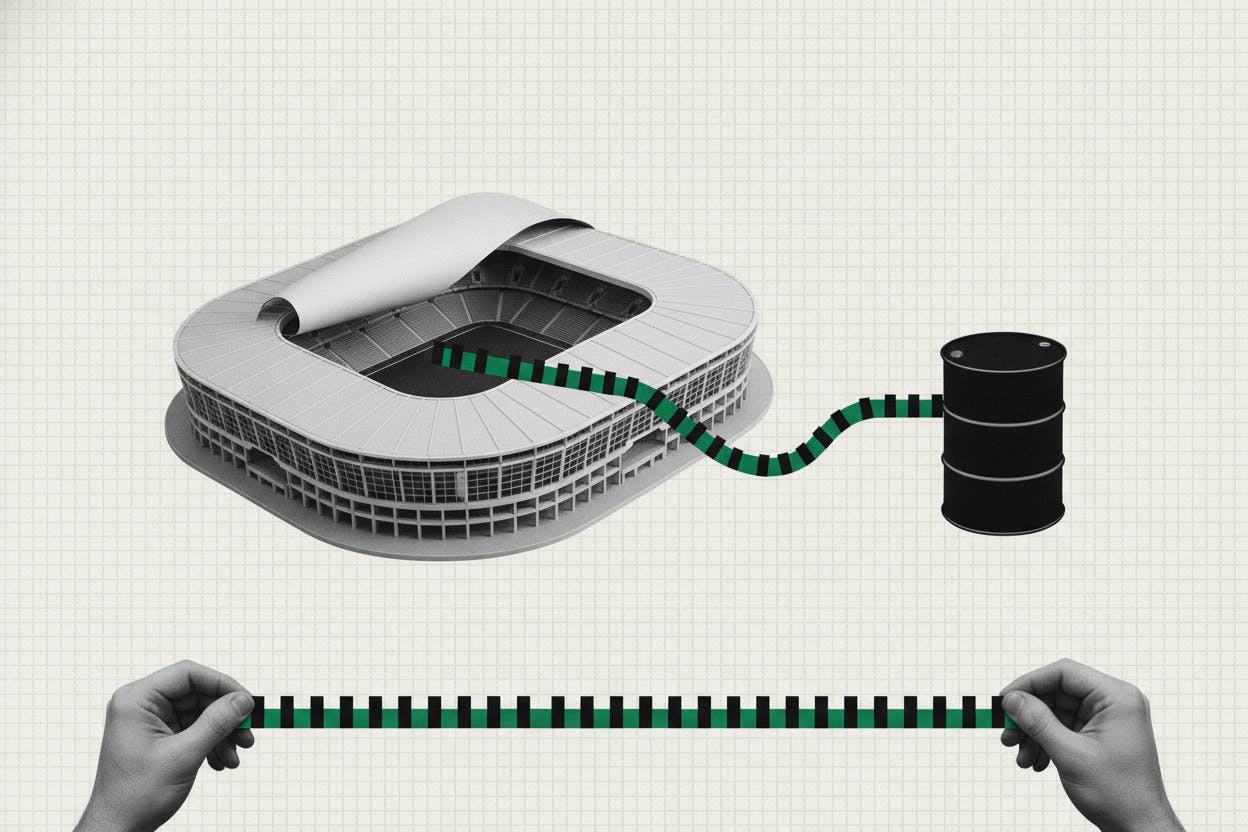
ROSHN, the Saudi real estate developer owned by the kingdom's $1.2 trillion Public Investment Fund (PIF), is approaching private investors to help finance the construction of the 47,000-seat Aramco Stadium, according to a Reuters report. The deal uses a lease-and-leaseback structure tied to Saudi Aramco's 25-year concession and a long-term stream of lease payments.
ROSHN has hired JPMorgan, the US investment bank, to run an equity-raising process, sources told Reuters. Aramco and JPMorgan declined to comment, while ROSHN and PIF did not respond to requests for comment.
How the Lease-and-Leaseback Works
In a lease-and-leaseback arrangement, the owner of an asset—in this case, ROSHN—sells it to an investor and then leases it back for a long period. The investor gets a steady income stream from lease payments, while the developer frees up capital to deploy elsewhere. Here, the stadium's value is underpinned by Aramco's 25-year concession, which provides a predictable revenue stream for the project.
This structure is common in infrastructure and real estate financing, allowing developers to raise cash without taking on traditional debt. For investors, it offers a bond-like return tied to a tangible asset and a creditworthy tenant like Aramco.
Why ROSHN Is Seeking Outside Cash
Saudi Arabia is juggling a massive pipeline of mega-projects under its Vision 2030 plan, including giga-developments like NEOM, the Red Sea Project, and Qiddiya. ROSHN itself is a key player in the kingdom's push to boost homeownership and develop integrated communities. However, the government's budget deficit is widening as oil revenues remain volatile and spending on these projects continues, Reuters noted.
By bringing in private capital, ROSHN can share the financial burden of building the stadium while keeping the project on track. This mirrors a broader trend in Saudi Arabia, where the PIF and other state-linked entities are increasingly turning to private investors to fund infrastructure, from renewable energy to entertainment venues. For context, the PIF has been active in global markets, including recent moves in space startup funding and other alternative assets.
What It Means for Investors
For everyday investors, this deal highlights a growing opportunity to gain exposure to Saudi Arabia's infrastructure boom through private markets. Lease-and-leaseback investments are typically offered to institutional investors, such as pension funds and insurance companies, but they can also appear in listed real estate investment trusts (REITs) or infrastructure funds.
The involvement of Aramco, the world's largest oil company, adds a layer of credit quality to the project. Aramco's 25-year concession means the stadium will likely be used for company events, sports, and entertainment, generating reliable income. However, investors should be aware that such deals are illiquid and long-dated, meaning capital is locked up for years.
Meanwhile, the broader Saudi economy is showing mixed signals. Saudi inflation remains cool at 1.8%, but wholesale costs are surging, which could pressure construction budgets. Energy markets also play a role: oil prices have jumped above $80, but energy stocks have stayed flat, reflecting uncertainty about demand. For Saudi projects, higher oil revenue helps the government's finances, but it doesn't directly affect project financing.
What to Watch Next
Investors should monitor how much equity ROSHN raises and at what terms. The success of this deal could set a precedent for other PIF-backed projects seeking private capital. Also watch for any updates from JPMorgan on the fundraising process, as well as broader trends in Saudi infrastructure financing.
For those interested in the region, the stadium deal is part of a larger story: Saudi Arabia is using its sovereign wealth fund to diversify the economy away from oil, and private investors are being invited to participate. Whether through direct investment or listed funds, the opportunity to tap into the kingdom's growth is expanding—but it comes with risks tied to oil prices, geopolitical stability, and project execution.



