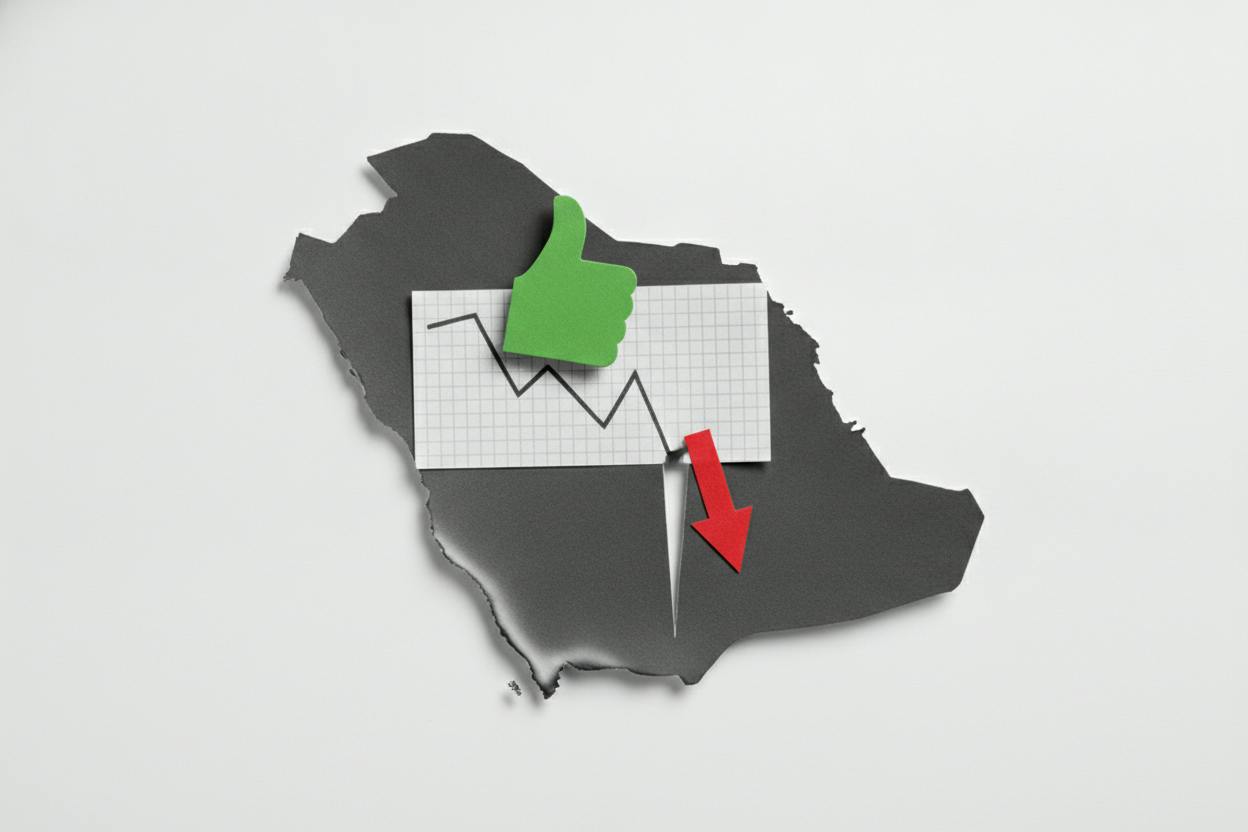
Saudi Arabia's stock market opened the week on a positive note, with the Tadawul All Share Index (TASI) closing Sunday up 0.82%. The gain came as investors weighed ongoing regional tensions against a fresh batch of corporate earnings, including a sharply disappointing result from one of the kingdom's major agribusiness firms.
The benchmark's advance suggests that, for now, market participants are looking through day-to-day geopolitical noise. But the backdrop remains fragile, and sentiment can shift quickly if headlines escalate. For ordinary investors, the key takeaway is that Saudi equities are still sensitive to both regional risk and company-specific fundamentals.
Nadec's mixed quarter
One of the day's most notable earnings reports came from National Agricultural Development Co. (Nadec), a Saudi food and agribusiness company. The firm posted a 72.53% year-on-year drop in attributable net profit for its third quarter, even as revenue grew 7.84% to SAR 909.72 million.
That kind of divergence—higher sales but much lower profits—often signals rising costs, lower margins, or one-off charges. While the brief does not specify the cause, companies in this position frequently face pressure from higher input prices, supply chain disruptions, or increased financing costs. For investors, it's a reminder that revenue growth alone doesn't always translate into bottom-line health.
Nadec's results stand in contrast to the broader market's upward move, highlighting how individual stock performance can diverge from the index. For those holding the stock, the sharp profit decline is a red flag that warrants closer attention to the company's earnings quality and outlook.
Regional tensions and oil's role
Saudi Arabia's market is closely tied to both regional stability and global energy prices. The kingdom is the world's largest oil exporter, and crude price movements often influence investor sentiment across the Gulf. Recent weeks have seen oil prices spike, with oil topping $101 at one point, lifting energy stocks globally. Higher oil prices generally benefit Saudi Arabia's fiscal position and its listed energy companies, but they can also reflect geopolitical risk that weighs on broader risk appetite.
Investors are also watching how regional tensions affect trade routes, supply chains, and investor confidence. Historically, Gulf markets have shown resilience during periods of elevated tension, but volatility tends to rise. For everyday investors, this means expecting swings and focusing on long-term fundamentals rather than reacting to every headline.
What it means for investors
For those with exposure to Saudi equities, Sunday's move is a modest positive, but the underlying picture is mixed. The TASI's gain suggests some optimism, but Nadec's profit slump is a cautionary tale about the risks of investing in individual stocks without digging into the details.
Diversification remains a key principle. A broad index fund tracking TASI would have benefited from Sunday's rise, while a concentrated position in Nadec would have suffered. For most retail investors, a diversified approach—whether through index funds or a mix of sectors—helps cushion against company-specific shocks.
Looking ahead, market watchers will likely focus on two things: the trajectory of regional tensions and the flow of third-quarter earnings. If more companies report similar margin pressures, the index could face headwinds despite the current uptick. Conversely, if earnings hold up, the market may continue to climb.
For now, the message is one of caution mixed with opportunity. Saudi Arabia's economic diversification efforts and its role in global energy markets provide a solid long-term backdrop, but short-term volatility is part of the package. Investors should stay informed, keep an eye on oil prices and geopolitical developments, and avoid making impulsive decisions based on a single day's trading.