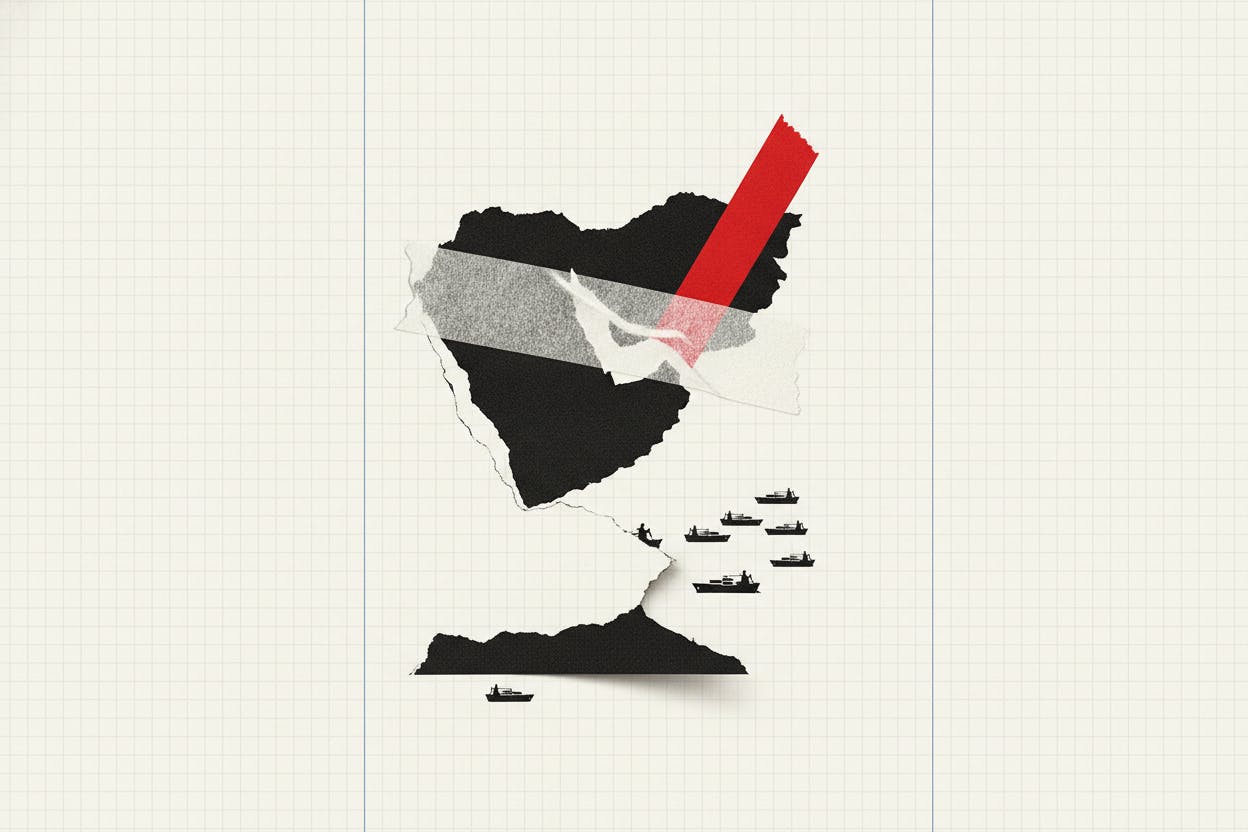
Saudi Arabia's stock market edged lower on Monday as fresh military strikes between the United States and Iran revived fears about the safety of shipping through the Strait of Hormuz, a narrow waterway that handles a significant portion of the world's oil exports.
The Tadawul All Share Index closed 0.16% lower, a modest decline that masked growing unease among investors about the potential for supply disruptions in the region. The move came after a weekend of escalating hostilities, with Iran launching missile and drone attacks on US facilities in Bahrain and Kuwait, and the US striking Iranian air defenses, coastal radar, and other sites.
Strait of Hormuz: A Key Chokepoint Under Scrutiny
The Strait of Hormuz, a narrow passage between the Persian Gulf and the Gulf of Oman, is one of the world's most critical energy chokepoints. Roughly one-fifth of global oil consumption passes through it daily, making any threat to its operation a major concern for energy markets and regional economies alike.
Over the weekend, signals were mixed. Iran claimed the strait was closed, while US President Donald Trump said commercial traffic could still pass. But analysts at ING, a Dutch bank, cautioned that the bigger issue isn't necessarily a formal shutdown. Even without an official closure, if insurers, shipowners, or navies treat the route as unsafe, traffic can slow sharply. ING warned that flows have already fallen to "a trickle," which would keep oil supply tight through the third quarter and make regional assets feel riskier.
This tension is not isolated to Saudi stocks. Similar concerns have weighed on other markets, with European stocks edging lower as oil prices rose on the same geopolitical risks. The impact has also been felt in Asia, where Chinese stocks tumbled on fears of disrupted oil flows.
What It Means for Investors: The Risk Premium Returns
For everyday investors, the key concept here is the "risk premium." When geopolitical tensions rise, markets don't wait for actual barrels of oil to disappear. Instead, they start pricing in a higher chance of sudden supply disruptions, sanctions, or policy responses. That shows up as a higher risk premium—the extra return investors demand for holding equities in a region that suddenly looks less predictable.
In practice, this can compress valuation multiples (meaning stocks trade at lower price-to-earnings ratios) and cool foreign investment inflows, even if companies' earnings forecasts haven't changed yet. The impact can be particularly harsh on domestically focused, non-energy firms. They don't directly benefit from higher oil prices, but their share prices still absorb the broader risk-off mood—exactly the dynamic that pulled the Tadawul down 0.16% on Monday.
This dynamic has also been visible in other markets. For instance, Canadian stocks saw futures rise as oil surged, while Central and Eastern European currencies tumbled on the same tensions, showing how the strait's fate ripples across global asset classes.
Company-Specific Moves: Dividends and Deals
Beyond the macro picture, individual stocks moved on company-specific news. Hamad Mohammed Bin Saedan Real Estate ended 0.12% lower after its board recommended a smaller dividend of 0.25 Saudi riyal per share for 2025. Dividend cuts can signal weaker cash flow or a shift in capital allocation priorities, and investors often react negatively to reductions.
On the positive side, Catrion Catering rose 1.89% after securing a new three-year inflight catering contract with Saudi Arabian Airlines Corp. Such long-term deals provide revenue visibility and can boost investor confidence in a company's growth prospects.
Looking Ahead: What Investors Should Watch
For now, the focus remains on the Strait of Hormuz and the trajectory of US-Iran tensions. If shipping flows continue to slow, oil prices could stay elevated, benefiting energy producers but pressuring import-dependent economies. For Saudi stocks, the key will be whether the risk premium fades quickly or becomes entrenched.
Investors should also keep an eye on how other markets react. The Singapore stock market barely budged despite the oil surge, highlighting that the impact varies by region and sector. In the coming days, any diplomatic developments or further military actions could trigger sharp moves in both oil prices and regional equities.
As always, the best approach for everyday investors is to stay informed, avoid knee-jerk reactions, and understand how geopolitical risks can affect portfolio valuations even when the underlying business fundamentals remain unchanged.



