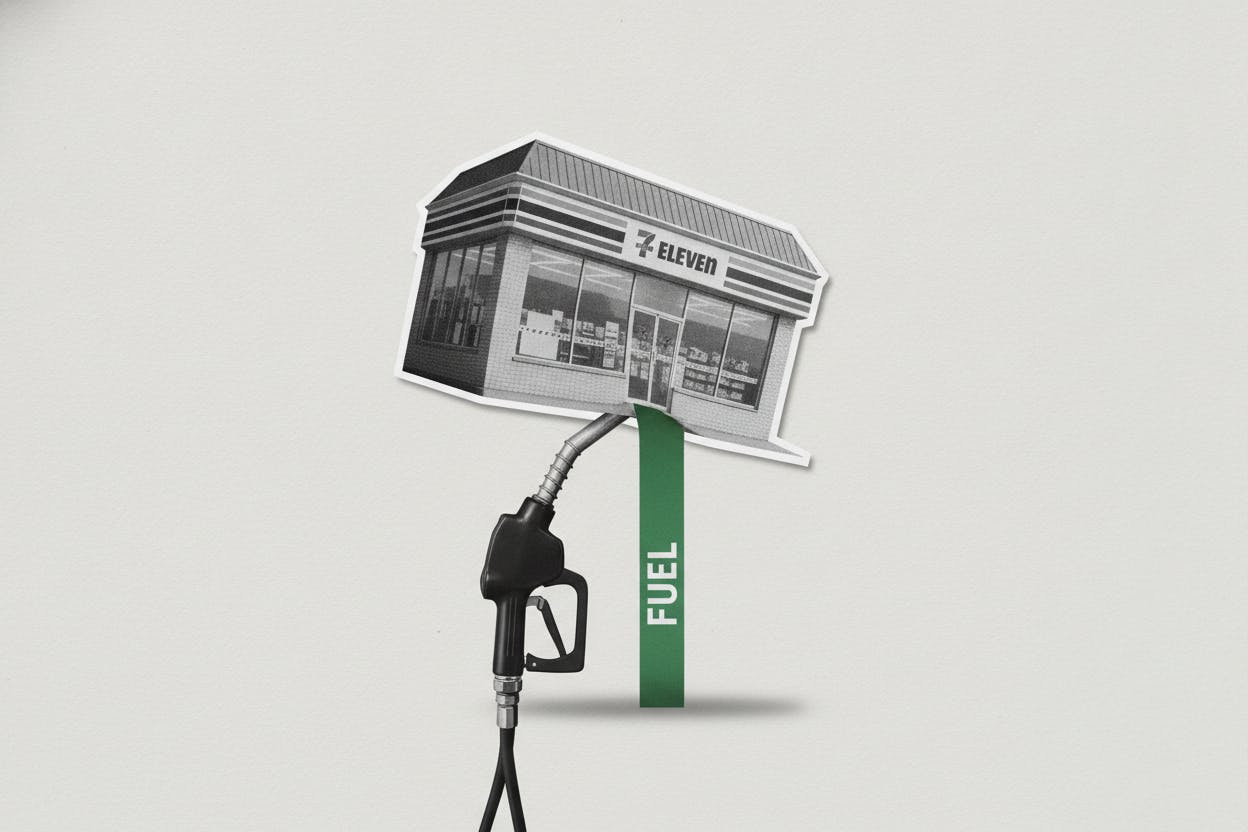
Seven & i Holdings, the Japanese retail giant that operates 7-Eleven stores worldwide, has raised its full-year profit forecast even as its latest quarterly sales fell. The company now expects net income of 278 billion yen for the fiscal year ending May 2026, up from a previous target of 270 billion yen. The upgrade comes after a 24% jump in net income for the first fiscal quarter, helped by stronger-than-expected gasoline revenue at its US convenience-store business and a weaker yen that boosts the value of its dollar-denominated earnings.
Quarterly Results: Profit Rises Despite Revenue Decline
For the three months ended May 31st, Seven & i reported net income attributable to shareholders of 60.6 billion yen, up from 49 billion yen a year earlier. However, revenue from operations slipped to 2.379 trillion yen from 2.777 trillion yen in the same period last year. The decline in sales reflects a challenging retail environment in Japan, where consumer spending has been under pressure from rising prices and a cautious economic outlook.
Despite the top-line drop, the company raised its full-year revenue forecast to 10.43 trillion yen from 9.448 trillion yen, signaling confidence in its US operations. Seven & i also lifted its earnings per share outlook to 120.89 yen from 117.42 yen.
Why the Upgrade? US Gasoline and a Weaker Yen
A key driver behind the improved outlook is the performance of Seven & i's US convenience-store business, which includes thousands of 7-Eleven locations. The company cited stronger-than-expected gasoline revenue in the US, where higher fuel prices and steady demand have boosted margins. Gasoline sales are a significant part of the US convenience-store model, and even small changes in price or volume can have a noticeable impact on profits.
Another major factor is the yen's continued weakness against the US dollar. Seven & i updated its exchange-rate assumption for the full year to 157 yen per US dollar, from a previous estimate. When a Japanese company earns revenue in dollars—as Seven & i does from its US stores—a weaker yen means those dollar profits translate into more yen when reported in financial statements. This "translation effect" can inflate reported earnings without any improvement in underlying business performance.
This dynamic is similar to what other Japanese companies with large overseas operations have experienced. For example, Uniqlo owner Fast Retailing lifted its profit forecast again after a 45.7% quarterly earnings surge, partly due to a weaker yen.
What It Means for Investors
For everyday investors, the key takeaway is that Seven & i's profit upgrade is not purely a sign of stronger store traffic or better sales. A meaningful portion of the improvement comes from currency translation—a mathematical effect rather than a fundamental business boost. If the yen strengthens later in the year, those dollar profits would convert into fewer yen, potentially making the 278 billion yen target harder to achieve without stronger underlying operations.
Investors should also watch the US gasoline market. Gasoline revenue can be volatile, influenced by global oil prices, seasonal demand, and economic conditions. A sharp drop in fuel prices or a slowdown in US consumer spending could weigh on Seven & i's US earnings. The company's reliance on this segment adds a layer of risk that goes beyond its core convenience-store business.
Seven & i's situation is not unique. Many Japanese retailers and manufacturers have benefited from the weak yen, but the effect can mask underlying challenges. For instance, ABC-Mart shares tumbled 11% despite a 10% profit jump after a flat outlook disappointed investors, highlighting how currency-driven gains can be fleeting.
Broader Context: Retail and Currency Trends
Seven & i's results come at a time when Japanese retailers are navigating a mixed economic landscape. Domestic consumer spending has been sluggish, with households tightening budgets amid rising living costs. Meanwhile, the Bank of Japan's gradual shift away from ultra-loose monetary policy has introduced uncertainty about future yen movements. If the yen strengthens, companies like Seven & i that rely on overseas earnings could see their reported profits shrink.
On the other hand, the US economy has remained relatively resilient, supporting demand at convenience stores and for gasoline. However, recent data suggests US consumers are becoming more cautious. US back-to-school spending is forecast to drop as families tighten budgets, a sign that discretionary spending may be cooling.
Seven & i's revised guidance reflects optimism about its US operations, but investors should be aware of the sensitivity to currency and commodity prices. The company's ability to hit its 278 billion yen target will depend not only on store performance but also on factors largely outside its control—namely, the yen-dollar exchange rate and global gasoline prices.
For now, the market appears to have taken the news positively, as the upgrade signals that management sees enough momentum to raise expectations. But as with any company with significant international exposure, the fine print matters. The yen's path and US gasoline trends will be key numbers to watch in the months ahead.