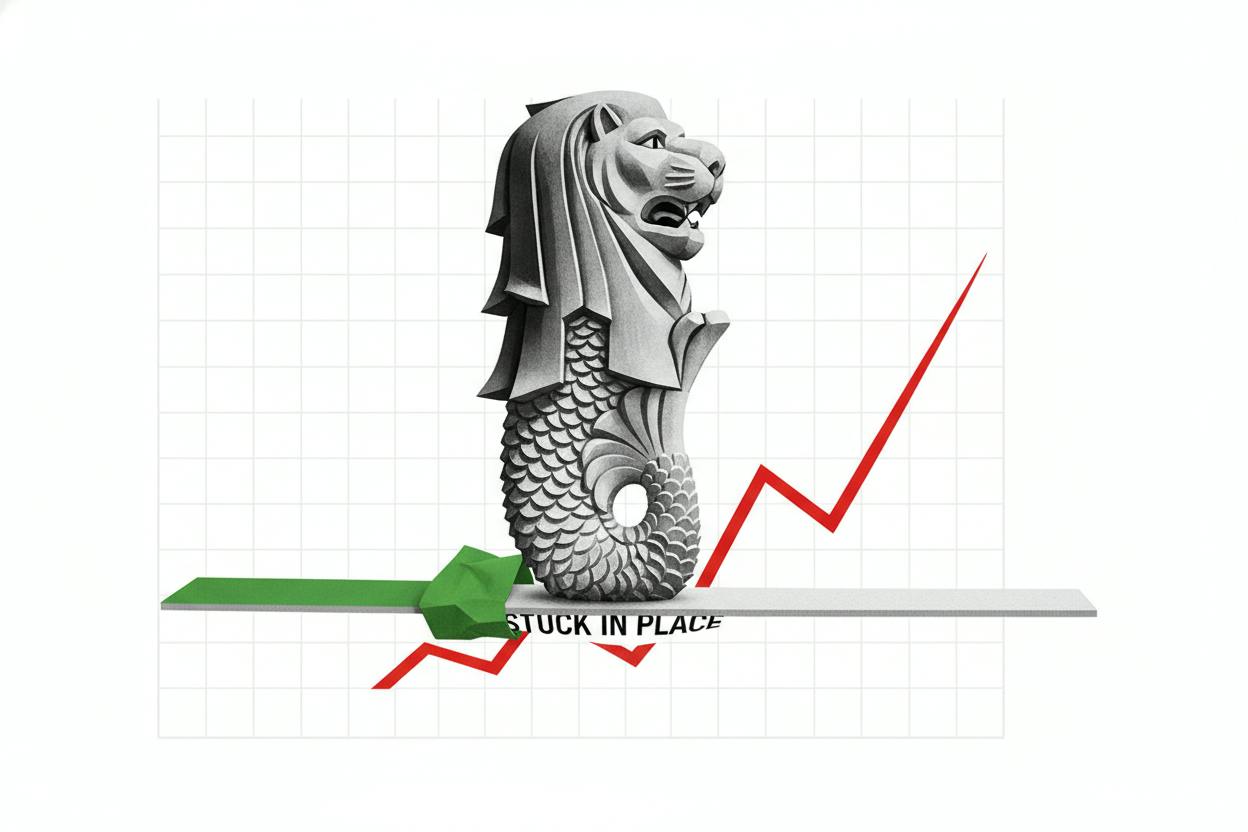
Singapore's benchmark Straits Times Index (STI) closed down 0.1% at 5,667.67 on Thursday, a muted reaction to a softer-than-expected US inflation report that had lifted sentiment in other markets. The index traded in a range between 5,652.82 and 5,700.59 during the session before settling slightly lower.
The subdued finish suggests that while global macro news can set the tone, it doesn't always move the whole market. Instead, the day's biggest swings came from company-specific deal news, a reminder that in Singapore equities, single-stock risk often matters more than the headline index level.
Why the US inflation print mattered
US inflation data is one of the most closely watched economic releases for global investors. When price growth comes in cooler than expected, it typically eases fears that the Federal Reserve will need to keep raising interest rates aggressively. Lower rates tend to support stock valuations, particularly for growth-oriented sectors, and can weaken the US dollar, which in turn affects Asian currencies and export competitiveness.
That relief was visible elsewhere. Regional markets such as New Zealand's NZX 50 held steady as cooler US inflation eased rate pressure, and even European stocks saw some support. But in Singapore, the macro tailwind wasn't enough to push the STI into positive territory.
Part of the reason may be that investors are increasingly looking past broad macro data and focusing on tangible, company-level events. When the market's overall direction is unclear, money tends to rotate into names with specific catalysts.
Deal news drives the biggest moves
Three STI-linked companies made headlines for completed transactions on Thursday, and their share price reactions were far larger than the index's 0.1% dip.
- Thakral Corp. jumped nearly 5% after completing the sale of a commercial building in Osaka, Japan, for 4.12 billion yen. Asset disposals like this bring in cash that can be used to pay down debt, fund new investments, or return capital to shareholders. For a company of Thakral's size, a deal of this magnitude can meaningfully change the balance sheet and investor expectations.
- Jardine Matheson gained almost 3% after closing its acquisition of I-MED Radiology Network, an Australian medical imaging business. Acquisitions can reprice a stock quickly because they change the earnings outlook: once a deal is complete, the buyer's future profits will include the target's contribution. Investors may also be betting on synergies or strategic benefits from expanding into healthcare services.
- Mapletree Industrial Trust fell almost 1% after selling a Minnesota data center to its current tenant, DataBank Properties, for $9.81 million. While the sale generates cash, the market may have interpreted the price or the loss of rental income as a slight negative. Data centers have been a hot asset class, so any divestment can raise questions about the trust's growth strategy.
These moves illustrate a key dynamic: when the overall index is flat, the action is often in individual stocks. For investors, that means paying attention to company announcements can be just as important as tracking macro headlines.
What it means for investors
For everyday investors, the STI's 0.1% decline is less important than what it reveals about market behavior. A flat index can mask significant divergence beneath the surface. Thakral's near-5% jump and Jardine Matheson's almost 3% gain show that deal completions can create immediate, tangible value—or at least the perception of it.
Asset sales and acquisitions are often called "event-driven" catalysts because they are discrete, identifiable events that can shift a stock's fair value. Unlike broad economic trends, which unfold over months, a completed deal provides hard numbers: cash received, assets acquired, future earnings potential. That clarity can attract investors who prefer to bet on specific outcomes rather than the market's overall direction.
However, not all deals are received equally. Mapletree Industrial's sale of a data center to its tenant for $9.81 million was met with a slight sell-off, possibly because the market expected a higher price or because the trust is seen as shedding a growth asset. This shows that the details matter—price, strategic fit, and use of proceeds all influence how a stock reacts.
More broadly, the Singapore market's muted response to US inflation data suggests that local investors may be more focused on domestic and company-specific factors. With global rate uncertainty still lingering—as seen in bond yields holding firm despite cooler inflation—the STI may continue to trade sideways while individual names provide the drama.
For those watching the market, the takeaway is to look beyond the index level. Check the announcements: completed deals, earnings guidance, and asset sales can move stocks far more than a single macro data point. And remember that in a flat market, stock selection often matters more than getting the overall direction right.